Rayaq: A Hub of Lebanese Aviation, Railway, and Ancient History
Located in the Beqaa Governorate near the city of Zahlé, Rayaq (also known as Rayaq-Haouch Hala) is a town with a multifaceted legacy. From its prehistoric roots to its role as a critical transportation nexus in the 20th century, Rayaq has served as a strategic point for both land and air travel in Lebanon.
Key Facts
- Strategic Location: Situated in the Beqaa Governorate, north of the town of Rayaq.
- Railway Legacy: Once Lebanon's most vital railway center, connecting Beirut, Damascus, Baalbek, Homs, and Aleppo.
- Aviation Milestone: Site of a 1933 world record for straight-line distance flight from New York.
- Archaeological Significance: Home to a Shepherd Neolithic site featuring ancient flint tools.
- Military History: Birthplace of several Free French fighter squadrons and the Lebanese Air Force.
Ancient Roots and Archaeology
The area surrounding Rayaq holds significant prehistoric value. Specifically, Rayaq North is a recognized Shepherd Neolithic archaeological site—a period characterized by early farming and livestock herding—located approximately 500 metres north of the town.
During a 1965 survey conducted by archaeologists Lorraine Copeland and Frank Skeels, various flint tools were recovered from the alluvial soil. These findings included blade-butts and end-scrapers typical of the Shepherd Neolithic. Additionally, researchers found large cores and flakes which Henri Fleisch identified as potentially Mousterian (associated with Neanderthals), Levalloiso-Mousterian, or Heavy Neolithic, drawing parallels to materials found at Fleywe and Serain.
The Golden Age of the Railway
In the early 20th century, Rayaq emerged as the most important railway center in Lebanon. It served as the critical junction where the 1.05-meter narrow-gauge Beirut–Damascus line intersected with the standard-gauge line heading north toward Baalbek, Homs, and Aleppo. Both of these railway systems were owned and operated by French companies.
This era of connectivity lasted until the outbreak of the Lebanese Civil War in 1975, which brought all railway traffic to a halt. Despite an attempt in 2002 to restore the link between Rayak and Damascus, the effort was unsuccessful.
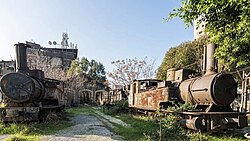
Aviation and Military History
Rayaq's strategic importance extended to the skies. A military airport was first established here by German troops during World War I, though the railway station was bombed and destroyed by the British army in 1918.
The air base became the site of global achievement on August 7, 1933, when French aviators Maurice Rossi and Paul Codos landed their Blériot 110 in Rayak. They had set a world record for straight-line distance, traveling 9,104 km from New York in 55 hours without stopping.
During World War II, the base saw significant military activity. In July 1941, British forces bombed the base and depots held by the Vichy regime. Subsequently, the base became a cradle for French aviation: the first Free French fighter squadron (Alsace Fighter Group) was created there on September 15, 1941, followed by the No. 3 Normandie Fighter Group in October 1941 and the 3/3 Ardennes Fighter Squadron in October 1943.
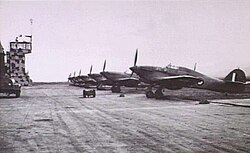
The legacy of aviation continued with the official creation of the Lebanese Air Force on June 1, 1949. In more recent history, the Rayak Air Base suffered severe damage to its landing strip during the 2006 Lebanon War following strikes by the Israeli Air Force.
Summary of Rayaq's Historical Significance
| Category | Key Details | Period/Date |
|---|---|---|
| Archaeology | Shepherd Neolithic and Mousterian flint tools | Prehistoric (Excavated 1965) |
| Railway | Junction for Beirut, Damascus, and Aleppo lines | Early 20th Century – 1975 |
| Aviation Record | New York to Rayak non-stop flight (9,104 km) | 1933 |
| Military | Formation of Free French squadrons and Lebanese Air Force | 1941 – 1949 |
Notable Figures
Rayaq is associated with several distinguished individuals, including:
- Charles Elachi: Former director of the American Jet Propulsion Laboratory (2001–2016).
- Romain Gary: Renowned French novelist.
- Elie Maakaroun: Writer and poet.
- Jean Tulasne: Aviator.
- Jean Makaron and Raymond Baaklini: Lebanese diplomats.
Frequently Asked Questions
What is the archaeological importance of Rayaq?
Rayaq North is a Shepherd Neolithic site where archaeologists discovered flint tools, including blade-butts and end-scrapers, as well as materials that may date back to the Mousterian or Heavy Neolithic periods.
Why was Rayaq important for Lebanese transportation?
It was the primary railway junction in Lebanon, connecting the narrow-gauge line from Beirut to Damascus with the standard-gauge line serving Baalbek, Homs, and Aleppo.
What world record was set at Rayak?
In 1933, French aviators Maurice Rossi and Paul Codos flew a Blériot 110 from New York to Rayak, covering 9,104 km in 55 hours without stopping.
When was the Lebanese Air Force established?
The Lebanese Air Force was officially created on June 1, 1949.
What happened to the railway traffic in Rayaq?
Railway traffic was interrupted by the Lebanese Civil War (1975–1990). A later attempt to restore the link to Damascus in 2002 failed.