Antiochene Syriac Maronite Church
The Antiochene Syriac Maronite Church is a distinct Eastern Catholic church sui iuris (of its own law), rooted in the ancient traditions of the Levant. With its patriarchal seat located in Bkerké, Lebanon, the church serves as a spiritual bridge between Eastern Syriac heritage and full communion with the Holy See of Rome. Its identity is defined by a rich history of resilience, a unique liturgical rite, and a global community that extends far beyond its ancestral homelands.
The church utilizes the Peshitta, the standard Syriac Bible, and follows the West Syriac Rite in its liturgy. While its theology is Catholic, its orientation remains firmly Eastern, preserving the linguistic and cultural legacy of Aramaic and Arabic.

Key Facts
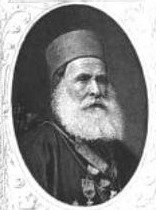
- Founder: Saint Maron; later organized under John Maron.
- Headquarters: Bkerké, Lebanon.
- Current Patriarch: Bechara Boutros al-Rahi.
- Global Population: Approximately 3.5 million members (2017).
- Primary Languages: Arabic and Classical Syriac (Aramaic).
- Ecclesiastical Status: Eastern Catholic (in communion with the Pope).
Historical Origins and Early Struggles
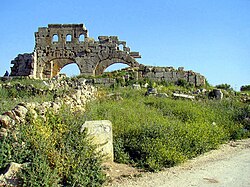
The Maronite tradition began around 410 AD with the establishment of the Monastery of Saint Maron in Phoenicia, within the Roman Empire. Early Maronites adhered to the beliefs of the Council of Chalcedon (451 AD), which led to violent sectarian conflicts with Monophysites. Records indicate that in 517 AD, Monophysites killed 350 Maronite monks and destroyed the Monastery of Saint Simeon Stylites.
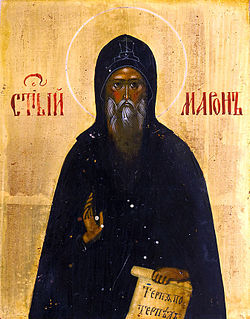
Despite these hardships, the community received formal recognition from both the Papacy and the Orthodox world. A letter from Pope Hormisdas in 518 AD confirmed this recognition, and Maronite representatives from Beth-Maron participated in the Constantinople synods of 536 and 553.
Islamic Rule and Migration
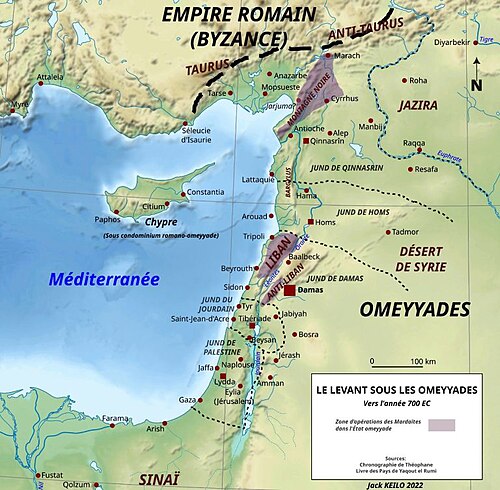
Following the Muslim conquest of Syria between 634 and 638 AD, Maronites increasingly migrated toward the mountains of Lebanon. This movement intensified during the reign of the Abbasid caliph al-Ma'mun (813–833 AD), as the rugged terrain provided a sanctuary for the community.
The Middle Ages and the Crusades
The Crusades marked a pivotal era for the Maronite Church, strengthening its ties to the West. In 1182, the Maronite Patriarch and bishops formally affirmed their affiliation with the Holy See of Rome. While traditional accounts suggest the church was always loyal to the Pope, historical chronicles like those of William of Tyre describe this as a formal abjuration of the Ekthesis of Heraclius in favor of Pope Alexander III.
This period saw significant diplomatic exchanges. In 1100 AD, Patriarch Youseff Al Jirjisi received the crown and staff of patriarchal authority from Pope Paschal II. Later, in 1215, Patriarch Jeremias II Al-Amshitti became the first Maronite patriarch to visit Rome, attending the Fourth Council of the Lateran. These connections allowed Maronites to teach Oriental languages and literature at prestigious universities in France and Italy during the Middle Ages.
Ottoman Influence and Latinization
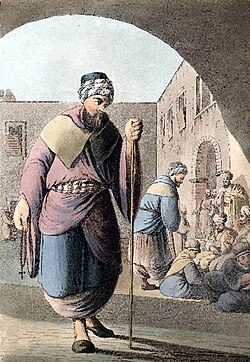
Under Ottoman rule, Maronites found a strategic ally in the Druze prince Fakhr-al-Din II (1572–1635). Through supporters like Abū Nādir al-Khāzin, the Maronites provided intellectual and trading skills in exchange for political protection and autonomy. By 1649, Patriarch Yuhanna al-Sufrari placed the church under French protection, leading to the opening of a French consulate in Beirut.
The close relationship with Rome led to a process of Latinization, where Western devotional practices—such as the rosary and the Stations of the Cross—were integrated into the Eastern tradition. Pope Gregory XIII further formalized this by establishing the Maronite College in Rome in 1584 and sending Jesuits to Lebanese monasteries to align practices with the Council of Trent.
Modern Era and Liturgical Reform
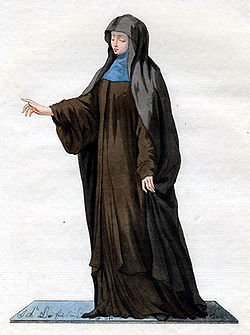
The 20th century brought significant challenges, most notably the Lebanese Civil War (1975–1990), which resulted in the displacement of approximately 670,000 Christians. In the aftermath, Patriarch Sfeir led a movement to reclaim the church's original identity. In 1992, a new Maronite Missal was published to remove centuries of Latinization and return to the authentic Antiochene liturgy, which consists of six anaphoras (eucharistic prayers).
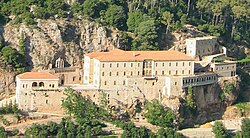
Recent synods (2003–2006) have focused on strengthening the bond between the Lebanese homeland and the global diaspora, while reviving the eremitic (hermit) tradition in the Qadisha Valley.
Church Organization and Global Reach
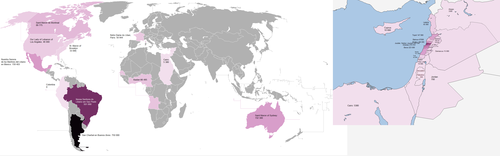
The Maronite Church is governed by the Holy Synod and led by the Patriarch of Antioch. It is organized into 28 eparchies (dioceses) and patriarchal vicariates spread across the Middle East and the diaspora.
| Region | Estimated Population / Status | Key Centers |
|---|---|---|
| Lebanon | ~1,062,000 (22-23% of population) | Bkerké, Beirut, Tripoli |
| Syria | ~51,000 | Aleppo, Damascus, Latakia |
| Cyprus | ~10,000 | Nicosia, Kormakitis |
| Israel | ~7,504 | Galilee |
| Diaspora | Estimated > 4 million | USA, Canada, Brazil, Australia |
The Diaspora in North America
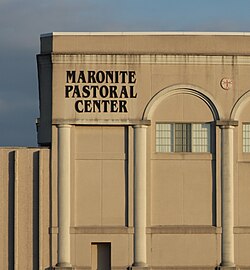
Maronite immigration to the United States began in the late 19th century. Initially served by local Latin bishops, the community gained its own structure in 1966 with the establishment of the Maronite Apostolic Exarchate. This evolved into the Eparchy of Saint Maron of Brooklyn in 1977 and the Eparchy of Our Lady of Lebanon of Los Angeles in 1994.
Frequently Asked Questions
Who was Saint Maron?
Saint Maron was the founder of the monastic tradition that gave rise to the Maronite Church. He established a monastery in Phoenicia around 410 AD, emphasizing a life of asceticism and prayer.
What is the West Syriac Rite?
The West Syriac Rite is the liturgical tradition used by the Maronite Church. While it has been influenced by Latin practices over time, recent reforms have sought to restore its original Antiochene characteristics.
How does the Maronite Church differ from the Roman Catholic Church?
While both are in full communion with the Pope and share the same core theology, the Maronite Church is an Eastern Catholic church. It maintains its own liturgy, canon law, and spiritual traditions rooted in the Syriac language and culture.
What is the significance of Bkerké?
Bkerké is the official seat of the Maronite Patriarchate in Lebanon, serving as the administrative and spiritual headquarters for the church worldwide.
Which saints are particularly venerated by Maronites?
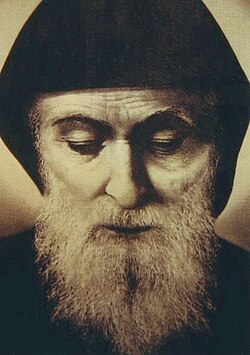
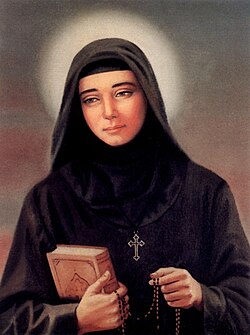
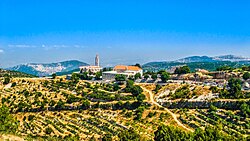
Among the most popular saints are Saint Charbel, known for his asceticism in Annaya, and Saint Rafqa, both of whom are deeply revered in Lebanon and the diaspora.
What is the Peshitta?
The Peshitta is the standard version of the Bible in the Syriac language, used by the Maronite Church and other Syriac-tradition churches.