Melkite Greek Catholic Church
The Melkite Greek Catholic Church is a particular sui iuris (self-governing) Eastern Catholic Church in full communion with the Pope in Rome. Rooted in the ancient traditions of the East, it blends the theological framework of Catholic theology with the rich liturgical heritage of the Byzantine Rite. Traditionally tracing its origins back to the 1st century AD and the foundations laid by Saint Peter and Saint Paul, the church serves as a vital bridge between Eastern and Western Christian traditions.
Primarily Arabic-speaking, the church is often referred to as the Melkite Church or Catholic Rūm. It is led by the Patriarch of Antioch, who also holds the titles of Patriarch of Alexandria and Jerusalem, reflecting a broad spiritual jurisdiction over the historic centers of early Christianity.
Key Facts
- Total Membership: Approximately 1,568,239 members.
- Current Leader: Patriarch Youssef Absi.
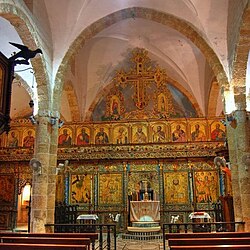
- Liturgical Rite: Byzantine Rite, with Greek as the liturgical language and Arabic as the primary spoken language.
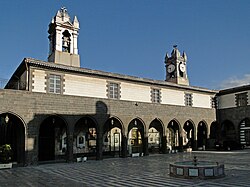
- Headquarters: Cathedral of Our Lady of the Dormition in Damascus, Syria.
- Global Hubs: Significant populations in Lebanon, Syria, Brazil, and Argentina.
Historical Development and Cultural Fusion
The Melkite Greek Catholic Church has long been a cornerstone of Arab Christianity. Unlike its Orthodox counterpart, which was led by Greek patriarchs until 1899, the Melkite Catholic Church has consistently been led by Arabic-speaking Christians. This deep integration with Arabic culture led to significant intellectual contributions; for instance, the theologian Abdallah Zakher of Aleppo established the first printing press in the Arab world around 1725.
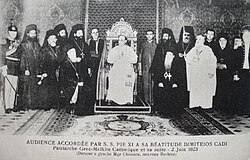
In 1835, the Ottoman Empire recognized Patriarch Maximos III Mazloum as the leader of a millet (a distinct religious community). During this era, Pope Gregory XVI granted Maximos III the triple patriarchate of Antioch, Alexandria, and Jerusalem, a title that remains with the Patriarch to this day.
Institutional Growth and Education
The 19th century marked a period of institutional expansion. Patriarch Gregory focused on the intellectual formation of the clergy, founding the Patriarchal College in Beirut (1865) and the Patriarchal College in Damascus (1875). He also reopened the Melkite seminary of Ain Traz in 1866 and supported the establishment of Saint Ann's Seminary in Jerusalem in 1882.
The Melkite Diaspora
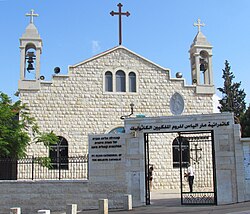
The geographical distribution of the church shifted dramatically due to emigration from the Eastern Mediterranean, spurred in part by the Damascus massacres of 1860. This movement created a global "Diaspora," leading to the establishment of Eparchies (the Eastern equivalent of a diocese) in the Americas, Australia, and Canada.
While Lebanon currently hosts the largest community in the Middle East, the diaspora has grown significantly. As of 2017, São Paulo, Brazil, became home to the largest Melkite community outside the Middle East.
Demographic Distribution
| Region/Country | Estimated Population |
|---|---|
| São Paulo, Brazil | 433,000 |
| Lebanon | 425,000 |
| Argentina | 302,800 |
| Syria | 234,000 |
| Israel and Palestine | 80,000 |
| Australia | 52,000 |
| Canada | 35,000 |
| United States | 24,000 |
Ecclesiastical Organization
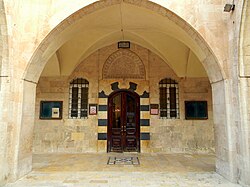
The church is organized under an episcopal polity, with the Patriarch of Antioch and All the East serving as the primate. The jurisdiction is divided into several archeparchies and eparchies across the Arab world, Africa, and the diaspora.
Regional Jurisdictions
- The Holy Land: Includes the Archeparchy of Akka (covering Haifa and Galilee) and the Archeparchy of Petra and Philadelphia in Amman.
- Lebanon: A dense network of archeparchies including Beirut and Byblos, Tyre, and Sidon.
- Syria: The Patriarchal See of Antioch is located in Damascus, with other archeparchies in Aleppo, Homs, and Latakia.
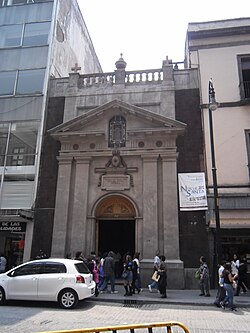
- The Diaspora: Eparchies in Newton (USA), Montréal (Canada), and Mexico City (Mexico), along with an Apostolic Exarchate in Argentina and Venezuela.
Religious Orders and Decorations
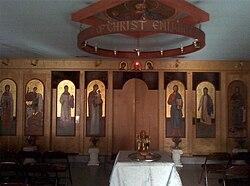
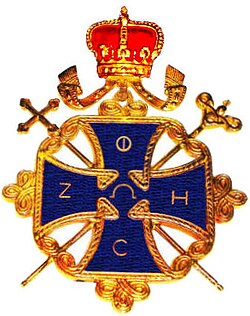
The church maintains several religious institutes of Pontifical right, including the Basilian Aleppian, Chouerite, and Salvatorian orders for both men and women. Additionally, the church provides protection to the Ordo Militiae Christi Templi Hierosolymitani, a Christian ecumenical organization.
Frequently Asked Questions
What does "Melkite" mean?
The term "Melkite" derives from the word for "king" or "emperor," historically referring to those who adhered to the faith defined by the Byzantine emperors.
How does the Melkite Church differ from the Roman Catholic Church?
While they share the same theology and are in full communion with the Pope, the Melkite Church uses the Byzantine Rite (liturgy) and maintains its own Eastern canon law and traditions, whereas the Roman Catholic Church uses the Latin Rite.
Who is the current leader of the Melkite Greek Catholic Church?
The current leader is Patriarch Youssef Absi, who serves as the Patriarch of Antioch and All the East, of Alexandria and of Jerusalem.
Where is the largest Melkite community located today?
In the Middle East, the largest community is in Lebanon. Globally, the largest community in the diaspora is located in São Paulo, Brazil.
What is an Eparchy?
An Eparchy is the Eastern Catholic equivalent of a diocese, serving as a territorial district under the jurisdiction of a bishop.