Roman Syria: The Strategic Powerhouse of the Ancient East
The province of Roman Syria served as one of the most vital frontiers of the Roman world. Annexed in 64 BCE, it functioned not only as a commercial hub connecting the Mediterranean to the East but also as a critical military bulwark against the Parthian and later Sasanian Empires. From its capital at Antioch, Rome projected power across the Levant, managing a complex tapestry of Greek, Aramaic, and Arab cultures.
The region's history is marked by its strategic importance, leading to frequent administrative shifts and military deployments. Its evolution from a single massive province to a series of smaller administrative units reflects Rome's ongoing effort to maintain control over a wealthy but volatile territory.
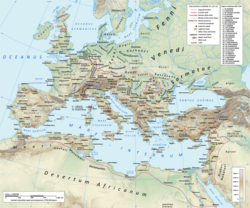
Key Facts
- Annexation: Established in 64 BCE by Pompey the Great during the Third Mithridatic War.
- Capital: Antioch (modern-day Antakya, Turkey) served as the primary administrative center.
- Strategic Role: Acted as the primary defense line against Persian empires (Parthia and Sasanids).
- Demographics: A diverse mix of Greek urbanites, Aramaic-speaking rural populations, and Arab settlers.
- Division: Split into Coele Syria and Syria Phoenice in 198 CE by Emperor Septimius Severus.
The Rise of Provincia Syria
Roman Syria was formally established when Pompey the Great deposed the Seleucid successors and annexed the region to the Roman Republic. Initially, the province was governed by a governor, such as Marcus Aemilius Scaurus, but transitioned into an imperial province governed by a legatus (a high-ranking military governor) after the fall of the Republic.
The province's borders were fluid. Over time, it absorbed territories from the Herodian Tetrarchy, including Iturea and Trachonitis. In 6 AD, the province of Judea was placed under the direct authority of the Legate of Syria, illustrating the governor's immense power over the eastern Mediterranean.
Military Significance and the First Jewish-Roman War
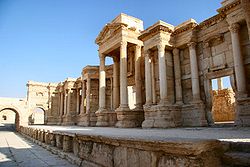
Due to its proximity to the Parthian Empire, Syria was heavily militarized, often hosting three legions and various auxiliary forces. This military strength was put to the test during the First Jewish-Roman War (66–70 AD). While the initial attempt by legate Cestius Gallus to quell the revolt ended in a shocking defeat at the Battle of Beth Horon, the Syrian units later supported Vespasian in his bid for the imperial throne.
Administrative Evolution and Division
By the late 2nd century, the governor of Syria held a command of the first rank in all of Asia. However, to prevent any single governor from wielding too much power, Emperor Hadrian began reducing these prerogatives. This culminated in 198 CE when Septimius Severus officially divided the province into two halves:
- Syria Coele: The northern region with its capital at Antioch.
- Syria Phoenice: The southern region with its capital at Tyre.
This division reduced the military hierarchy of the Syrian governors, distributing legions between the two new administrations to ensure imperial stability.
Crisis and the Palmyrene Empire
The 3rd century brought significant instability. Syria became a focal point during the Crisis of the Third Century, even producing a Roman Emperor, Philip the Arab, who ruled during Rome's millennial celebration in 244 AD.
The region suffered devastating invasions by the Persian King Shapur I in the mid-3rd century, who sacked numerous cities after victories at the Battle of Barbalissos and the Battle of Edessa, where Emperor Valerian was captured. In the vacuum of Roman authority, the Palmyrene Empire emerged as a breakaway state from 268 to 273 AD, asserting independence before being reintegrated into Rome.
Syria in the Byzantine Era
Following the reforms of Diocletian, Syria was integrated into the Diocese of the East. The region remained a commercial and intellectual powerhouse under the Byzantine Empire. Further subdivisions occurred, creating the province of Euphratensis and later splitting Syria Coele into Syria Prima (Antioch) and Syria Secunda (Apamea).
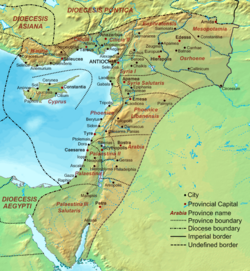
The Byzantine hold on Syria was contested. The Sasanians occupied the region between 609 and 628 AD before Emperor Heraclius reconquered it. However, the rise of the Rashidun Caliphate and the decisive Battle of Yarmouk eventually led to the loss of the region to Muslim forces, though Antioch was briefly recovered in the 10th century.
Demographics and Cultural Identity
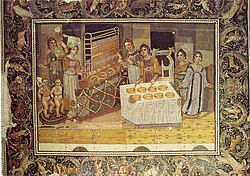
Roman Syria was a mosaic of ethnicities and languages. The rural interior was dominated by Aramaic speakers, while the coast remained largely Phoenician-speaking until the end of the 2nd century. Arabs were settled in regions like Hauran and Palmyra.
In contrast, the urban centers—such as Antioch and the Decapolis—were predominantly Greek, reflecting the legacy of Seleucid patronage. Population density was remarkably high for the era; Antioch and Palmyra are estimated to have reached 200,000 to 250,000 inhabitants each.
Despite this diversity, there was no unified "Syrian" cultural identity. Instead, the population adopted Greek civic structures and Roman imperial narratives, making "Syrian" primarily a geographical term rather than an ethnic one.
| Period | Administrative Status | Key Capital(s) | Major Events |
|---|---|---|---|
| 64 BCE – 198 CE | Provincia Syria | Antioch | Annexation by Pompey; Defense against Parthia |
| 198 CE – 4th Century | Coele Syria & Syria Phoenice | Antioch & Tyre | Division by Septimius Severus |
| 268 – 273 CE | Palmyrene Empire | Palmyra | Breakaway state from Rome |
| 4th Century – 7th Century | Byzantine Provinces | Antioch, Apamea | Diocletian reforms; Sasanian and Muslim conquests |
Frequently Asked Questions
Who first brought Syria under Roman control?
Pompey the Great annexed Syria to the Roman Republic in 64 BCE during the Third Mithridatic War after defeating Tigranes the Great and deposing the Seleucid kings.
Why was the province of Syria divided in 198 CE?
Emperor Septimius Severus divided the province into Coele Syria and Syria Phoenice to reduce the power of the Syrian governor, who previously commanded a massive military force that could threaten the emperor.
What was the demographic makeup of Roman Syria?
The region was highly diverse: Greeks dominated the cities, Aramaic speakers lived in the rural interior, and Arabs were settled in the east and south, while Phoenicians remained prominent on the coast.
What was the significance of the Palmyrene Empire?
The Palmyrene Empire was a short-lived breakaway state (268–273 AD) that took advantage of Roman instability and Persian invasions to assert independence over the region.
How did the Byzantine Empire manage Syria?
Syria was governed as part of the Diocese of the East and further subdivided into smaller provinces like Syria Prima, Syria Secunda, and Euphratensis to improve administration and military defense.