Ramlet al-Baida: A Public Beach of History and Contrast in Beirut
Located along the Mediterranean coast, Ramlet al-Baida (Arabic: الرملة البيضا) serves as a prominent public beach in Beirut, Lebanon. Situated at the southern end of the Corniche Beirut promenade, the beach occupies a strategic point where Avenue General de Gaulle meets Avenue Rafic Hariri, extending toward Rue Venezuela. While it is located within the Moussaitbeh area and sits adjacent to the affluent district of Ras Beirut, the beach is primarily frequented by a male clientele from Beirut's lower-income southern suburbs and is known as a popular cruising area.
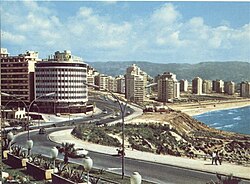
Key Facts
- Location: Southern end of the Corniche Beirut promenade, Moussaitbeh, Beirut.
- Demographics: Popular with men from the southern suburbs of Beirut.
- Historical Significance: Site of various military and political events during the Lebanese conflict.
- Notable Landmark: The Hotel Beau Rivage, once a center for Syrian intelligence.
A Turbulent History
Beyond its role as a recreational space, Ramlet al-Baida has been the backdrop for several significant events during the war in Lebanon. The beach's accessibility by sea made it a point of interest for military operations and political tragedies.
Military Operations and Assassinations
On April 10, 1973, the beach was used by a seaborne Israeli commando unit. After landing in Dora and assassinating PLO officials Muhammad Al Najjar, Kamal Adwan, and Kamal Nasser, the unit departed from Ramlet al-Baida.
Political Tragedies
The beach has also been linked to high-profile deaths. On June 16, 1976, the body of Francis Meloy, the incoming U.S. Ambassador to Lebanon, was discovered on the shores of Ramlet al-Baida.
Regional Conflict
In 1983, the area was affected by the broader instability of the region. A terrorist group, believed to be backed by Iran, bombed the barracks of French peacekeepers located four miles from the beach. This devastating attack resulted in the deaths of 58 French soldiers.
The Legacy of Hotel Beau Rivage
Overlooking the beach is the Hotel Beau Rivage, a structure with a dark history. From 1997 to 2005, the hotel served as the headquarters for Syrian intelligence in Beirut. During this period, it became a notorious center for the detention of Lebanese dissidents and was synonymous with human rights violations and torture.
Following the withdrawal of Syrian forces from Lebanon in 2005, the hotel underwent a complete transformation. It was renovated and reopened in 2008 as a luxury civilian hotel, shifting its identity from a site of oppression to one of hospitality.
| Feature | Details |
|---|---|
| Location | Moussaitbeh, Beirut (Southern Corniche) |
| Primary Users | Male clientele from southern suburbs |
| Key Historical Event (1973) | Israeli commando departure after PLO assassinations |
| Key Historical Event (1976) | Discovery of U.S. Ambassador Francis Meloy's body |
| Hotel Beau Rivage (1997-2005) | Syrian intelligence headquarters |
| Hotel Beau Rivage (Post-2008) | Luxury civilian hotel |
Frequently Asked Questions
Where exactly is Ramlet al-Baida located?
It is a public beach in Beirut, Lebanon, situated at the southern end of the Corniche Beirut promenade where Avenue General de Gaulle meets Avenue Rafic Hariri, ending at Rue Venezuela.
Who typically visits Ramlet al-Baida?
Despite its proximity to the upscale Ras Beirut district, the beach is predominantly popular with men from Beirut's low-income southern suburbs and is used as a cruising area.
What is the historical significance of the beach regarding international diplomacy?
The beach is known as the site where the body of Francis Meloy, the incoming U.S. Ambassador to Lebanon, was found on June 16, 1976.
What was the role of Hotel Beau Rivage between 1997 and 2005?
During those years, the hotel served as the headquarters for Syrian intelligence in Beirut and was used to detain Lebanese dissidents, becoming associated with torture and human rights abuses.
What happened to Hotel Beau Rivage after 2005?
After the Syrian withdrawal from Lebanon in 2005, the hotel was renovated and reopened in 2008 as a luxury hotel for civilians.