Rainforests: The Earth's Most Biodiverse Ecosystems
Rainforests are extraordinary ecosystems defined by a closed, continuous tree canopy and vegetation that depends heavily on moisture. These forests are characterized by the presence of epiphytes (plants that grow on other plants) and lianas (woody climbing vines), and they naturally lack wildfires. Often described as the "jewels of the Earth," these regions are critical to global survival, housing between 40% and 75% of all biotic species on the planet.
Beyond their beauty, tropical rainforests serve as the "world's largest pharmacy," as more than one-quarter of all natural medicines have been discovered within their borders. Despite their importance, these habitats and their endemic species are rapidly vanishing due to pollution, habitat loss, and widespread deforestation.
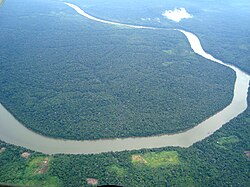
Key Facts
- Biodiversity: Up to 75% of all known species are indigenous to rainforests.
- Medicine: Over 25% of natural medicines originate from tropical rainforest plants.
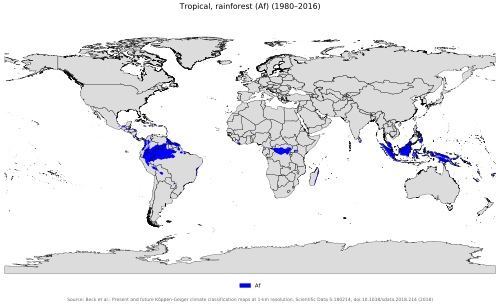
- Climate: Tropical rainforests typically exist within 10 degrees north and south of the equator.
- Threats: Massive losses in West Africa (90%) and Madagascar (two-thirds) highlight the deforestation crisis.
- Structure: Rainforests are organized into distinct vertical layers, from the forest floor to the emergent layer.
Types of Rainforests
Tropical Rainforests
Tropical rainforests are defined by warm, wet climates with no significant dry season. They are typically located within 10 degrees of the equator, where mean monthly temperatures always exceed 18 °C (64 °F). Annual rainfall is substantial, usually ranging between 175 cm (69 in) and 200 cm (79 in), though it can exceed 1,000 cm (390 in) in some regions.
Temperate Rainforests
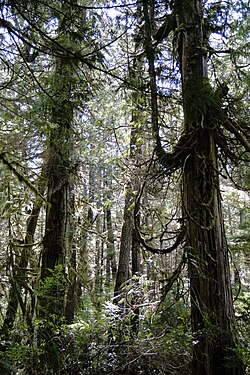
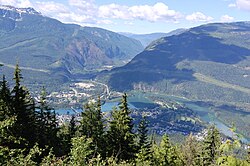
Unlike their tropical counterparts, temperate rainforests occur in cooler climates but still maintain high moisture levels, often found in coastal regions of the Pacific Rim.
Dry Rainforests
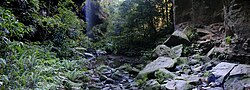
Dry rainforests feature a more open canopy and exist in areas with lower rainfall, typically between 630 mm and 1,100 mm (25–43 in). These are often found in the rain-shadow of mountains. In Australia, these forests show complex adaptations to survive, such as sclerophylly (thick, leathery leaves), reduced leaf size, or deciduousness. They are further categorized by leaf size into microphyll or notophyll types.
The Vertical Structure of the Rainforest
Rainforests are stratified into layers, each supporting different forms of life.
The Emergent Layer
The highest level consists of a few massive trees called emergents. These giants reach heights of 45–55 meters, with some reaching up to 80 meters. Because they are exposed to strong winds and intense heat, they must be highly resilient. This layer is home to bats, butterflies, eagles, and certain monkey species.
The Canopy Layer
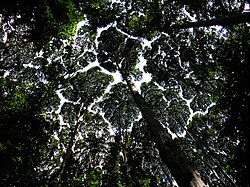
The canopy is a continuous cover of foliage formed by treetops typically 30 to 45 meters tall. This is the most biodiverse region of the forest, housing an estimated 50% of all plant species and 25% of all insect species. Scientists use dendronautics—the science of accessing the canopy via airships, cranes, or walkways—to study this "continent of life."
The Understory and Forest Floor
Below the canopy lies the understory and the forest floor, where limited sunlight reaches the ground, creating a unique environment for shade-tolerant plants and ground-dwelling fauna.
Human Connection and Indigenous Peoples
Rainforests are home to numerous indigenous groups, some of whom remain uncontacted. Brazil has the highest number of uncontacted tribes, with 67 confirmed as of 2007, followed by West Papua in New Guinea with approximately 44 groups. In Central Africa, the Mbuti pygmies live as hunter-gatherers, while Southeast Asia is home to the Negrito peoples. In Sarawak, Borneo, various tribes collectively known as Dayaks or Orangulu ("people of the interior") inhabit the forest.
The Crisis of Deforestation
Throughout the 20th century, rainforests have suffered from legal and illegal logging for hardwoods and agricultural expansion via clearcutting and slash-and-burn techniques. The scale of loss is staggering: nearly 90% of West Africa's rainforests are gone, and Madagascar has lost two-thirds of its original cover.
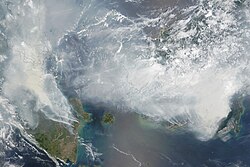
In Indonesia and Malaysia, the expansion of oil palm plantations to meet the demand for biofuels and vegetable fats is a primary driver of destruction. Some biologists, including E.O. Wilson, have warned that habitat loss could drive over 50,000 species to extinction annually. However, some reports suggest a glimmer of hope, noting that secondary forests and degraded forests are regrowing in some tropical areas.
Rainforest Summary Table
| Type | Typical Climate | Key Characteristics | Example Locations |
|---|---|---|---|
| Tropical | Warm & Wet (>18°C) | Closed canopy, high rainfall (>168cm) | Amazon, Congo Basin |
| Temperate | Cool & Moist | High moisture, cooler temperatures | Pacific Rim, Canada |
| Dry | Seasonal/Lower Rainfall | Open canopy, sclerophylly, rain-shadows | Australia |
Frequently Asked Questions
What is the difference between a tropical and a temperate rainforest?
Tropical rainforests are found near the equator with consistently warm temperatures and high rainfall year-round. Temperate rainforests occur in cooler climates, typically in coastal regions, while still receiving significant moisture.
What is dendronautics?
Dendronautics is the scientific practice of accessing and studying the tropical forest canopy using aerial platforms such as airships, balloons, or specialized cranes.
Why are rainforests called the "world's largest pharmacy"?
They earned this nickname because more than 25% of all natural medicines used in healthcare were discovered from plants found in tropical rainforests.
What is causing the rapid loss of rainforests in Indonesia?
A major driver of deforestation in Indonesia is the expansion of oil palm plantations to satisfy the global demand for cheap biofuels and vegetable fats.
How many uncontacted tribes live in the rainforests?
As of 2007, Brazil reported 67 uncontacted tribes, and West Papua (New Guinea) is home to an estimated 44 uncontacted tribal groups.