Radical Civic Union
The Radical Civic Union (Spanish: Unión Cívica Radical, abbreviated as UCR) is a cornerstone of Argentine political history. Founded on June 26, 1891, it stands as the second oldest active political party in Argentina. Historically rooted in the support of the middle class, the UCR has navigated over a century of democratic transitions, military coups, and ideological shifts to remain a central force in the nation's governance.
From its early days of armed uprisings to its role in establishing universal secret suffrage, the UCR has evolved from a revolutionary movement into a diverse political entity. Today, it operates as a center-positioned party with affiliations including the Socialist International and COPPPAL.
Key Facts
- Founded: June 26, 1891, by Leandro N. Alem.
- Political Position: Centre.
- Ideologies: Radicalism, social liberalism, liberalism, social democracy, and conservative liberalism.
- Membership: 1,816,169 members as of 2023 (the second largest in Argentina).
- International Affiliations: Socialist International (since 1995) and COPPPAL.
- Current Leadership: President Martín Lousteau and Vice President Olga Inés Brizuela y Doria.
The Path to Power: The Yrigoyen Era
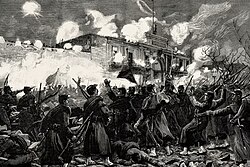
The early 20th century was defined by the leadership of Hipólito Yrigoyen, who sought to dismantle the "predictable vote"—a system where votes were cast verbally or via public tickets, leaving voters vulnerable to external pressure. In 1905, Yrigoyen led an armed uprising known as the Revolution of 1905. While it did not immediately seize power, it created a critical political breakdown that paved the way for reform.
A pivotal moment occurred in 1912 with the passage of the Sáenz Peña Law. This legislation established universal, secret, and obligatory voting for men, effectively ending the era of public voting booths and ensuring the independence of the voter. Although the UCR proposed women's suffrage as early as 1919, it was not passed at the time due to a conservative congressional majority.
The first presidential election using the secret ballot took place on April 2, 1916. The UCR emerged victorious, initiating a 14-year cycle of radical governance. This period saw the presidencies of Hipólito Yrigoyen (1916–1922), Marcelo T. de Alvear (1922–1928), and Yrigoyen once more (1928–1930), until a military coup ousted Yrigoyen during the economic crisis of the Great Depression.
Political Turbulence and Mid-Century Governance
Between 1930 and 1958, the UCR served primarily as the main opposition party, facing off against military regimes and the rising Peronist movement. The party experienced several fractures, leading to the creation of different factions. In 1958, the Intransigent Radical Civic Union, led by Arturo Frondizi, returned to power through an alliance with banned Peronists. However, Frondizi was ousted by the army in 1962.
In 1963, Arturo Illia of the People's Radical Civic Union won the presidency. Despite achieving significant economic success, Illia's perceived "slow" and "boring" governing style led to his removal by the military in 1966.
The 1970s marked a shift in the rivalry between the UCR and Peronism. UCR leader Ricardo Balbín famously signaled the end of this long-standing conflict by saluting the coffin of Juan Perón in 1974, stating, "This old adversary salutes a great friend."
Modern Era and Coalition Politics
The UCR returned to the presidency under Raúl Alfonsín (1983–1989) following the end of military rule, and later under Fernando de la Rúa (1999–2001). The latter's presidency ended in a crisis that left the party fragmented. In the following decades, the UCR shifted its alignment to counter the leftward move of the Justicialist Party under Néstor and Cristina Kirchner.
From 2015 to 2023, the UCR was a key member of the center-right Cambiemos (later Juntos por el Cambio) coalition, supporting Mauricio Macri. This alliance caused friction with the Socialist International, leading to the suspension of the party's youth wing, Juventud Radical, from the International Union of Socialist Youth. Following the dissolution of Juntos por el Cambio in 2023, the UCR currently operates independently, generally opposing the Milei administration while negotiating specific reform bills.
Party Structure and Ideology
The UCR is characterized by a wide ideological spectrum. While figures like Ricardo Balbín represented the conservative wing, Fernando de la Rúa introduced neoliberal elements, famously asserting, "we are radicals, not socialists." The party maintains a robust organizational structure, including the Alem Foundation (think tank) and Franja Morada (student wing).
| Category | Details |
|---|---|
| Headquarters | Adolfo Alsina 1786, Buenos Aires, Argentina |
| Current President | Martín Lousteau |
| Legislative Presence | 7 Deputies / 10 Senators |
| Executive Presence | 5 Governors (out of 24) |
| Colors & Anthem | Red and White; "Marcha Radical" |
Frequently Asked Questions
Who founded the Radical Civic Union?
The party was founded on June 26, 1891, by Leandro N. Alem after splitting from the Civic Union.
What was the significance of the Sáenz Peña Law?
Passed in 1912, the Sáenz Peña Law established the secret, obligatory, and universal (for men) vote in Argentina, ending the "predictable vote" system and allowing the UCR to win the 1916 presidency.
Which presidents belonged to the UCR?
The UCR has held the presidency seven times through Hipólito Yrigoyen, Marcelo Torcuato de Alvear, Arturo Frondizi, Arturo Illia, Raúl Alfonsín, and Fernando de la Rúa.
What is the current political status of the UCR?
As of 2023, the UCR is not part of any formal coalition following the dissolution of Juntos por el Cambio. It generally maintains an opposition stance toward the Milei administration.
What is the party's international affiliation?
The UCR has been a member of the Socialist International since 1995 and is also affiliated with COPPPAL.