Radical Centrism in Global Politics: Movements and Leaders
In an era of deepening political polarization, radical centrism has emerged as a distinct approach to governance. Unlike traditional moderation, which often seeks a middle-ground compromise between two opposing sides, radical centrism seeks to transcend the left-right axis entirely. It aims to synthesize the best elements of various ideologies to create bold, evidence-based solutions to systemic problems.
From the presidential palaces of Europe to grassroots movements in Australia and the United States, radical centrists argue that the most effective way to achieve progress is not through incremental change, but through a fundamental restructuring of political thought based on first principles rather than partisan loyalty.
Key Facts
- Definition: A political philosophy that rejects the traditional left-right divide in favor of synthesizing effective ideas from both sides to achieve radical systemic change.
- Global Reach: Observed in diverse political landscapes including France, Canada, South Korea, Brazil, and the United States.
- Core Goal: To move beyond "mere symbolism" or "fine-tuning" toward evidence-based, structural reforms.
- Common Themes: Emphasis on fiscal prudence combined with social tolerance, environmentalism, and the rejection of statism.
Radical Centrism in Europe
Europe has seen some of the most prominent examples of radical centrism reaching the highest levels of government. In France, Emmanuel Macron is frequently cited as a primary example. His movement, En Marche! (meaning "forward"), embodies a synthesis of market-driven economics and collective solidarity, positioning itself as "neither left nor right."

In Spain, Albert Rivera and the Ciudadanos party adopted a similar stance, advocating for courageous changes backed by data and technical expertise rather than populist rhetoric. While Rivera eventually resigned as leader after the party's influence waned, his approach mirrored Macron's attempt to break the established bipartisan deadlock.
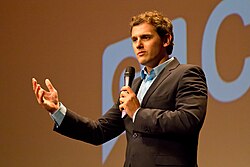
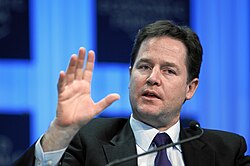
The United Kingdom has also engaged with these concepts. Nick Clegg described the Liberal Democrats as radical centrists during the 2010-2015 coalition government, rejecting paternalism and narrow egalitarianism. More recently, former Prime Minister Tony Blair suggested that radical centrism is the most viable strategy for governing in the age of AI, where technological and geopolitical shifts require radical policy changes rather than minor adjustments.
Other European Developments
- Germany: The Green party of 2018 has been viewed as attracting a socio-liberal, pro-European constituency alienated by larger power-sharing parties.
- Netherlands: The D66 party is often seen as radical centrist, while former minister Aart Jan de Geus once urged the Christian Democratic Appeal (CDA) to adopt a similar "radicale midden" (radical middle) approach.
- Italy: The concept of "parallel convergence" promoted by Aldo Moro—seeking a convergence of interests between the Christian Democrats and Communists without erasing their identities—is seen as a precursor to modern radical centrism.
The Americas: From Canada to Brazil
In Canada, former Prime Minister Pierre Elliott Trudeau claimed his Liberal Party adhered to the radical centre in the late 1970s, suggesting that the state must sometimes be fought against to achieve true progress.
In Brazil, Marina Silva was identified as an emerging radical centrist leader in the late 2010s. Her platform combined environmentalism, liberalism, and "clean politics," moving away from her earlier roots in the left-wing Workers' Party.

Chile's Andrés Velasco also represents this trend, promoting a philosophy that is both liberal and egalitarian. Drawing on the ideas of Amartya Sen and John Rawls, Velasco emphasizes the absence of domination and equal treatment over simple state redistribution.
Radical Centrism in the United States
The U.S. experience with radical centrism has often manifested through independent candidates and non-partisan organizations. Ross Perot's 1992 campaign is frequently cited as an early national example, as he focused on balancing the budget and challenged partisan extremes.
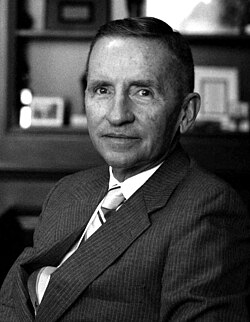
During the 1990s, independent governors like Jesse Ventura pioneered a blend of fiscal prudence and social tolerance. This "maverick" style continued into the 2000s with figures like Michael Bloomberg and Arnold Schwarzenegger, who were celebrated for bypassing partisanship to achieve results.
![Political independent Jesse Ventura was elected Governor of Minnesota in 1998.[59]](/images/3b/ca/3bcabfa88a6ab7a68add2e4b436630f42924ba2a86561d40d5a705f2debd369b.jpg)
In recent years, the movement has shifted toward organized efforts to reduce polarization. The No Labels organization focuses on "Problem Solvers" who can bridge the divide, while Andrew Yang's Forward Party explicitly provides a home for those identifying as radical centrists.

Global Perspectives: Asia and Oceania
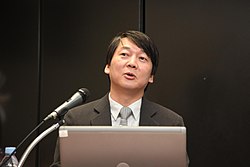
In South Korea, the concept of jungdogaehyeok (centrist reformism) mirrors radical centrism. Politician Ahn Cheol-soo has explicitly identified as a radical centrist, and several parties since 2016 have adopted the reformist centrist label.
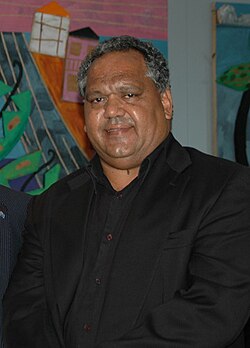
In Australia, lawyer Noel Pearson applied radical centrism to Indigenous issues. He sought a synthesis between the need for state assistance and the importance of individual responsibility. This approach informed the development of the Indigenous Voice to Parliament, which attempted to balance structural reform with the preservation of parliamentary sovereignty.
Other notable mentions include Nikol Pashinyan of Armenia, whose Civil Contract party won a supermajority in 2021, and the Opportunities Party (TOP) in New Zealand, which advocates for evidence-based policies such as a universal basic income and cannabis legalization.
Summary of Global Radical Centrist Movements
| Region | Key Figure/Party | Core Focus/Approach |
|---|---|---|
| France | Emmanuel Macron / En Marche! | Synthesis of markets and collective solidarity. |
| USA | Andrew Yang / Forward Party | Reducing polarization; evidence-based policy. |
| Australia | Noel Pearson | Indigenous reform via state aid and individual responsibility. |
| South Korea | Ahn Cheol-soo | Centrist reformism (jungdogaehyeok). |
| New Zealand | Opportunities Party (TOP) | Evidence-based policy (e.g., Universal Basic Income). |
| Brazil | Marina Silva | Environmentalism and "clean politics." |
Frequently Asked Questions
How does radical centrism differ from traditional moderation?
Traditional moderation typically seeks a compromise or a middle point between two existing poles. Radical centrism, however, seeks to transcend those poles entirely, using first principles and evidence to create new, often bold solutions that may take elements from both the left and the right.
Who are some of the most prominent radical centrist leaders?
Prominent figures include French President Emmanuel Macron, former UK Deputy Prime Minister Nick Clegg, and former Canadian Prime Minister Pierre Trudeau, as well as various independent leaders like Andrew Yang in the United States.
What is the goal of the Forward Party in the U.S.?
Founded by Andrew Yang, the Forward Party aims to provide a political home for radical centrists and focuses on reducing political polarization to implement more effective governance.
How has radical centrism been applied to Indigenous rights in Australia?
Noel Pearson used radical centrism to argue for a balance between structural state support for Aboriginal and Torres Strait Islander peoples and a push for individual responsibility, aiming to move the debate beyond traditional partisan divides.
Is radical centrism the same as the "Third Way"?
While similar, some observers, such as Dave Anderson, argue that radical centrism transcends the "Third Way" politics of the US and UK by taking more significant, transformative elements from both sides of the spectrum rather than just seeking a moderate center.