Race to the Sea: The Strategic Struggle of 1914
The Race to the Sea was a series of flanking maneuvers conducted by the Allied and German armies between September 17 and October 19, 1914. Occurring in the aftermath of the First Battle of the Marne, this strategic struggle saw both sides attempting to outmaneuver the other to the north, eventually extending the front line from the Swiss border to the North Sea coast in France and Belgium.
This period marked a critical transition in the First World War, as the war of movement evolved into the static, grueling reality of trench warfare. The result of these maneuvers was ultimately indecisive, leaving both sides locked in a stalemate that would define the Western Front for years to come.
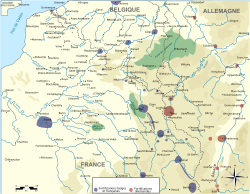
Key Facts
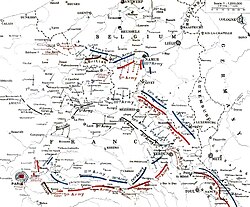
- Date: 17 September – 19 October 1914.
- Location: France and north-west Belgium.
- Belligerents: Germany vs. Belgium, France, and the United Kingdom.
- Outcome: Indecisive; resulted in a continuous line of trenches to the coast.
- Key Commanders: Joseph Joffre (France), John French (UK), Albert I (Belgium), and Erich von Falkenhayn (Germany).
The Road to the Race: Early 1914 Operations
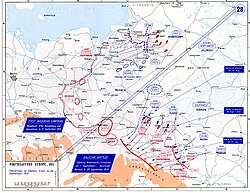
The Battle of the Frontiers
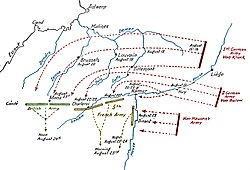
Before the Race to the Sea began, the conflict was defined by the Battle of the Frontiers (August 7 – September 13). This phase consisted of encounter battles along the German-French border and in southern Belgium. Early French offensives, such as the Battle of Mulhouse and the Battle of Lorraine, were initially successful but were eventually repulsed by German counter-attacks.
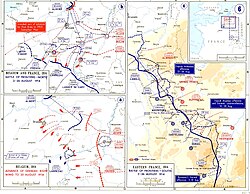
Simultaneously, Germany invaded Belgium, occupying Liège on August 7. The Belgian army fought a delaying action, retreating toward Antwerp, while the British Expeditionary Force (BEF) landed in France to support the Allies. The BEF fought a significant delaying action at the Battle of Mons on August 23 to protect the flank of the French Fifth Army.
The Great Retreat and the Marne
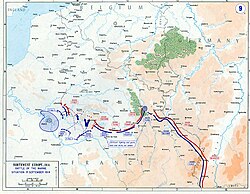
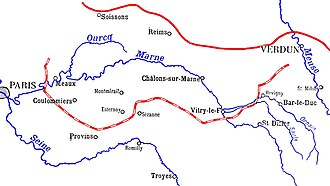
Following defeats at Charleroi and Mons, the Allied forces underwent the Great Retreat (August 24 – September 5). This retreat culminated in the First Battle of the Marne, where the Allies halted the German advance. However, the victory was not absolute; the Germans retreated to the high ground of the Aisne river, where they began to dig in, creating a stalemate.
The Mechanics of the Race to the Sea
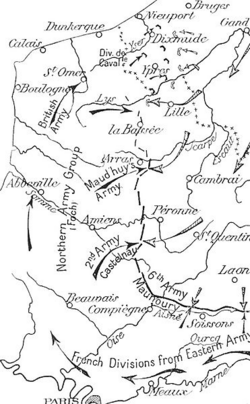
By mid-September, the front had stabilized along the Aisne. Both the French and German commands sought to break this deadlock by attempting to turn the enemy's flank—essentially trying to get around the end of the opponent's line to attack from the side or rear.
First Phase: Picardy and Albert
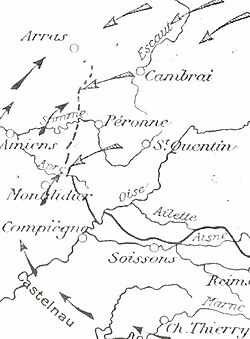
From September 22 to 26, the French Sixth Army advanced along the Oise. However, bad weather grounded reconnaissance aircraft, leaving commanders blind to German movements. By September 25, the Battle of Albert ensued, where French forces defended the approaches to the town against the German II Bavarian and XIV Reserve corps. By September 28, the French had stopped the German advance on a line from Maricourt to Thiepval.
Second Phase: The Struggle for Arras
In early October, the focus shifted toward Arras. The German 6th Army attempted to envelop the French around the north side of the city. The French responded by reinforcing the area with the X Corps and creating a new Tenth Army. Intense fighting continued as both sides pushed northwards, each trying to seize the last remaining open ground.
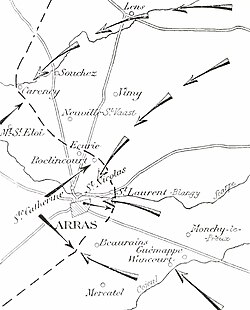
Third Phase: La Bassée and Messines
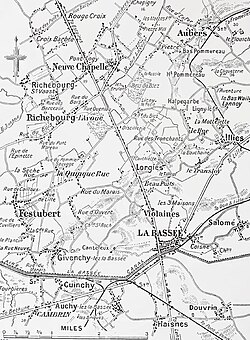
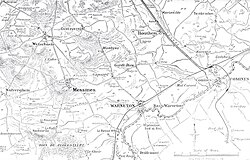
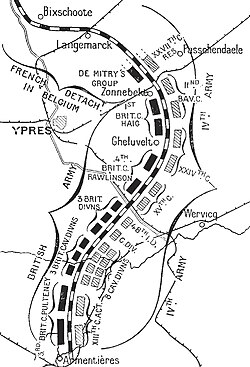
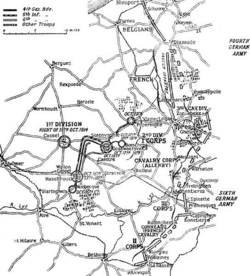
By mid-October, the conflict reached the Belgian border. The German 6th Army captured Lille, and the 4th Army attacked the British flank at Ypres. The BEF arrived by rail at Abbeville and advanced toward Béthune, engaging in the Battle of La Bassée. Meanwhile, the Battle of Messines saw the BEF and French cavalry fighting to secure the Lys river and the Comines canal.
The Conclusion: Flanders and the Yser
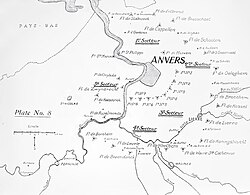
The "race" effectively ended when the armies reached the coast, where there was no more room to flank. The Belgian army retreated to the Yser river, where they held a 15 km front from the coast southwards. This was supported by the BEF and the French Tenth Army.
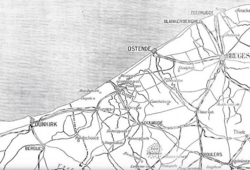
The final stage of this period was the First Battle of Ypres (October 19 – November 22). The German 4th and 6th armies launched massive attacks against the BEF and French forces. Despite unprecedented bombardments and the attack of the Prussian Guard, the Allies held their positions, though at a staggering cost in manpower.
Casualties and Impact
The human cost of these early months was immense. By the end of the battles at Ypres, German casualties in the west reached 800,000, including 116,000 dead. The French suffered 454,000 casualties by the end of the year. The Belgian army was particularly hard hit, with approximately 50% of its force becoming casualties.
| Month (1914) | Losses |
|---|---|
| August | 14,409 |
| September | 15,189 |
| October | 30,192 |
| November | 24,785 |
| December | 11,079 |
| Total | 95,654 |
Frequently Asked Questions
What was the primary goal of the Race to the Sea?
The primary goal for both the Allied and German armies was to outflank the opponent. By moving northwards, each side hoped to find the open end of the enemy's line and swing around it to achieve a decisive victory and avoid the stalemate of frontal assaults.
Why is it called a "race"?
It is called a "race" because both sides were simultaneously attempting to reach the coast of the North Sea first to secure the flank of their armies and potentially capture key ports like Dunkirk and Calais.
Did anyone actually win the Race to the Sea?
The result was indecisive. Neither side managed to successfully envelop the other. Instead, they simply extended the front line until it hit the sea, resulting in a continuous line of trenches from Switzerland to the Belgian coast.
How did this lead to trench warfare?
As the armies ran out of room to maneuver and the firepower of modern rifles and artillery made open-field advances suicidal, soldiers began digging in for protection. What started as temporary shelters became a permanent system of fortifications.
What role did the BEF play in these operations?
The British Expeditionary Force (BEF) provided critical support on the western flank. They fought key delaying actions at Mons and later played a central role in defending Ypres, preventing a German breakthrough to the Channel ports.