Schlieffen Plan: The Controversial Strategy of Germany's 1914 Invasion
The Schlieffen Plan refers to the series of German war plans developed before World War I, heavily influenced by Field Marshal Alfred von Schlieffen. Designed to avoid the nightmare of a prolonged two-front war, the strategy aimed for a decisive, war-winning offensive against France before turning the full might of the German army toward Russia. Executed on August 7, 1914, the plan would become one of the most debated military strategies in history.
At its core, the plan sought to bypass the heavy French frontier fortifications by invading through the Netherlands, Luxembourg, and Belgium. By utilizing a massive right-wing flanking movement, Germany hoped to envelop the French army and force a quick surrender, thereby preventing a stalemate of attrition.
Key Facts
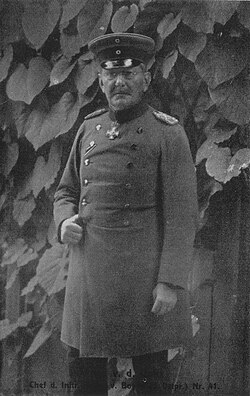
- Primary Architect: Alfred von Schlieffen, Chief of the General Staff (1891–1906).
- Execution Date: Began August 7, 1914, under Helmuth von Moltke the Younger.
- Core Objective: A decisive victory over France via a northern flanking maneuver through neutral Belgium.
- Casualties: Approximately 305,000 during the initial execution phase.
- Outcome: Failed to achieve a quick victory, leading to the First Battle of the Marne and four years of trench warfare.
Strategic Foundations and Evolution
From Prostration to Destruction
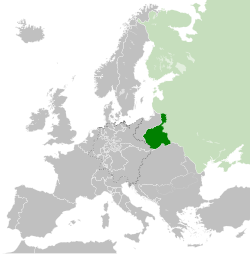
German military thinking evolved from the cautious Kabinettskriege (cabinet wars) to Vernichtungsstrategie (destruction strategy), a policy seeking a decisive victory to completely prostrate the enemy. This shift was inspired by the rapid successes of the Austro-Prussian War (1866) and the Franco-Prussian War (1870).
The Influence of the Franco-Prussian War
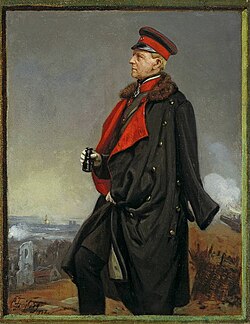
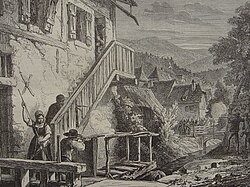
During the Franco-Prussian War, Moltke the Elder observed that French patriotism could lead to a total national effort. This led to the concept of Volkskrieg (people's war), where the civilian population becomes involved in the conflict. By December 1870, Moltke the Elder had even contemplated an Exterminationskrieg to destroy remaining French resources, though this was curtailed by civilian authorities seeking a quick peace.
Schlieffen's Deployment Logic
Between 1892 and 1906, Alfred von Schlieffen grappled with the challenge of fighting France and Russia simultaneously. He realized that attacking French frontier fortifications head-on would be too slow. By 1905, following Russia's defeat in the Russo-Japanese War (the Battle of Mukden), Schlieffen believed the Russian army was weakened and would not mobilize quickly.
This allowed him to propose a plan where the bulk of the German army would assemble in the west, with a powerful northern wing swinging through Belgium to envelop France. However, modern research suggests Schlieffen's 1905 memorandum was specifically for a war against France alone, rather than a guaranteed solution for a two-front war.
Execution and the 1914 Campaign
Moltke the Younger and Plan XVII
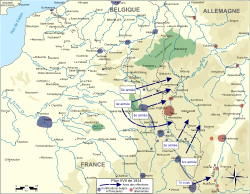
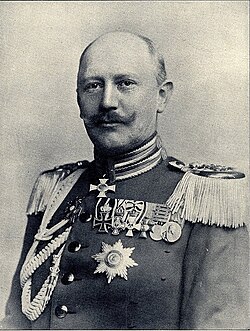
Helmuth von Moltke the Younger succeeded Schlieffen in 1906. By 1914, he faced a revived Russian military power, making a quick victory in the west an absolute necessity. Simultaneously, France had developed Plan XVII, which anticipated a German concentration on the Franco-German border and focused on a French offensive into Alsace-Lorraine.
The Battle of the Frontiers
The execution of the German plan led to the Battle of the Frontiers in August 1914. Key engagements included:
- Battle of Mulhouse: August 7–10
- Battle of Lorraine: August 14–25
- Battle of the Ardennes: August 21–23
- Battle of Charleroi: August 21–23
- Battle of Mons: August 23–24
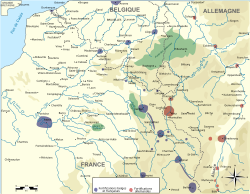
Despite initial gains, the offensive stalled at the First Battle of the Marne (September 5–12, 1914), leading to Moltke the Younger's dismissal and the collapse of the plan's objective for a quick victory.
!["Western Front 1914; Schlieffen Plan of 1905. French Plan XVII" (USMA) "...a mishmash...." and "An armchair strategist's dream....", according to Terry Zuber (2011)[65]](/images/39/e2/39e297cd1fc805f91ec617114e4a87f5e404b756742b8d068c02e1aeabca9f1f.jpg)
Historical Debates and Revisions
The Post-War Narrative
After the war, official German historians from the Reichsarchiv claimed that Schlieffen's original blueprint was perfect and that Moltke the Younger had ruined it through timidity and tampering. This narrative served to shift blame away from the strategy itself.
The Delbrück Critique
Historian Hans Delbrück challenged this, arguing that the General Staff used the wrong plan entirely. He suggested Germany should have defended in the west and attacked in the east, avoiding the breach of Belgian neutrality and potentially securing a negotiated peace.
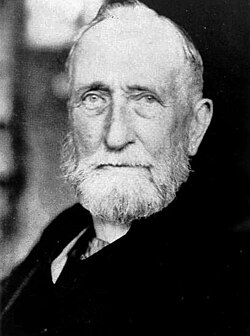
Modern Interpretations
Recent scholarship, including work by Terence Holmes and Martin van Creveld, suggests the "Schlieffen Plan" as a rigid, six-week blueprint is largely a myth. Evidence from the 1940s and 2000s indicates that Schlieffen's writings were often tactical rather than strategic, and that the 1914 operations were a result of Moltke the Younger's own adaptations to the geopolitical realities of the time.
| Perspective | Core Argument | View on Failure |
|---|---|---|
| Reichsarchiv | The plan was a blueprint for victory. | Moltke the Younger's poor execution. |
| Hans Delbrück | The plan was fundamentally flawed. | Wrong strategic focus (West vs. East). |
| Terence Holmes | The "Plan" is a post-war construct. | Misinterpretation of Schlieffen's memos. |
| Humphries & Maker | Based on tradition of decisive battle. | Failure to achieve envelopment in 40 days. |
Frequently Asked Questions
What was the primary goal of the Schlieffen Plan?
The primary goal was to avoid a two-front war by achieving a rapid, decisive victory over France through a massive flanking maneuver through Belgium and the Netherlands, allowing Germany to then shift its forces to the Eastern Front to face Russia.
Why did the plan fail?
The plan failed to achieve the necessary speed and envelopment of the French army, culminating in the First Battle of the Marne, which halted the German advance and led to a prolonged war of attrition.
How did Plan XVII differ from the Schlieffen Plan?
Plan XVII was the French deployment plan which expected the Germans to concentrate on the common border. It focused on a French offensive into the lost territories of Alsace-Lorraine, rather than anticipating the German sweep through Belgium.
Was Alfred von Schlieffen responsible for the 1914 failure?
While the plan bears his name, modern historians argue that the actual operations of 1914 were executed by Helmuth von Moltke the Younger, who modified the original concepts to fit the military situation of 1914.
What is Vernichtungsstrategie?
Vernichtungsstrategie, or "destruction strategy," is a military policy that seeks a single, decisive battle to completely destroy the enemy's ability to wage war, rather than engaging in a slow war of attrition.