First Battle of the Marne: The Miracle That Halted the German Advance
The First Battle of the Marne, remembered in France as the miracle de la Marne (Miracle on the Marne), was a pivotal confrontation of the First World War. Fought between September 5 and 12, 1914, this engagement fundamentally altered the course of the conflict by halting the German Empire's rapid advance into France and ending hopes of a swift victory in the West.
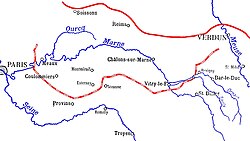
The German strategy, known as the Schlieffen Plan, aimed to win the war in just 40 days by capturing Paris and destroying the combined French and British armies. While the Germans saw early success in August—winning the Battles of Mons and the Frontiers—they were forced into a grueling pursuit of the retreating Allies. This phase, known as the Great Retreat, saw French and British forces pushed more than 250 km (160 mi) south, eventually halting in the Marne River valley just 40 km (25 miles) from Paris.
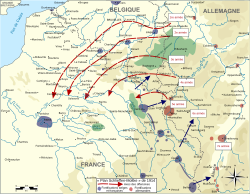
Key Facts
- Date: 5–12 September 1914
- Location: Marne River near Brasles, east of Paris, France
- Outcome: Entente victory; failure of the Schlieffen Plan
- Allied Forces: France and the United Kingdom (BEF)
- Central Powers: Germany
- Strategic Result: The German advance on Paris was repulsed, leading to the stalemate of trench warfare.
The Combatants and Forces
Germany deployed seven armies on the Western Front, with the First, Second, and Third Armies bearing the brunt of the fighting at the Marne. Initially, the First Army under Alexander von Kluck numbered 320,000 men, the Second under Karl von Bülow had 260,000, and the Third under Max von Hausen had 180,000. However, these numbers were depleted by the time they reached the Marne.
The French response was a massive mobilization. Along with the Fourth and Fifth Armies, France created the 6th Army under Joseph Gallieni to protect Paris and the 9th Army under Ferdinand Foch. By September 6, French divisions facing the German right wing had grown from 17.5 to 41, totaling over 700,000 men. They were supported by the British Expeditionary Force (BEF), which began the war with 130,000 men under General John French.
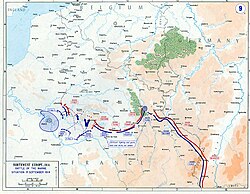
The Shift in Strength
A critical turning point occurred in August when German commander Helmuth von Moltke reduced the attacking force in France by over 200,000 men to reinforce the eastern front against Russia and besiege Antwerp and Maubeuge. Consequently, on the eve of the battle, the Allies held a significant numerical advantage between Paris and Verdun, with 980,000 French and 100,000 British soldiers facing 750,000 Germans.
The Course of the Battle
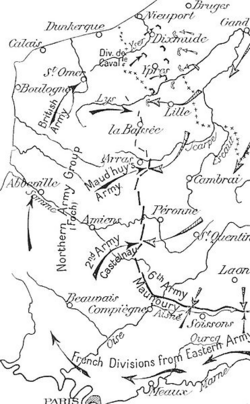
At dawn on September 6, the Allies launched a massive counterattack. The battle unfolded in two primary sectors: the French 5th and 9th Armies assaulted the German 2nd and 3rd Armies, while the French 6th Army engaged the German 1st Army north of the Marne.
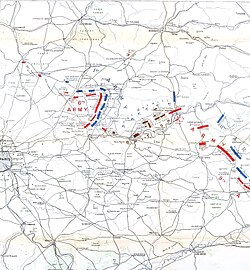
The Struggle for Paris
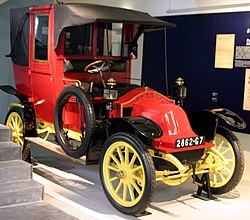
In the sector facing the German 1st Army, the arrival of 6,000 soldiers via rail, truck, and the famous taxis of the Marne is often cited as a critical moment. While some historians argue the taxis were militarily insignificant, their impact on French morale was profound.
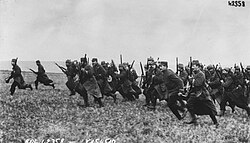
The Gap and the Allied Exploitation
Poor communication between the German armies created a vulnerability. As Karl von Kluck pushed toward Paris, a gap opened between his 1st Army and Karl von Bülow's 2nd Army. The Allies exploited this opening, sending the BEF northwest and the French 5th Army northeast.
The French 5th Army, led by Franchet d'Esperey, pinned the German 2nd Army in the Battle of the Two Morins. Meanwhile, the BEF captured bridges over the Marne and established a bridgehead. Although the BEF's advance was slower than the French desired, the combined pressure forced the German 2nd Army to withdraw.
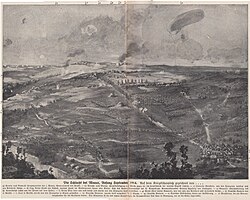
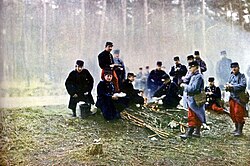
Simultaneously, Max von Hausen's 3rd Army launched a surprise night attack with bayonets against Ferdinand Foch's 9th Army, pushing them back 13 km (8.1 miles). However, the German soldiers were exhausted, and the attack eventually bogged down.
Aftermath and Strategic Analysis
The battle resulted in a tactical victory for General Joffre, who successfully redistributed troops using interior lines to reinforce the left wing. By the end of the engagement, the German advance was broken, and they were forced to retreat to the north bank of the Aisne River.
The victory ended the war of movement. Following the First Battle of the Aisne (September 13–28), both sides began to dig in, leading to the Race to the Sea—a series of attempts by both the Entente and Germany to outflank each other to the north. This movement eventually resulted in a continuous line of trenches stretching from the Swiss border to the North Sea.
Summary of Battle Statistics
| Category | Allied Forces (France & UK) | German Empire |
|---|---|---|
| Personnel Strength | ~1,080,000 | 750,000–900,000 |
| Artillery Guns | 3,000 | 3,300 |
| Estimated Casualties | ~262,733 (combined) | ~298,000 |
| Key Commanders | Joffre, Gallieni, Foch, John French | Moltke, von Kluck, von Bülow |
Frequently Asked Questions
Why is the Battle of the Marne called a "miracle"?
It is called the "Miracle on the Marne" because it unexpectedly halted the seemingly unstoppable German advance toward Paris, saving the French capital and preventing a total collapse of the French army.
What was the significance of the taxis of the Marne?
While historians debate their actual military impact, the use of taxis to transport reinforcements to the front became a powerful symbol of national mobilization and boosted French morale during a critical hour.
How did the battle affect the Schlieffen Plan?
The battle marked the definitive failure of the Schlieffen Plan. The German goal of a quick victory in the West was destroyed, forcing Germany into a prolonged two-front war against both France/Britain and Russia.
What happened immediately after the battle?
The Germans retreated to the Aisne River and began digging in. This led to the First Battle of the Aisne and the subsequent "Race to the Sea," where both sides attempted to outflank each other, eventually resulting in the stalemate of trench warfare.
Who were the primary commanders involved?
The Allies were led by General Joffre, with key roles played by Joseph Gallieni and Ferdinand Foch. The German forces were overseen by Helmuth von Moltke, with Alexander von Kluck and Karl von Bülow commanding the primary armies on the right flank.