Polymathy and the Legacy of the Renaissance Man
In an era that often demands narrow specialization, the concept of the polymath—an individual whose knowledge spans a vast array of different subjects—offers a compelling alternative. A polymath, or polyhistor, is not merely someone with a wide range of interests, but someone capable of drawing upon complex, disparate bodies of knowledge to solve specific problems. Whether explaining concepts abstractly or applying them within a specific context, polymaths embody the belief that human capacity for development is limitless.
This intellectual ideal is deeply rooted in Renaissance humanism, which encouraged individuals to develop their capacities fully across intellectual, artistic, social, physical, and spiritual dimensions. This holistic approach to achievement gave rise to the celebrated figure of the "Renaissance man."
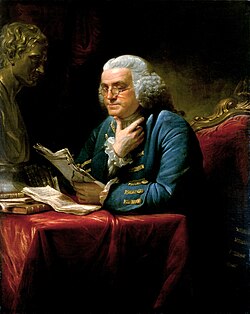
Key Facts
- Etymology: Derived from the Greek poly- (many) and manthanein (to learn).
- Renaissance Ideal: The "Renaissance man" represents a dynamic being who creates and recreates themselves through diverse expertise.
- Academic Shift: Peter Burke notes a historical shift from the 17th century onward, where the explosion of new knowledge forced scholars to move from universal mastery toward specialization.
- Creative Potential: Modern researchers like Robert Root-Bernstein argue that polymathy is a primary source of creative potential, allowing for the combination of contradictory ideas in novel ways.
- Modern Definition: Author Waqas Ahmed defines a polymath as someone who has made significant contributions to at least three different fields.
The Origins and Evolution of the Term
The linguistic roots of polymathy trace back to Ancient Greece. Plutarch referenced Polymatheia, a name for the muse Polyhymnia, describing the soul's faculty to attain and retain knowledge. In Western Europe, the formal use of the term appeared in 1603 with Johann von Wowern's De Polymathia tractatio, where he defined polymathy as the pursuit of various matters across all disciplines as far as the human mind can reach.
The term entered the English language in the early 17th century, appearing in Robert Burton's The Anatomy of Melancholy (1624), while the related term polyhistor dates back to the late 16th century.
The Archetype of the Renaissance Man
While the term "Renaissance man" only appeared in written English in the early 20th century, it describes a phenomenon from the 14th to the 17th century. During this period, the ideal gentleman or courtier was expected to be proficient in multiple languages, music, and poetry. Leonardo da Vinci remains the primary archetype of this era, characterized by an "unquenchable curiosity" and a "feverishly inventive imagination."
Today, calling someone a Renaissance man implies more than just superficial curiosity; it suggests a profound proficiency or expertise in several distinct fields.
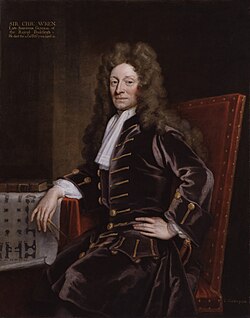
Polymathy in Modern Academia and Psychology
Contemporary research seeks to understand how polymathic thinking influences creativity and education. Robert Root-Bernstein and his colleagues challenge the idea that creativity is domain-specific, suggesting instead that the ability to integrate ideas from diverse fields is the basis of creative giftedness.
Typologies of Creative Life Stages
Root-Bernstein and Michèle Root-Bernstein identified six patterns of creative development:
- Type 1: Early specialization in one major talent exploited throughout life.
- Type 2: Early exploration of various activities before settling on one.
- Type 3: Polymathic from the start, juggling multiple simultaneous careers.
- Type 4: Early recognition in one talent, followed by diversification with age.
- Type 5: Serial devotion to one creative field after another.
- Type 6: Early development of diverse skills, explored serially over time.
Interdisciplinary Perspectives
Other scholars have explored the practical application of polymathy. Bharath Sriraman's 2009 study on pre-service mathematics teachers found that students more engaged in solving complex linguistic paradoxes displayed stronger polymathic thinking traits. Similarly, James C. Kaufman and Ronald A. Beghetto have investigated whether the potential for polymathy exists in everyone, regardless of their initial domain of expertise.
The Conflict Between Specialization and Versatility
In his 2018 book The Polymath, Waqas Ahmed argues against the "cult of specialization" born from the Industrial Revolution's production lines. He suggests that the complex problems of the 21st century require the versatility and broad perspectives that polymaths provide. According to Ahmed, studying multiple approaches fosters open-mindedness and an awareness of the limitations of one's own knowledge—a trait he identifies as the essential mark of the polymath.
| Approach | Focus | Key Characteristic | Historical Context |
|---|---|---|---|
| Polymathy | Cross-disciplinary mastery | Integration of diverse knowledge | Renaissance Humanism |
| Specialization | Deep, narrow expertise | Domain-specific proficiency | Industrial Revolution |
| Generalism | Broad overview | General approach to knowledge | Modern Professionalism |
Frequently Asked Questions
What is the difference between a polymath and a generalist?
While a generalist has a broad approach to knowledge, a polymath is typically characterized by profound knowledge or expertise in several different fields, often making significant contributions to them.
Is polymathy an innate gift or a developed skill?
While some are born with high aptitude, researchers like Waqas Ahmed argue that every human being has the potential to become a polymath because humans naturally possess multiple interests and talents.
Why did polymathy decline after the 17th century?
According to historian Peter Burke, the rapid increase in the volume of global and scientific knowledge made it increasingly difficult for a single individual to master all disciplines, leading to an "intellectual retreat" toward specialization.
How does polymathy relate to creativity?
Polymathy is seen as a primary source of creative potential because it allows individuals to combine disparate or contradictory ideas, skills, and knowledge in novel and useful ways.