George Buchanan: The Humanist Scholar Who Challenged Divine Right
George Buchanan (1506–1582) was a towering figure of the Scottish Renaissance, described by historian Keith Brown as the most profound intellectual produced by sixteenth-century Scotland. A historian, poet, and humanist scholar, Buchanan's life was a whirlwind of academic achievement, religious persecution, and political influence. He is best remembered for his daring political theories that challenged the absolute power of monarchs, ideas that would echo through centuries of political upheaval.
Buchanan's legacy is defined by his commitment to humanism—an intellectual movement focused on the study of classical Greek and Roman literature and the belief in human potential and reason. His work bridged the gap between the academic rigor of the European continent and the turbulent political landscape of Reformation-era Scotland.
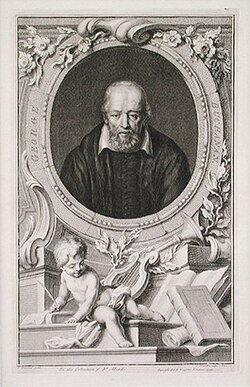
Key Facts
- Born: February 1506 in Killearn, Stirlingshire, Scotland.
- Died: September 28, 1582, in Edinburgh, Scotland.
- Major Work: De Jure Regni apud Scotos (1579), which argued that political power originates from the people.
- Political Impact: His theories on resisting tyrants influenced the deposition of King James VII in 1689.
- Academic Reach: Taught at prestigious institutions in Paris, Bordeaux, and Coimbra.
- Royal Influence: Served as the senior tutor to King James VI of Scotland.
Early Life and Academic Ascent
Buchanan's intellectual journey began in 1520 when his uncle, James Heriot, sent him to the University of Paris. In the heart of France, Buchanan was exposed to the dual forces of the Renaissance and the Reformation. After a brief return to Scotland due to illness and a short-lived stint with French auxiliaries during the siege of Wark Castle in 1523, he entered the University of St Andrews, graduating with a B.A. in 1525.
His thirst for knowledge led him back to Paris, where he earned an M.A. from Scots College in 1528. Buchanan quickly rose through the academic ranks, becoming a professor (regent) at the prestigious College of Sainte-Barbe. He gained international acclaim for reforming the teaching of Latin and was elected "Procurator of the German Nation" at the University of Paris multiple times in 1529.
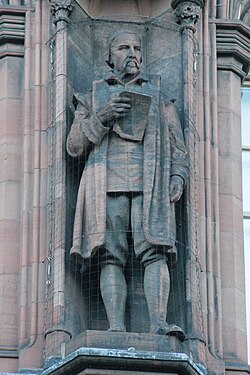
Exile, Inquisition, and Religious Struggle
The mid-16th century was a perilous time for intellectuals with unconventional views. In 1539, Buchanan was arrested during the persecution of Lutherans in Scotland. He managed to escape to London and then Paris, but the arrival of his adversary, Cardinal David Beaton, forced him to flee once more to Bordeaux. There, he served as a professor of Latin at the College of Guienne, producing major works including translations of Medea and Alcestis.
Buchanan's travels eventually took him to the University of Coimbra in Portugal in 1547. However, his tenure ended in tragedy when he was targeted by the Inquisition. Accused of Lutheran and Judaistic practices, Buchanan was imprisoned in the monastery of São Bento in Lisbon in 1551. During his captivity, he spent his leisure time translating the Psalms into Latin verse.
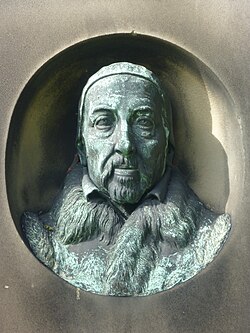
![George Buchanan, painter unknown[17]](/images/87/8a/878a3f166a7017c6f1dc3571a23146e8c2fe3966da6b1bea35ae21609ac1c979.png)
Return to Scotland and Royal Tutelage
Returning to Scotland around 1560, Buchanan transitioned from the Catholic Church to the Protestant Reformed Church. Despite his shift in faith, he maintained a complex relationship with the monarchy. Mary, Queen of Scots, admired his intellect, providing him with a yearly pension and reading Livy with him daily.
Following the assassination of Regent Moray, Buchanan was appointed as a preceptor to the young King James VI. His approach to education was rigorous; he utilized strict discipline, including regular beatings, to instill a passion for literature and a God-fearing nature in the future king. More importantly, he sought to teach James that the monarchy was limited and that a king must serve the people.
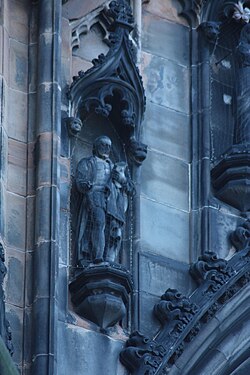
Political Philosophy and Lasting Legacy
The pinnacle of Buchanan's intellectual output was De Jure Regni apud Scotos (1579). In this treatise, he argued that the source of all political power resides with the people and that kings are bound by the conditions under which they were granted power. He asserted that it was lawful to resist, and even punish, tyrants.
These ideas were so subversive that the British legislatures and King James VI spent the following century attempting to suppress them. The work was condemned by an act of Parliament in 1584 and was publicly burned by the University of Oxford in 1664 and 1683.
Summary of George Buchanan's Life and Works
| Category | Details |
|---|---|
| Education | University of St Andrews (B.A.), University of Paris (M.A.) |
| Key Academic Posts | College of Sainte-Barbe (Paris), College of Guienne (Bordeaux), University of Coimbra (Portugal) |
| Political Theory | Popular sovereignty and the right to resist tyranny |
| Major Publications | De Jure Regni apud Scotos, Rerum Scoticarum Historia |
| Religious Affiliation | Catholic (early life), Calvinist/Protestant (later life) |
Buchanan died on September 28, 1582, and was buried in Greyfriars Kirkyard in Edinburgh.
Frequently Asked Questions
What was George Buchanan's most controversial belief?
Buchanan believed that political power comes from the people, not from a divine right, and that citizens have the legal right to resist or punish a tyrant who violates the conditions of their rule.
How did Buchanan influence King James VI?
As the King's senior tutor, Buchanan provided a strict classical education that gave James a lifelong love for learning, while simultaneously attempting to instill the belief that the monarchy should be limited.
Why was his work burned by the University of Oxford?
His writings, particularly De Jure Regni apud Scotos, were seen as dangerous and treasonous because they challenged the absolute authority of the crown and justified the deposition of monarchs.
What role did the Inquisition play in his life?
While teaching at the University of Coimbra in Portugal, Buchanan was tried by the Inquisition for Lutheran and Judaistic practices, leading to his imprisonment in Lisbon for several months.
Was George Buchanan always a Protestant?
No. For much of his early career and during his time in France and Portugal, he remained a member of the Catholic Church. He openly joined the Protestant Reformed Church after returning to Scotland around 1560.