Understanding Poales: The Powerhouse Order of Monocots
From the vast prairies of the Midwest to the tropical canopies of South America, the order Poales plays a fundamental role in Earth's ecosystems and human survival. This diverse group of flowering plants belongs to the monocots (monocotyledons), which are plants that typically produce only one seed leaf upon germination. Poales includes some of the most economically significant plants on the planet, including the grasses that provide the bulk of human caloric intake.
Key Facts
- Diversity: Contains over 23,700 species across approximately 1,017 genera.
- Core Families: Includes 14 recognized families, most notably Poaceae (grasses), Cyperaceae (sedges), and Bromeliaceae (bromeliads).
- Temporal Range: Emerged between 66 and 115 million years ago, spanning from the Late Cretaceous to the present.
- Economic Value: The most economically important order of monocots, providing global staples like wheat, rice, and maize.
- Pollination: Many species rely on wind pollination and produce seeds rich in starch.
Botanical Characteristics and Description
Plants within the Poales order generally share specific morphological traits. Their flowers are typically small and enclosed by bracts (modified leaves that protect the flower bud). These flowers are usually arranged in inflorescences, which are clusters of flowers on a single branch, although a few species in the genus Mayaca have highly reduced, single-flowered versions.
Because many Poales species are wind-pollinated, they do not require the showy petals associated with insect-pollinated plants. A defining characteristic of their seeds is the presence of starch, which makes them an ideal energy source for both the plant and the animals that consume them.
Taxonomy and Classification
Modern botanical classification follows the APG IV system (Angiosperm Phylogeny Group IV, 2016), which places Poales within a clade known as the commelinids. Currently, botanists recognize 14 families within this order:
- Poaceae: Grasses, bamboo, and reeds.
- Cyperaceae: Sedges.
- Bromeliaceae: Bromeliads.
- Eriocaulaceae: Pipewort family.
- Juncaceae: Rushes.
- Typhaceae: Cattails.
- Xyridaceae: Yellow-eyed grass family.
- Other families: Ecdeiocoleaceae, Flagellariaceae, Joinvilleaceae, Mayacaceae, Rapateaceae, Restionaceae (including Anarthriaceae and Centrolepidaceae), and Thurniaceae.
Taxonomy has evolved significantly over time. Earlier morphology-based systems, such as the Cronquist system, split these plants into several different orders, including Cyperales and Bromeliales. Other historic systems used descriptive names like Graminales or Glumiflorae to describe the grass-bearing groups.
Diversity and Distribution
The Poales order is characterized by a few highly dominant families. The Poaceae family is the largest, followed by sedges and bromeliads.
| Family Name | Common Name | Approximate Species Count |
|---|---|---|
| Poaceae | Grasses | 12,070 |
| Cyperaceae | Sedges | 5,500 |
| Bromeliaceae | Bromeliads | 3,170 |
| Eriocaulaceae | Pipeworts | 1,150 |
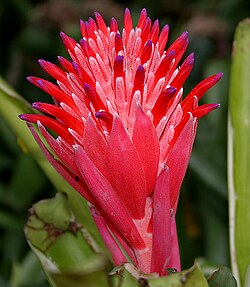
Bromeliads are often used as ornamental plants, and the order includes the internationally grown pineapple.
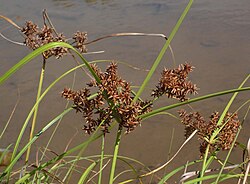
Sedges and rushes are frequently found in wetland environments, where they provide critical habitats for waterfowl.
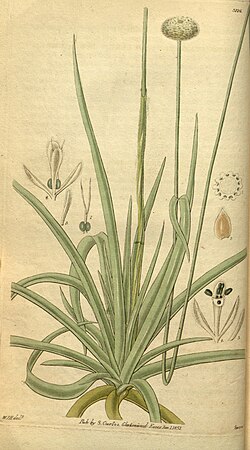
The pipewort family adds to the order's diversity in specialized habitats.
Evolutionary History
The evolutionary timeline of Poales is a subject of ongoing research. The earliest confirmed fossils, consisting of fruits and pollen, date back to the Late Cretaceous period, roughly 66 million years ago. However, some scientific studies suggest the group may have originated as far back as 115 million years ago, likely in South America.
Phylogenetic analysis using chloroplast DNA indicates that Poales is the sister group to the combination of Commelinales and Zingiberales. Researchers have identified several major lineages within the order, referred to as the bromeliad, cyperid, xyrid, graminid, and restiid clades.
Economic and Ecological Importance
Poales is arguably the most economically vital order of plants globally. The Poaceae family provides the world's primary starch staples, including common wheat (Triticum aestivum), rice, maize, barley, and millet. This family also includes sugarcane and lemongrass, as well as bamboo, which is used for both structural purposes and as a vegetable.
Ecologically, graminoids (grass-like plants) dominate open habitats such as savannas, steppes, and prairies. These plants serve as the primary forage for grazing livestock and are the foundation of most managed lawns in Western countries.
Beyond grasses, other members of the order provide essential resources. Cattails were significant pre-agricultural food sources for humans, and certain sedges, such as water chestnut (Eleocharis dulcis) and chufa (Cyperus esculentus), remain important starchy root crops in specific regions. Additionally, many wetland species are utilized in the craft of weaving chair seats.
Frequently Asked Questions
Which family in the Poales order is the most species-rich?
The Poaceae family, which includes grasses, bamboo, and reeds, is the most species-rich, with approximately 12,070 species.
When did the Poales order first appear?
While the earliest confirmed fossils date to the Late Cretaceous about 66 million years ago, some evidence suggests they may have originated nearly 115 million years ago in South America.
What are the primary economic uses of Poales?
They provide essential food staples like wheat, rice, and maize, as well as industrial materials like bamboo and sugarcane. They also include ornamental plants like bromeliads and the edible pineapple.
How are Poales flowers typically structured?
Poales flowers are generally small, enclosed by bracts, and arranged in clusters called inflorescences. Most are wind-pollinated rather than insect-pollinated.
What is the difference between the APG IV and Cronquist systems regarding Poales?
The APG IV system uses genetic data to group these plants into a single order (Poales) within the commelinid clade. The Cronquist system was based on morphology and split these plants into several separate orders, such as Cyperales and Bromeliales.