Eudicots: The True Dicotyledons of the Plant World
From the towering maples of autumn to the bright sunflowers of summer, much of the greenery we encounter daily belongs to a massive group of flowering plants known as eudicots. These plants represent over 70% of all angiosperms (flowering plants), making them one of the most successful and diverse lineages of life on Earth.
The term "eudicot" is derived from the Greek words eu (meaning true), di (meaning two), and cotyledon (meaning seed leaf). Essentially, eudicots are the "true dicotyledons," distinguished by specific biological traits that separate them from other flowering plants like monocots and magnoliids.
Key Facts
- Defining Feature: Eudicots produce pollen grains with three grooves, known as tricolpate pollen.
- Seed Structure: They possess two seed leaves, or cotyledons, upon germination.
- Diversity: They constitute more than 70% of all angiosperm species.
- Evolutionary Marker: A key genetic trait is the duplication of DELLA protein-encoding genes.
- Timeline: The lineage split from other plants between 134 and 160 million years ago.
The Science of Eudicot Identification
For a long time, botanists grouped plants simply as "dicots" if they had two seed leaves. However, in 1991, evolutionary botanist James A. Doyle and paleobotanist Carol L. Hotton introduced the term "eudicots" to highlight a more specific evolutionary divergence. They discovered that "true" dicots share a unique characteristic in their pollen.
Eudicots possess tricolpate pollen, meaning the pollen grains have three colpi—elongated apertures or grooves that run parallel to the polar axis. These apertures are critical for the plant's survival, as they serve as exit points for the pollen contents and allow the grain to shrink or swell in response to changes in moisture.
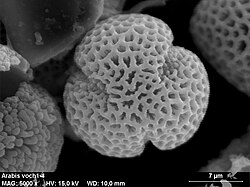
In contrast, other seed plants, such as gymnosperms and monocots, typically produce monosulcate pollen, which features only a single pore set in a groove called a sulcus.
Evolutionary History and Genetics
Molecular clock calculations suggest that the eudicot lineage diverged from other plants approximately 134 million years ago, though some estimates push this date back to between 155 and 160 million years ago. Fossil evidence confirms that basal eudicots—the earliest branches of the group—were already diverse by 121 million years ago during the Early Cretaceous period.
Beyond pollen structure, genetic research has identified a defining molecular marker for eudicots: the duplication of DELLA protein-encoding genes in their most recent common ancestor. This genetic shift helped distinguish them from the less specialized, earlier dicots.
Taxonomy and Classification
Under the Angiosperm Phylogeny Group IV (APG IV) system, eudicots are classified as a monophyletic group (a clade consisting of an ancestor and all its descendants). They are broadly divided into two main categories:
Basal Eudicots
This is an informal, paraphyletic group that includes early-diverging orders such as:
- Ranunculales
- Proteales
- Trochodendrales
- Buxales
Core Eudicots
The core eudicots are a monophyletic group that further splits into the Gunnerales and the Pentapetalae. The Pentapetalae are further divided into three major clades:
- Dilleniales
- Superrosids: Including the Saxifragales and the rosids (such as the Vitales).
- Superasterids: Including the Santalales, Berberidopsidales, Caryophyllales, and asterids.
| Feature | Eudicot Detail | Comparison/Example |
|---|---|---|
| Seed Leaves | Two cotyledons | Monocots have one |
| Pollen Type | Tricolpate (3 colpi) | Monosulcate (1 sulcus) in others |
| Genetic Marker | DELLA gene duplication | Unique to eudicot ancestor |
| Common Genera | Helianthus, Malus, Acer | Sunflower, Apple, Maple |
| Temporal Range | Early Cretaceous to present | Diverse by 121 million years ago |
Common Examples of Eudicots
Many of the world's most important agricultural and ornamental plants are eudicots. Familiar examples include:
- Edibles: Cabbage (Brassica), Apple (Malus), and Macadamia (Macadamia).
- Flowers: Sunflower (Helianthus), Dandelion (Taraxacum), and Forget-me-not (Myosotis).
- Wildflowers: Buttercup (Ranunculus).
- Trees: Maple (Acer) and most mid-latitude leafy trees.
It is important to note that not all broad-leafed trees are eudicots; for instance, magnolias and the American tulip tree (Liriodendron) belong to the magnoliids.
Frequently Asked Questions
What is the difference between a dicot and a eudicot?
While "dicot" was historically used for any plant with two seed leaves, "eudicot" refers specifically to the monophyletic group of "true" dicots that possess tricolpate pollen. This distinction separates them from more primitive flowering plants that may have two seed leaves but different pollen structures.
What are colpi in pollen grains?
Colpi are elongated apertures or furrows in the wall of a pollen grain. They allow the pollen contents to exit and enable the grain to expand or contract based on the amount of moisture in the environment.
When did eudicots first appear?
Molecular evidence suggests they split from other plants between 134 and 160 million years ago, with fossil records showing a diverse presence by approximately 121 million years ago.
Are all flowering plants eudicots?
No. While eudicots make up over 70% of angiosperms, the remaining flowering plants include monocots, magnoliids, and basal angiosperms.
Which genetic trait defines the eudicot clade?
One of the primary genetic markers for eudicots is the duplication of DELLA protein-encoding genes in their most recent common ancestor.