Understanding the Genus Poa: A Guide to Meadow-grass and Bluegrass
The genus Poa represents one of the most diverse and widespread groups of grasses in the world. Comprising approximately 570 species, these plants are native to the temperate regions of both the Northern and Southern Hemispheres. Depending on where you are in the world, you might know them by different names: in Europe and Asia, they are commonly called meadow-grass; in North America, they are often referred to as bluegrass; in New Zealand, some species are known as tussock; and others are called speargrass.
Scientific Classification and Etymology
Taxonomically, Poa belongs to the family Poaceae and the subfamily Pooideae. The name itself has ancient roots, derived from the Greek word póα, which translates to "fodder." This reflects the historical and ongoing importance of these grasses as a primary food source for grazing livestock.
Physical Characteristics and Growth Habits
Species within the Poa genus exhibit a variety of growth forms, including both annual (completing their life cycle in one year) and perennial (living for multiple years) varieties. Most species are monoecious, meaning they possess both male and female reproductive organs on a single plant, though a small number are dioecious, where male and female flowers are located on separate individual plants.
The leaves of Poa are typically narrow and can be either folded or flat. Some species may even appear bristled. A defining anatomical feature is the ligule—a thin, membranaceous (membrane-like) structure located at the junction where the leaf blade meets the sheath. The leaf apex (the tip) is often blunt or hooded.
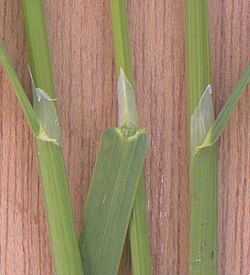
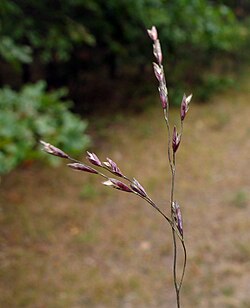
One of the most recognizable aspects of certain species is the color change in their reproductive structures. For example, in many bluegrass varieties, the leaves remain green, but the seed heads undergo a dramatic transformation. When allowed to reach their natural height of 0.6 to 0.9 meters (two to three feet), the seed heads turn a distinct blue color.
Cultivation, Uses, and Ecological Role
The Poa genus plays a vital role in both agriculture and landscaping. Many species serve as essential pasture plants for grazing animals. In the United States, Kentucky bluegrass (Poa pratensis) is a dominant cool-season grass used extensively for lawns, golf courses, and sports fields. Conversely, annual bluegrass (Poa annua) is often viewed as a weed in managed landscapes.
Historically, Poa species have been utilized for medicinal purposes. The second-century physician Galen noted that the roots of certain species were effective for treating bleeding and fresh wounds. By the sixteenth century, these grasses were also used in treatments for kidney inflammation.
Beyond human use, these grasses are an important part of the ecosystem, serving as a food source for various insects. Specifically, the caterpillars of certain Lepidoptera (moths and butterflies), such as the Common wood-nymph and the Hobomok skipper, rely on Poa as a host plant.
Key Facts
- Species Count: Approximately 570 different species.
- Global Presence: Found in temperate regions of both hemispheres.
- Etymology: The name comes from the Greek word for "fodder."
- Common Names: Meadow-grass, bluegrass, tussock, and speargrass.
- Primary Uses: Livestock pasture, lawn landscaping, and sports turf.
Summary of Notable Poa Species
| Common Name | Scientific Name | Primary Note |
|---|---|---|
| Kentucky bluegrass | Poa pratensis | Widely used for lawns and golf courses. |
| Annual bluegrass | Poa annua | Often considered a weed in gardens. |
| Rough meadow-grass | Poa trivialis | Known for its specific ligule structure. |
| Alkali bluegrass | Poa secunda | Also known as Sandberg bluegrass. |
Frequently Asked Questions
What does the name "Poa" mean?
The name is derived from the Greek word póα, which means "fodder," referring to the grass's use as animal feed.
Why is it called "bluegrass"?
While the leaves are green, the name comes from the seed heads, which turn a purplish blue when the plant reaches its full height of two to three feet.
Are all Poa species the same?
No. The genus is incredibly diverse, containing about 570 species with varying growth habits, such as annuals and perennials, and different leaf structures.
Can Poa grasses be used for medicine?
Yes. Historically, they have been used to treat bleeding and wounds, and in the sixteenth century, they were used to treat kidney inflammation.
Is Poa annua a useful grass?
While it is a member of the genus, Poa annua (annual bluegrass) is frequently categorized as a weed in many cultivated environments.