Phlox drummondii
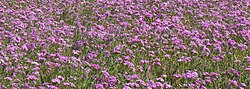
Phlox drummondii, commonly known as annual phlox or Drummond's phlox, is a striking flowering plant belonging to the genus Phlox within the Polemoniaceae family. Native to Texas and widely distributed across the southeastern United States, this plant is frequently spotted along public highways and is highly prized as an ornamental garden addition.
The species is named in honor of Thomas Drummond, a Scottish botanist. During his expedition to Texas between 1833 and 1835, Drummond collected various plant samples, including this vibrant phlox, and sent them back to Britain for study.
Key Facts
- Origin: Native to Texas; common in the southeastern US.
- Life Cycle: Annual (grows from seed every year).
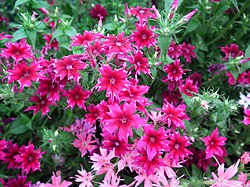
- Flower Colors: Ranges from white, cream, pink, lilac, rose, purple, and red to almost black.
- Primary Pollinator: The butterfly Battus philenor, accounting for roughly 80% of visits.
- Climate Needs: Cold-tolerant but requires significant water; sensitive to heat, wind, and drought.
Botanical Description
As an annual, Phlox drummondii completes its entire life cycle from seed to flower within a single growing season. The plant is characterized by branches featuring lengthy, ciliated (fringed with small hairs) leaves that are sharp and pointed.
The flowers are the plant's most distinctive feature. They can appear as single or double blooms with flat, star-shaped petals that emit a light scent. Upon reaching maturity, these flowers typically measure 2.5 cm (1 inch) in diameter.
Environmental Preferences and Ecology
While the plant handles cold weather effectively, it has specific moisture and environmental requirements. It thrives with plentiful watering and is susceptible to stress caused by drought, high heat, and strong winds.
Phlox drummondii plays a vital role in its local ecosystem by attracting hummingbirds and butterflies. Research indicates a strong reliance on a single pollinator species, Battus philenor, which is responsible for approximately 80% of the plant's pollinator visits.
Species Summary
| Category | Details |
|---|---|
| Scientific Name | Phlox drummondii |
| Family | Polemoniaceae |
| Order | Ericales |
| Native Range | Texas and Southeastern USA |
| Flower Diameter | 2.5 cm (1 in) |
| Growth Habit | Annual |
Frequently Asked Questions
What colors can Phlox drummondii flowers be?
The flowers exhibit a vast spectrum of colors, including white, cream, pink, lilac, rose, purple, red, and shades that appear almost black.
Is Phlox drummondii a perennial plant?
No, it is an annual plant, meaning it grows from seed each year rather than persisting through multiple seasons.
Which pollinators are most attracted to this plant?
The plant attracts hummingbirds and butterflies, with the butterfly species Battus philenor serving as the primary pollinator for about 80% of visits.
What are the ideal growing conditions for annual phlox?
It tolerates cold weather well but requires consistent and plentiful watering. It does not perform well in conditions of drought, extreme heat, or high wind.
Who is the plant named after?
It is named after Thomas Drummond, a Scottish botanist who collected the species during a Texas expedition from 1833 to 1835.