Philosophy of Mathematics: The Nature of Mathematical Existence
For centuries, thinkers have grappled with a fundamental question: do numbers, sets, and geometric shapes actually exist, or are they merely tools created by the human mind? The philosophy of mathematics seeks to answer whether mathematical entities are discovered in a pre-existing reality or invented to describe the world around us.
The Quine-Putnam Indispensability Argument
One of the most influential arguments for the existence of mathematical objects is the Quine-Putnam indispensability thesis. This argument is based on the "unreasonable effectiveness" of mathematics in the natural sciences. From the use of Hilbert spaces in quantum mechanics and differential geometry in general relativity to chaos theory and combinatorics in biology, mathematics provides more than just a predictive tool; it offers an elegant language for expressing the laws of nature.
Philosophers Willard Quine and Hilary Putnam argued that because our best scientific theories cannot function without mathematics, we must accept an ontological commitment—a philosophical acknowledgment that these mathematical entities actually exist. Their argument follows a specific logical path:
- Premise 1: We should have an ontological commitment to all and only the entities indispensable to our best scientific theories.
- Premise 2: Mathematical entities are indispensable to our best scientific theories.
- Conclusion: We should have an ontological commitment to mathematical entities.
This perspective aligns with naturalism (or predicativism), which posits that science provides the only authoritative standard for determining what exists.
Key Facts
- Platonism views mathematical objects as real, abstract entities existing independently of humans.
- Nominalism claims mathematical objects are convenient fictions or linguistic shorthand.
- Logicism attempts to reduce all mathematics to purely logical truths.
- Formalism treats mathematics as a game of symbol manipulation according to set rules.
- Constructivism requires a specific example to be "constructed" to prove an object's existence.
- Structuralism defines mathematical objects by their role within a system rather than their intrinsic nature.
Major Schools of Thought
Platonism
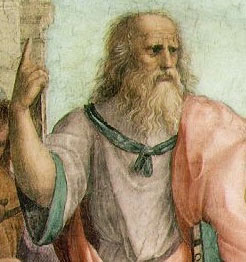
Platonism asserts that mathematical objects are abstract entities that exist in a realm independent of human thought. In this view, numbers and sets are as real as electrons or planets. Mathematicians do not invent theorems; they discover objective truths about these entities.
Notable Platonists include Plato, who posited the realm of perfect forms; Kurt Gödel, whose work in model theory influenced modern views; and Roger Penrose, who suggests mathematical truths exist in an abstract reality.
Nominalism
Nominalism is the opposite of Platonism, denying that mathematical objects have any independent existence. Instead, they are seen as symbols or "convenient fictions" used to describe relationships. Nelson Goodman argued that these objects are products of linguistic convention, while Hartry Field developed "fictionalism," suggesting mathematical statements are useful but do not correspond to actual abstract objects.
Logicism
Logicism proposes that mathematics is fundamentally a branch of logic. Proponents believe all mathematical truths can be derived from logical principles. Gottlob Frege founded this movement, though his system faced challenges like Russell's paradox. Bertrand Russell and Alfred North Whitehead later attempted to formalize this in Principia Mathematica.
However, logicism was undermined by Gödel's incompleteness theorems, which proved that any sufficiently powerful formal system cannot be both complete and consistent, meaning some mathematical truths cannot be derived purely from logic.
Formalism
Formalism treats mathematics as the manipulation of symbols according to specific rules, similar to a game like chess. It focuses on the consistency of the system rather than the existence of the objects. David Hilbert was a primary advocate, arguing that truth lies in the consistency of formal rules. Hermann Weyl also contributed significantly to these foundational ideas.
Constructivism
Constructivism rejects non-constructive proofs (proofs by contradiction). To a constructivist, proving an object exists requires actually "constructing" or finding a specific example of it. This school includes L. E. J. Brouwer, the pioneer of intuitionism, and Errett Bishop, who developed constructive analysis to prove real analysis theorems using constructivist methods.
Structuralism
Structuralism suggests that mathematical objects have no intrinsic nature; they are defined solely by their position within a structure. For example, the number "2" is defined by its relationship to other numbers in the system of arithmetic. Key figures include Paul Benacerraf and Stewart Shapiro.
Objects versus Mappings
In the philosophy of mathematics, the definition of an "object" varies. Gottlob Frege distinguished between objects (complete entities) and functions (incomplete entities that map arguments to values). While some philosophers limit "objects" to this strict definition, others include properties and relations. In modern mathematics and type theory, the term "object" is often used interchangeably with "entity" to encompass a broader range of mathematical structures.
![In mathematics, a map or mapping, is a function in the general sense; here as in the association of any of the four colored shapes in X to its color in Y.[29]](/images/8b/f4/8bf4649e7c5912f4b4e47794bed21c16619e6243d2be51a24bde70224bce4481.webp)
Summary of Mathematical Philosophies
| School of Thought | Status of Mathematical Objects | Key Approach | Notable Figures |
|---|---|---|---|
| Platonism | Real, Abstract | Discovery | Plato, Gödel, Penrose |
| Nominalism | Fictions/Symbols | Linguistic Convention | Goodman, Field |
| Logicism | Logical Objects | Reduction to Logic | Frege, Russell |
| Formalism | Symbols/Rules | System Consistency | Hilbert, Weyl |
| Constructivism | Constructed Entities | Verification/Construction | Brouwer, Bishop |
| Structuralism | Positional Roles | Systemic Relationships | Benacerraf, Shapiro |
Frequently Asked Questions
What is the main idea of the Quine-Putnam argument?
The argument suggests that because mathematics is indispensable to our most successful scientific theories, we are logically required to believe that mathematical objects actually exist.
How does Platonism differ from Nominalism?
Platonism claims mathematical objects are real and exist independently of humans, whereas Nominalism claims they are merely useful fictions or linguistic tools with no independent existence.
Why did Logicism fail to fully reduce mathematics to logic?
Logicism was primarily undermined by Gödel's incompleteness theorems, which demonstrated that some mathematical truths cannot be proven within any consistent formal logical system.
What is a non-constructive proof?
A non-constructive proof is a method of proving an object exists by showing that its non-existence would lead to a contradiction, without actually providing a specific example of the object.
What does Structuralism mean by "no intrinsic nature"?
Structuralism argues that a mathematical object (like a number) is not a "thing" with its own properties, but is instead defined entirely by its relationship and role within a larger mathematical system.