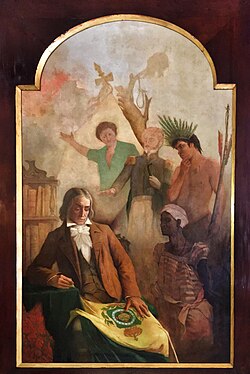
Ethnicity: Definitions, Theories, and Global Distribution
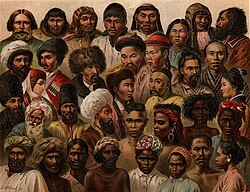
An ethnicity, or ethnic group, consists of humans who identify with one another based on perceived shared attributes. These attributes distinguish them from other groups and often include a shared language, culture, ancestry, traditions, religion, history, or common social treatment. While ethnicity is sometimes used interchangeably with terms like nation or race, it is a distinct concept; not all ethnicities identify as racial groups.
Ethnic identities are typically maintained through long-term endogamy (the practice of marrying within a specific social group). Depending on the group, genetic ancestry may be narrow or broad, and some ethnicities possess mixed genetic backgrounds.
Key Facts
- Ethnogenesis is the process by which a new, separate ethnic identity is formed.
- Africa is the most ethnically diverse continent, with over 3,000 ethnic groups.
- Ethnicity can be categorized as ethno-linguistic, ethno-national, or ethno-racial.
- Theories of ethnicity are generally split between primordialism (inherited traits) and constructivism (social constructs).
- Individuals can shift ethnic groups through assimilation, intermarriage, or religious conversion.
The Evolution of Ethnic Identity
Ethnic groups are not static. Through processes such as assimilation (adopting the traits of another group), acculturation, and language shift, individuals may move from one ethnic group to another. Conversely, ethnic groups may split into smaller subgroups or tribes due to physical isolation or endogamy.
When formerly separate ethnicities merge, they may form a panethnicity, which can eventually evolve into a single, unified ethnicity. This fluid movement between division and amalgamation is central to the study of human social organization.
Theoretical Approaches to Ethnicity
Scholars generally use two primary frameworks to understand how ethnic groups form and persist:
Primordialism
Prominent in the early 20th century, primordialists viewed ethnic groups as real, objective phenomena. In this view, the distinct characteristics of a group are seen as enduring traits that have existed since the distant past, often linked to inherited tendencies.
Constructivism
Developing more widely after the 1960s, constructivists argue that ethnic groups are social constructs. In this framework, identity is assigned by societal rules rather than biological imperatives. Influential theorist Fredrik Barth expanded this in 1969, suggesting that ethnicity is perpetually negotiated through both internal self-identification and external ascription. Barth emphasized the "interface" or boundaries between groups rather than treating cultures as isolated entities.
Terminology and Classifications
The term "ethnic group" was first recorded in 1935 and entered the Oxford English Dictionary in 1972. In the mid-20th century, it began replacing the term "race" in certain contexts to avoid associations with ideological racism. Today, ethnicity is often categorized by its primary emphasis:
- Ethno-linguistic: Focuses on shared language, dialect, or script (e.g., French Canadians).
- Ethno-national: Focuses on a shared polity or national identity (e.g., Austrians).
- Ethno-racial: Focuses on shared physical appearance based on phenotype (e.g., African Americans).
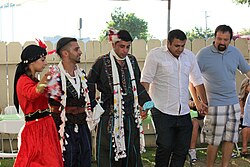
![A group of ethnic Bengalis in Dhaka, Bangladesh. The Bengalis form the third-largest ethnic group in the world, with the largest being the Han Chinese and the second largest being the Arabs.[17]](/images/82/b1/82b1d46d573e8585af9eda1dcbbcbb91afade70ba43e835257adc3065507dd55.jpg)
Global Distribution of Ethnic Groups
Ethnicity manifests differently across the globe, influenced by migration, geography, and political history.
Africa and Asia
Africa is the most linguistically and ethnically diverse continent, hosting over 3,000 ethnic groups and 2,000 languages across 54 countries. These belong to major families including Niger-Congo, Afroasiatic, Nilo-Saharan, and Khoisan.
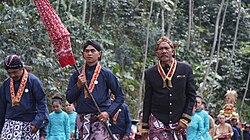
Asia also exhibits massive diversity. India alone contains more than 2,000 distinct ethnic groups, while Indonesia hosts over 600 groups spread across 17,000 islands.
Europe and the Americas
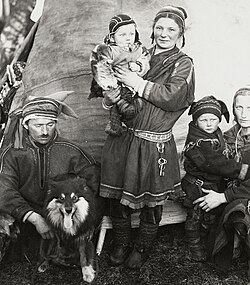
In Europe, researchers have identified 87 distinct "peoples," with 33 forming the majority in at least one sovereign state. National minority populations are estimated at 105 million people, roughly 14% of the European population.

In North America, specifically the United States, there is a growing trend toward mixed-race identities. In 2021, 13.5 million non-Hispanic Americans and 20.3 million Hispanic Americans identified as multiracial.
Oceania and Australia
Oceania features unique ethnic histories. The Rapa Nui of Easter Island are the only indigenous population on the islands politically associated with Latin America. The Pitcairn Islands are inhabited by Euronesians, descendants of British and Tahitian settlers.
In Australia, the 2016 Census noted that while England and New Zealand are the most common birth countries after Australia, the proportion of people identifying as Aboriginal or Torres Strait Islander rose to 2.8%.
Summary of Ethnic Diversity by Region
| Region | Key Diversity Metric | Notable Characteristics |
|---|---|---|
| Africa | 3,000+ ethnic groups | Most ethnically and linguistically diverse continent. |
| Asia | 2,000+ groups (India) | High concentration of groups in India and Indonesia. |
| Europe | 87 distinct peoples | 14% of population are national minorities. |
| North America | High multiracial growth | Significant increase in non-Hispanic multiracial identity. |
| Oceania | Mixed-race populations | Presence of Euronesians and Polynesian groups. |
Frequently Asked Questions
What is the difference between ethnicity and race?
While often used interchangeably, ethnicity refers to shared cultural attributes like language, religion, and ancestry. Race is more frequently associated with shared physical phenotypes. Historically, they were seen as the same, but modern social science, influenced by Max Weber, treats them as distinct concepts.
What is ethnogenesis?
Ethnogenesis is the process of the emergence of a new ethnic group. This can happen through the division of a parent group (due to isolation or endogamy) or the amalgamation of several different ethnicities into a single new identity.
What are primordialism and constructivism?
Primordialism is the theory that ethnic identity is an innate, inherited trait that remains constant over time. Constructivism is the theory that ethnicity is a social construct, created and renegotiated by societal rules and individual identification.
How do multi-ethnic states form?
Multi-ethnic states typically arise in one of two ways: either through the creation of state borders that overlap with various traditional tribal territories, or through the immigration of ethnic minorities into a previously homogenous nation-state.
What is a panethnicity?
A panethnicity occurs when formerly separate ethnic groups merge to form a broader, inclusive identity, which may eventually consolidate into a single ethnicity over time.