Phanerozoic Eon: The Era of Visible Life
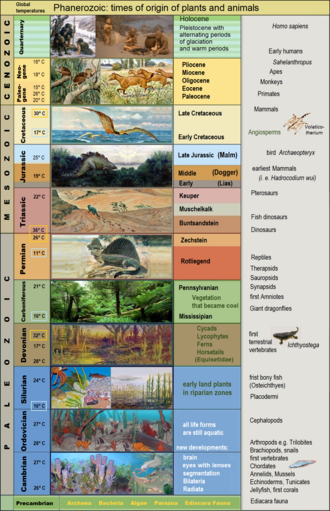
The Phanerozoic is the current geologic eon, spanning from approximately 538.8 million years ago to the present day. Its name, coined in 1930 by geologist George Halcott Chadwick, is derived from the Ancient Greek words phanerós ("visible") and zōḗ ("life"). This designation reflects a historical belief that complex life only began during this eon, though modern science has since identified earlier complex life forms in the preceding Proterozoic eon.
The transition into the Phanerozoic is marked by a shift from the largely sessile (stationary) biota of the Precambrian to the active, mobile organisms of the Cambrian. This eon is defined by the appearance of the ichnofossil Treptichnus pedum, with the official boundary ratified at the Fortune Head section in Newfoundland, Canada.
Key Facts
- Time Span: 538.8 ± 0.6 million years ago to the present.
- Etymology: Greek for "visible life."
- Boundary: Begins with the appearance of Treptichnus pedum.
- Structure: Divided into three eras: Paleozoic, Mesozoic, and Cenozoic.
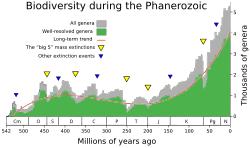
- Biodiversity: Shows a general, though non-monotonic, increase in the number of genera over time.
The Paleozoic Era
The Paleozoic Era represents the first great chapter of the Phanerozoic, characterized by the rapid diversification of life. This era includes the Cambrian, Ordovician, Silurian, Devonian, Carboniferous, and Permian periods.
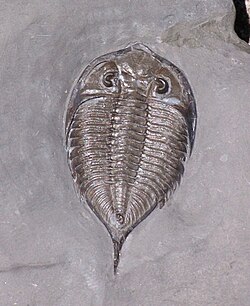
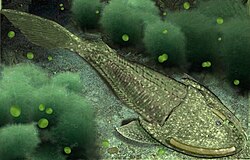
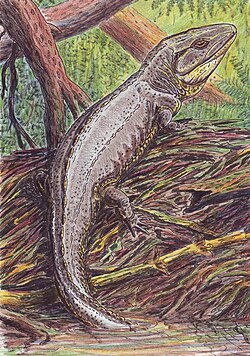
During this time, life expanded from simple marine organisms to complex creatures. Early examples include the trilobites of the Silurian and jawless fish like Cephalaspis. As the era progressed, vertebrates began to colonize land, leading to the rise of non-amniote tetrapods (amphibians) such as Proterogyrinus during the Carboniferous.
The Mesozoic Era
Known as the "Age of Reptiles," the Mesozoic Era consists of the Triassic, Jurassic, and Cretaceous periods. This era saw the rise of the dinosaurs and the continued movement of continents.
The Jurassic Period
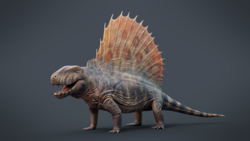
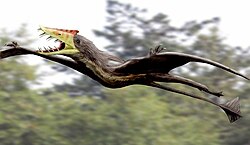
The Early Jurassic (201–174 million years ago) featured a warm, humid, and partially tropical climate. The oceans were dominated by ammonites, ichthyosaurs, and plesiosaurs, while the land was ruled by dinosaurs and pterosaurs, with Dilophosaurus serving as an apex predator. During this time, crocodylomorphs evolved into aquatic forms, nearly driving large amphibians to extinction.
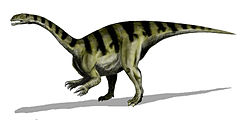
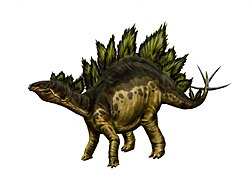
In the Middle and Late Jurassic (174–145 million years ago), conifer savannahs dominated the landscape. While plesiosaurs and ichthyosaurs flourished in the seas, the Late Jurassic saw a severe extinction of many ichthyosaurs and sauropods on northern continents.
The Cretaceous Period
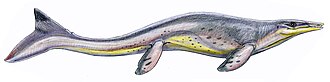
The Cretaceous continued the dominance of dinosaurs and marine reptiles, such as the large mosasaurs (e.g., Tylosaurus), before the era ended in a major extinction event.
The Cenozoic Era
The Cenozoic Era, the current era, is divided into the Paleogene, Neogene, and Quaternary periods. It is characterized by the rise of mammals and the evolution of modern ecosystems.
The Neogene Period
During the Miocene epoch (23.03–5.333 million years ago), grasses spread globally, reducing forest cover and favoring the evolution of grazers and perissodactyls. Apes diversified into 30 different species. The closure of the Tethys Sea created the Arabian Peninsula and led to the formation of the Mediterranean, Black, Red, and Caspian seas, increasing global aridity.
The Quaternary Period
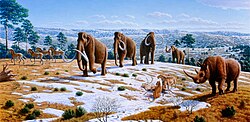
The Pleistocene epoch (2.58 million to 11,700 years ago) was defined by repeated glacial periods (ice ages). This era supported massive megafauna, including mammoths, sabre-toothed cats, and giant ground sloths. It also saw the emergence and migration of Homo sapiens out of East Africa.
The Holocene epoch began 11,700 years ago and continues today. This period encompasses all of recorded human history. Currently, scientists observe a "Sixth Extinction," a mass extinction event driven by human activities such as habitat destruction and overhunting.
Biodiversity and Planetary Change
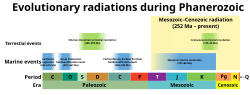
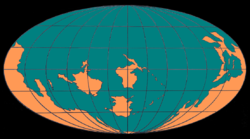
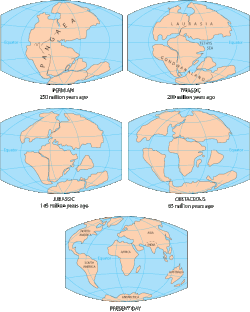
Throughout the Phanerozoic, biodiversity has generally increased from near zero to several thousand genera. This growth has not been linear, as it was interrupted by several mass extinction events. Continental drift has also played a critical role in shaping life, as landmasses shifted from their positions 500 million years ago to their current configuration.
| Era | Key Characteristics | Notable Life Forms |
|---|---|---|
| Paleozoic | Colonization of land, early diversification | Trilobites, jawless fish, early amphibians |
| Mesozoic | Age of Reptiles, warm tropical climates | Dinosaurs, Pterosaurs, Mosasaurs |
| Cenozoic | Age of Mammals, glacial cycles | Mammoths, Apes, Modern Humans |
Frequently Asked Questions
What does the word Phanerozoic mean?
The term comes from the Ancient Greek words for "visible" (phanerós) and "life" (zōḗ), referring to the abundance of visible fossils found in the rock record from this eon.
When did the Phanerozoic eon begin?
The Phanerozoic began approximately 538.8 million years ago, marked by the appearance of the trace fossil Treptichnus pedum.
What is the "Sixth Extinction"?
The Sixth Extinction refers to the ongoing mass extinction event occurring during the Holocene, primarily caused by human activities such as overhunting, the introduction of invasive species, and habitat destruction.
How did the climate change during the Jurassic?
The Early Jurassic was much more humid and warm than the preceding Triassic, creating a partially tropical world that supported vast conifer savannahs and diverse reptile populations.
What happened to the megafauna at the end of the Pleistocene?
A major extinction event wiped out much of the world's megafauna, including mammoths and several human species like Homo neanderthalensis, though Africa retained more of its large animals.