Petrobras: The Evolution of Brazil's Energy Giant
Founded on the nationalist sentiment of "The Oil is Ours," Petrobras (Petróleo Brasileiro S.A.) has grown from a state-mandated monopoly into one of the world's most significant energy corporations. Headquartered in Rio de Janeiro, the company is a cornerstone of the Brazilian economy, specializing in the exploration, production, and refining of oil and natural gas.
From its early days of limited production to pioneering deep-water extraction, Petrobras has navigated geopolitical shifts, economic crises, and corporate scandals to maintain its position as a global energy leader.
Key Facts

- Founded: October 3, 1953, by the Government of Brazil.
- Global Standing: Ranked #71 in the 2023 Fortune Global 500 and 58th in the 2023 Forbes Global 2000.
- Production Capacity: 2.99 million barrels of oil equivalent per day (2025).
- Financials (2025): Revenue of US$ 89.2 billion and net income of US$ 19.6 billion.
- Ownership: The Government of Brazil holds a 29.02% stake.
- Core Products: Petroleum, natural gas, lubricants, petrochemicals, fertilizers, and biofuels.
Historical Development
Founding and Early Growth
Petrobras was established in 1953 under President Getúlio Vargas. At its inception, Brazil's oil production was a mere 2,700 barrels per day. The company quickly expanded its infrastructure, opening the REDUC refinery near Rio de Janeiro in 1961 and the Cenpes research center in 1963. Cenpes remains one of the largest energy research hubs globally.

Technological Innovation and Expansion
The company diversified early, establishing Petroquisa in 1968 to focus on petrochemicals. It also developed Petrosix, a specialized technology for extracting oil from oil shale. By the 1990s, Petrobras was utilizing industrial-size retorts capable of processing 260 tonnes of shale per hour.
Breaking the Monopoly
For decades, Petrobras held a legal monopoly over Brazil's oil. This changed in 1997 with Law N.9.478, which introduced competition and created the Agência Nacional do Petróleo (ANP), the national petroleum agency responsible for industry regulation and supervision.
Operational Milestones and Global Reach
Deep-Water Pioneering
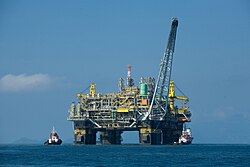
Petrobras is renowned for its expertise in deep-water exploration. In 2000, the company set a world record by reaching a depth of 1,877 meters below sea level. Its primary growth prospects currently lie in the Tupi oil field within the Santos Basin, while the Campos Basin continues to be a vital source of reserves.
International Ventures and Challenges
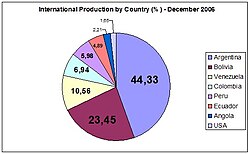
The company expanded aggressively into Latin America, acquiring PECOM Energía in 2002 for $1.18 billion. However, international operations have faced volatility. In 2006, the Bolivian government nationalized oil and gas fields, leading Petrobras to cancel major investment plans in the region.
Production and Infrastructure
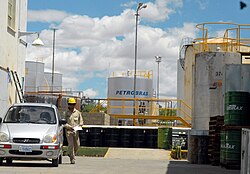
Brazil's domestic production is the company's primary engine, accounting for the vast majority of its reserves. Petrobras operates a vast network of refineries across the Northeast, Southeast, and South regions of Brazil, including the high-capacity REPLAN refinery in Paulínia.

Financial Performance and Corporate Governance
Economic Volatility
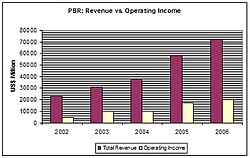
Petrobras' financial history is marked by extreme peaks and troughs. While the company achieved its highest net profit in history in 2022 (R$188.3 billion), it also faced a severe debt crisis in the mid-2010s. By November 2015, debt had reached $128 billion, largely due to fuel subsidies.
The Corruption Scandal
Between 2015 and 2016, revelations of systemic bribery involving politicians and executives sparked massive protests. This scandal led to significant legal settlements, including a $2.95 billion payment to settle a U.S. class action lawsuit in 2018 and an $853.2 million settlement with Brazilian and U.S. authorities.

Environmental Impact and Responsibility
Petrobras has faced criticism for various oil spills, with significant incidents occurring in Guanabara Bay and São Sebastião. Conversely, the company has invested in conservation, specifically sponsoring humpback whale population studies in northeast Brazil, contributing to a population increase from 2,000 in the mid-90s to over 9,000 by 2008.
| Year | Revenue (USD Billion) | EBIT (USD Billion) | Total Assets (USD Billion) | Market Cap (USD Billion) |
|---|---|---|---|---|
| 2000 | 26.95 | 9.16 | 63.08 | 13.71 |
| 2010 | 120.05 | 27.47 | 310.19 | 224.83 |
| 2020 | 53.68 | 5.54 | 174.34 | 71.83 |
| 2024 | 91.41 | 14.98 | 181.64 | 77.50 |

Frequently Asked Questions
What is the current role of the Brazilian government in Petrobras?
The Government of Brazil remains a primary owner, holding a 29.02% stake in the company.
How did Petrobras break its monopoly?
The monopoly ended in 1997 following the approval of Law N.9.478, which allowed competition in Brazilian oilfields and established the National Petroleum Agency (ANP).
What is the significance of the Tupi oil field?
The Tupi oil field in the Santos Basin is considered the largest growth prospect for the company's future production.
What caused the massive debt increase in 2015?
The company accumulated approximately $128 billion in debt, partly due to spending an estimated $40 billion to subsidize motor fuels during the 2010s.
Has Petrobras contributed to environmental conservation?
Yes, Petrobras has sponsored conservation efforts for humpback whales in northeast Brazil, helping the population grow from 2,000 to over 9,000 between the mid-1990s and 2008.