ExxonMobil: Corporate Evolution, Global Operations, and Energy Transition
ExxonMobil is one of the world's largest publicly traded energy companies, operating as a global powerhouse in the extraction, refining, and sale of hydrocarbons. Formed through the massive merger of Exxon and Mobil in 1999, the corporation traces its lineage back to the Standard Oil Company (New Jersey), founded in 1882. Today, the company is a central pillar of the global energy infrastructure, managing a vast portfolio that spans from deep-sea drilling to advanced petrochemical manufacturing.
The company operates across three primary business segments: Upstream, which focuses on the exploration and extraction of raw resources; Product Solutions, which handles the refining and chemical processing (downstream); and Low Carbon Solutions, a newer division aimed at mitigating environmental impact through emerging technologies.
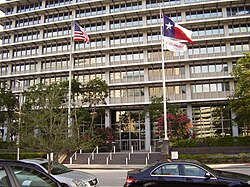
Key Facts
- Founded: November 30, 1999 (via merger); roots date back to 1882.
- Headquarters: Spring, Texas.
- 2025 Financials: Revenue of US$ 333.7 billion with a net income of US$ 28.84 billion.
- Global Footprint: Operates worldwide, with significant assets in the US, Guyana, Australia, and Papua New Guinea.
- Major Brands: Exxon, Mobil, Esso, and Federal Oil.
- Environmental Impact: Responsible for 610 Mt of CO2 emissions in 2024 (1.58% of global emissions).
Corporate History and Evolution
The identity of ExxonMobil is defined by consolidation. Originally part of the Standard Oil trust, the company evolved into the Exxon Corporation before merging with Mobil in 1999 to create the modern entity. This merger was one of the largest in corporate history, consolidating resources to better compete in a volatile global energy market.
Over the decades, the company has shifted its operational focus. While it remains a leader in traditional oil and gas, it has recently expanded into shale through the acquisition of Pioneer Natural Resources and is diversifying into minerals essential for the energy transition, such as lithium.
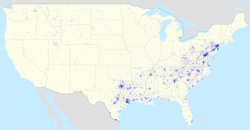
Global Operations and Business Segments
Upstream Exploration and Production
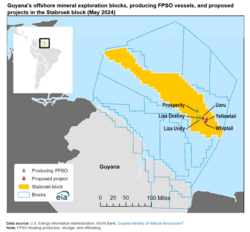
The Upstream segment is the engine of the company, involving the search for crude oil and natural gas. ExxonMobil maintains a massive global presence, with notable offshore operations in Guyana, where it exports approximately 500,000 barrels per day.
Product Solutions: Downstream and Chemicals
The Product Solutions division manages the downstream process—the refining of crude oil into usable products like gasoline, diesel, and aviation fuel—and the production of petrochemicals. This segment includes a global network of refineries and retail brands, such as the ubiquitous Exxon and Mobil gas stations.
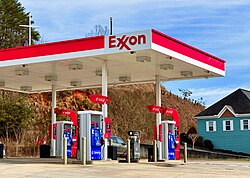
Low Carbon Solutions
In response to global climate goals, ExxonMobil established the Low Carbon Solutions business. This division focuses on carbon capture and storage (CCS)—the process of trapping carbon dioxide emissions from industrial sources and storing them underground—and lithium mining to support battery technology for electric vehicles.
Financial Performance and Market Position
ExxonMobil is a heavyweight on the New York Stock Exchange (NYSE: XOM) and a component of both the S&P 100 and S&P 500. Its financial trajectory reflects the volatility of energy prices, with a notable net loss in 2020 followed by a strong recovery in 2022, where net income peaked at US$ 55.7 billion.
| Company | Revenue (USD) | Profit (USD) | Key Brands |
|---|---|---|---|
| ExxonMobil | $286 billion | $23 billion | Mobil, Esso |
| Shell plc | $273 billion | $20 billion | Jiffy Lube, Pennzoil |
| TotalEnergies | $185 billion | $16 billion | Elf Aquitaine |
| BP | $164 billion | $7.6 billion | Amoco Aral AG |
| Chevron | $163 billion | $16 billion | Texaco, Caltex |
Controversies and Environmental Impact
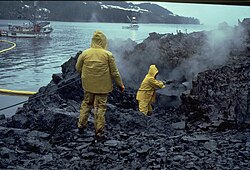
The company's scale has brought significant scrutiny. ExxonMobil has faced long-standing allegations regarding climate change denial and the environmental impact of its operations. One of the most cited disasters is the Exxon Valdez oil spill, which led to extensive cleanup efforts and lasting ecological damage.
Beyond oil spills, the company has been criticized for plastic pollution and its geopolitical influence. Activist groups, such as Extinction Rebellion, frequently demonstrate against the company's role in global carbon emissions.

Legal challenges have also targeted the company, including lawsuits regarding benzene exposure and allegations of human rights violations in Indonesia. Despite these challenges, the company has pledged to reach net-zero emissions by 2050.
Corporate Leadership
ExxonMobil is currently led by Chairman and CEO Darren Woods. The board of directors consists of seasoned professionals from various sectors, including former executives from MetLife, State Street, and Continental Airlines, ensuring a mix of financial and operational expertise to navigate the energy transition.

Frequently Asked Questions
What is the difference between Upstream and Downstream operations?
Upstream refers to the exploration and extraction of raw crude oil and natural gas. Downstream refers to the refining of those raw materials into finished products, such as gasoline and chemicals, and their subsequent sale to consumers.
How is ExxonMobil addressing climate change?
The company has created a Low Carbon Solutions division focusing on carbon capture and storage (CCS) and lithium mining, and has pledged to achieve net-zero emissions by 2050.
What was the significance of the 1999 merger?
The merger between Exxon and Mobil created one of the largest energy companies in the world, allowing for greater economies of scale and a more competitive global position in both oil production and refining.
What are some of the major brands owned by ExxonMobil?
The company operates several well-known brands, including Exxon, Mobil, Esso, and Federal Oil, as well as retail services like On the Run and Speedpass.
What is the company's current financial standing?
As of 2025, ExxonMobil reports a revenue of US$ 333.7 billion, total assets of US$ 449.0 billion, and a net income of US$ 28.84 billion.