Understanding the Petiole: The Essential Bridge of the Plant World
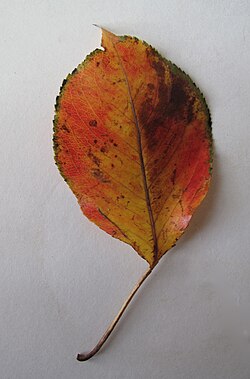
When we look at a plant, we often focus on the vibrant green of the leaves or the strength of the trunk. However, there is a small but critical structure that connects these two parts: the petiole. Commonly referred to as the leaf stalk or leaf stem, the petiole is the specialized stalk that attaches a leaf blade to the twigs, branches, or stems of a plant.
Derived from the Latin word petiolus, meaning "little foot," the petiole serves as more than just a physical connector. In many species, it acts as a dynamic tool, allowing the plant to twist its leaves to face the sun, thereby optimizing the exposure to sunlight necessary for photosynthesis.
Key Facts
- Definition: The petiole is the stalk connecting a leaf blade to the plant stem.
- Terminology: Leaves with petioles are "petiolate," while those without are "apetiolate" or "sessile."
- Movement: Some petioles contain pulvini, flexible tissues that allow the leaf to move.
- Adaptations: In some plants, petioles evolve into phyllodes, which function as the primary leaf.
- Edibility: Several common vegetables, including celery and rhubarb, are actually cultivated petioles.
Types of Leaf Attachments
Not all plants utilize petioles in the same way. Botanists categorize leaves based on the presence and length of this stalk:
- Petiolate: These leaves possess a distinct petiole. The length can vary significantly; for example, basil has a short petiole, while celery and rhubarb have very long ones.
- Sessile (Apetiolate): When a petiole is completely absent, the leaf blade attaches directly to the stem. This is seen in the broomrape family (Orobanchaceae) and certain species of the speedwell genus (Veronica).
- Subpetiolate: These leaves have an extremely short petiole, making them appear sessile at first glance.
- Pseudopetiole: In grasses (Poaceae), leaves are technically apetiolate. However, some species, such as Pseudosasa japonica, have a leaf blade that narrows at the junction with the leaf sheath, creating a "false" petiole.
Complex Structures and Specialized Adaptations
In more complex plant architectures, the petiole evolves into specialized forms to support the plant's survival and efficiency.
Compound Leaves and the Rachis
In plants with compound leaves, the main petiole extends into a continuation called the rachis. The individual leaflets are then attached to this rachis. If a leaflet has its own small stalk, that structure is known as a petiolule.
The Role of Pulvini
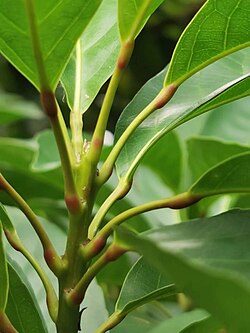
Some plants, particularly those in the bean family (Fabaceae) and the prayer plant family (Marantaceae), feature swollen regions at the ends of the petiole called pulvina (singular: pulvinus). These are composed of flexible tissue that enables leaf movement. When a pulvinus is located on a petiolule, it is specifically called a pulvinulus.
Phyllodes and Hydrophytes
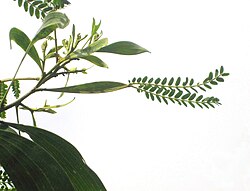
In certain environments, the petiole takes over the role of the leaf entirely. These flattened, widened petioles are called phyllodes (also known as cladophylls or phyllodia). This adaptation is common in the genus Acacia, particularly Australian species. For instance, Acacia koa possesses thick, leathery phyllodes that help the tree survive in stressful environments.
Additionally, in hydrophytes (plants that grow in water), the petiole allows leaves to float at various depths by positioning itself between the node and the stem.
Culinary Uses of the Petiole
While we often think of "stems" and "leaves" as separate food groups, several popular crops are actually cultivated petioles. Examples include:
- Celery (Apium graveolens)
- Artichokes
- Cardoons (Cynara cardunculus)
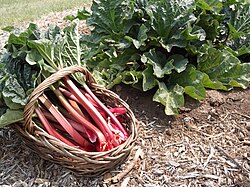
- Rhubarb (Rheum rhabarbarum)
Rhubarb is a unique case; its petiole grows directly from the rhizome to produce the leaf. While botanically categorized as a vegetable, it is most frequently used as a fruit in culinary applications.
Summary of Botanical Terms
| Term | Definition | Example/Context |
|---|---|---|
| Petiolate | Leaf with a stalk | Basil, Celery |
| Sessile | Leaf without a stalk | Orobanchaceae family |
| Rachis | Extension of petiole in compound leaves | Compound leaf structures |
| Pulvinus | Flexible tissue for movement | Fabaceae (Bean family) |
| Phyllode | Flattened petiole acting as a leaf | Acacia species |
Frequently Asked Questions
What is the main function of a petiole?
The primary function of a petiole is to attach the leaf blade to the plant's stem. Additionally, it can help the plant optimize sunlight exposure by twisting the leaf to face the sun.
What is the difference between a petiole and a rachis?
A petiole is the stalk that connects the entire leaf structure to the stem. A rachis is the continuation of that petiole in compound leaves, serving as the central axis to which individual leaflets are attached.
Are there plants that do not have petioles?
Yes. Leaves without petioles are called sessile or apetiolate. An example of a plant group where leaves are always sessile is the broomrape family (Orobanchaceae).
What is a phyllode?
A phyllode is a modified petiole that has become flattened and widened to perform the functions of a leaf. These are common in Australian Acacia species to help them survive stressful environments.
Which edible vegetables are actually petioles?
Celery, rhubarb, cardoons, and artichokes are all examples of plants where the petioles are the primary part cultivated for consumption.