Oviraptorosaurs: The Beaked Dinosaurs of the Cretaceous
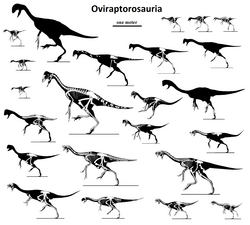
The Oviraptorosaurs (meaning "egg thief lizards") were a diverse group of feathered, bipedal maniraptoran dinosaurs that roamed Asia and North America during the Cretaceous Period, roughly 130 to 66 million years ago. Known for their striking, parrot-like beaks and bird-like characteristics, these creatures represent a fascinating link in the evolutionary journey toward modern birds.
While they vary wildly in size—from the turkey-sized Caudipteryx to the massive Gigantoraptor—they share a distinct cranial anatomy. Most possessed short, beaked skulls, some adorned with bony crests. While the most complete fossils have been unearthed in Asia, a sparser record exists in North America.
Key Facts
- Temporal Range: Lived during the Cretaceous Period (130–66 Ma).
- Physical Traits: Characterized by short, beaked skulls and a covering of feathers.
- Size Diversity: Ranged from small, turkey-sized species to the 8-meter-long Gigantoraptor.
- Bird Connection: Closely related to the ancestry of birds; some researchers argue they may be primitive flightless birds.
- Reproduction: Practiced bird-like brooding behavior, incubating eggs at temperatures between 35–40 °C.
Anatomy and Physical Characteristics
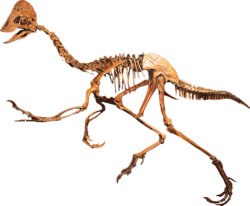
Oviraptorosaurs are defined by their unique skull structure, featuring shortened rostrums (snouts) and massive, beak-like mandibles. While advanced members were entirely toothless, primitive species like Incisivosaurus possessed enlarged, bucktoothed incisors.
Their skeletal structure reveals a high degree of pneumatization (air-filled cavities) in the vertebrae and skull. They possessed thick, U-shaped furculae (wishbones) and large sternal plates. Their limbs were specialized, with arms roughly half the length of their legs and long, tridactyl (three-fingered) hands.
One of the most distinguishing features of the group is their short tail. In some genera, such as Nomingia, the tail ends in fused vertebrae. While this resembles a pygostyle (the bone supporting tail feathers in modern birds), evidence suggests it evolved independently from the avian version.
Feathers and Avian Links
The evidence for feathers in oviraptorosaurs is extensive. Direct impressions of well-developed feathers have been found on the wings and tails of Caudipteryx, Protarchaeopteryx, and Similicaudipteryx, likely used for display. Additionally, Avimimus portentosus exhibits quill knobs on the ulna, which served as anchor points for wing feathers.
The relationship between oviraptorosaurs and birds is a subject of ongoing scientific debate. Because they are so bird-like, some paleontologists classify them as true birds more advanced than Archaeopteryx. Others view them as non-avialan maniraptorans. Interestingly, studies on Caudipteryx suggest it was secondarily flightless, implying that its ancestors may have been capable of flight.
Paleobiology: Diet and Behavior
Dietary Habits
Determining the exact diet of oviraptorosaurs is challenging, as they likely occupied various ecological niches. Evidence suggests a mix of habits:
- Carnivory: A lizard skeleton found in an Oviraptor specimen and baby troodontid skulls in a Citipati nest indicate some ate small vertebrates.
- Herbivory: The presence of gastroliths (stomach stones) in Caudipteryx suggests plant consumption.
- Generalists: A 2022 study on bite forces indicates that most oviraptorosaurs had very strong bites, allowing them to eat tougher vegetation than other herbivorous theropods.
Reproduction and Nesting
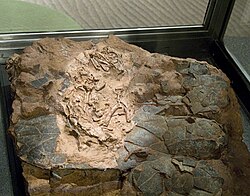
Oviraptorosaurs exhibited sophisticated parental care. Specimens have been found in brooding positions over circular clutches of elongated oval eggs. Unlike crocodilians, which lay many eggs at once, oviraptorosaurs produced eggs in pairs, laying them two at a time while rotating in a circle.
Geochemical analysis of fossil embryos shows they incubated their eggs at 35–40 °C (95–104 °F), mirroring the behavior of modern birds. This biological middle ground—having two oviducts like crocodilians but producing one egg per oviduct like birds—highlights their transitional nature.
Classification and Diversity
The classification of Oviraptorosauria is complex. Most researchers divide them into two primary families: the Caenagnathidae and the Oviraptoridae. The Oviraptoridae are further split into the small, crestless Ingeniinae and the larger, crested Oviraptorinae.
| Feature | Primitive Oviraptorosaurs | Advanced Oviraptorosaurs |
|---|---|---|
| Dentition | Some teeth (e.g., buckteeth in Incisivosaurus) | Toothless beaks |
| Size | Generally smaller | Variable (up to 8m in Gigantoraptor) |
| Skull | Simpler structure | Often with bony crests |
| Bite Force | Moderate | Very strong |
Frequently Asked Questions
Were oviraptorosaurs actually egg thieves?
No. Although the name Oviraptor means "egg thief," this was based on a misunderstanding of a fossil found atop a nest. Later research proved the dinosaur was actually brooding its own eggs.
Could oviraptorosaurs fly?
Most known species were flightless. However, some research suggests that Caudipteryx was secondarily flightless, which implies that some of their earlier ancestors may have possessed the ability to fly.
How did they differ from other theropods?
They differed primarily through their shortened snouts, beak-like jaws with few or no teeth, and very short tails compared to other maniraptorans.
Where were they most commonly found?
The most complete and diverse specimens have been discovered in Asia, though they also existed in North America.