Feathers: The Evolution, Structure, and Utility of Avian Plumage
Feathers are highly specialized epidermal growths that form the plumage—the distinctive outer covering found on birds and certain non-avian dinosaurs and archosaurs. As the most complex integumentary structures (skin-derived coverings) found in vertebrates, feathers represent a remarkable evolutionary novelty that distinguishes modern birds from other living animal groups.
While feathers cover the majority of a bird's body, they do not grow uniformly; instead, they emerge from specific, well-defined tracts on the skin. The scientific study of these structures is known as plumology.
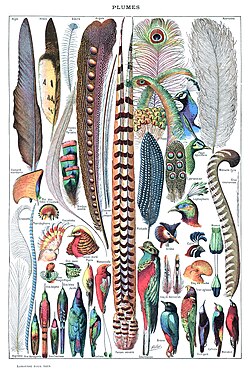
Key Facts
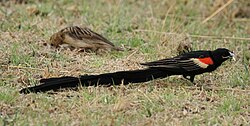
- Primary Functions: Feathers are essential for flight, thermal insulation, waterproofing, and communication.
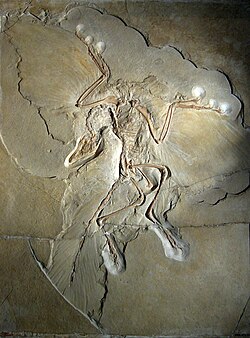
- Evolutionary Reach: They are not exclusive to birds; evidence shows they existed in various non-avian dinosaurs.
- Complex Anatomy: Feathers consist of a central shaft with branching barbs and interlocking barbules.
- Human Use: Beyond fashion, feathers are used in high-end bedding and winter clothing due to their heat-trapping properties.
Anatomy and Structure of a Feather
The complexity of a feather allows it to be both lightweight and incredibly strong. The basic structure typically includes a central axis and branching elements that create a cohesive surface.
Core Components
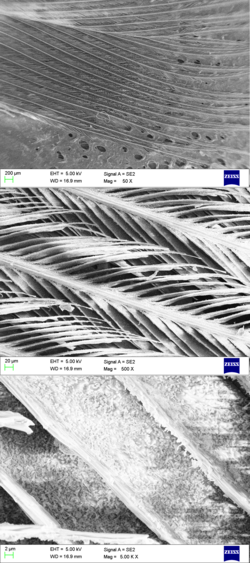
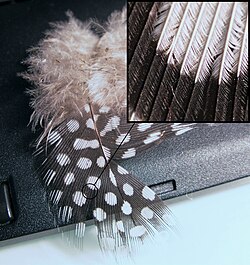
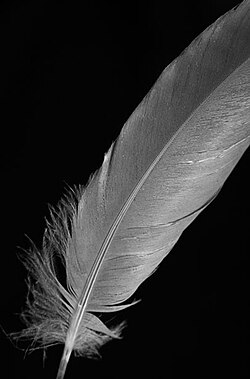
A typical feather consists of a calamus (the quill) at the base, which transitions into the rachis (the main shaft). Extending from the rachis are barbs, which further divide into smaller barbules. In many feathers, these barbules interlock to create a firm, wind-resistant surface called the vane.
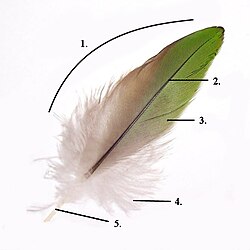
Microscopic Detail
At a microscopic level, the interlocking mechanism of the barbules is what gives a feather its structural integrity. This allows birds to "zip" their feathers back together if they become separated, ensuring the wing remains an effective airfoil for flight.
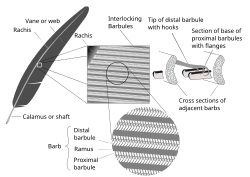
Types and Functions of Plumage
Not all feathers serve the same purpose. Depending on their structure and location, they are adapted for different biological needs.
- Flight and Contour Feathers: These provide the aerodynamic shape of the bird and protect the body.
- Down Feathers: Characterized by a lack of interlocking barbules, down creates a fluffy layer that traps air for insulation. Goose and eider down are prized for their loft—the ability to expand and trap large volumes of insulating air.
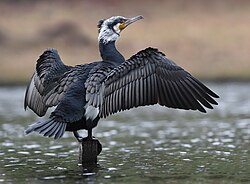
- Filoplumes: These hair-like feathers can play a role in nuptial (mating) displays. For example, the great cormorant produces white filoplumes on its head and neck during the breeding season.
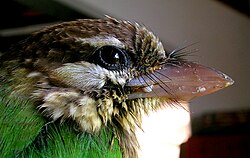
- Rictal Bristles: Specialized bristles found around the mouth of some birds, such as the white-cheeked barbet, which can assist in sensory perception or prey capture.
Distribution and Coloration
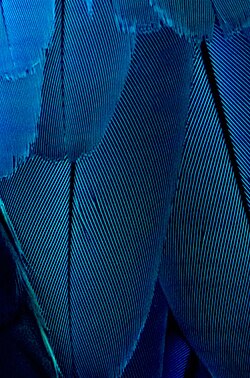
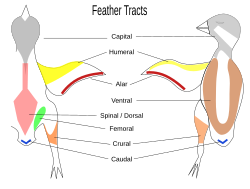
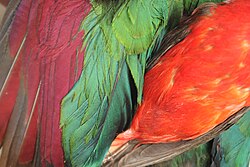
Feathers grow in specific areas called pterylae (feather tracts). Their colors are derived from various sources, including pigments like carotenoids (reds/yellows), melanins (darks), and structural colors caused by the physical interaction of light with the feather's microstructure.
The Evolution of Feathers
The transition from simple filaments to complex flight feathers is a central topic in paleontology. Research indicates that feathers evolved in stages long before the emergence of modern birds.
Stages of Development
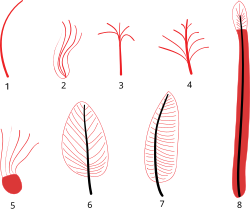
In 2009, researchers Xu and Guo proposed a progression of feather evolution:
- Single filament.
- Multiple filaments joined at the base.
- Multiple filaments joined to a central filament.
- Multiple filaments along the length of a central filament.
- Multiple filaments arising from a membranous structure.
- Pennaceous feathers with a vane of barbs and barbules.
- Pennaceous feathers with an asymmetrical rachis (optimized for flight).
- Undifferentiated vane with a central rachis.
It is important to note that some scientists, such as Foth (2011), suggest that certain stages may be artifacts of fossil preservation rather than distinct evolutionary steps.
Human Interaction and Usage
Humans have utilized feathers for millennia for practical, cultural, and artistic purposes.
Utilitarian and Industrial Use
Due to their thermal properties, feathers are used in pillows, mattresses, and quilted winter coats. Historically, large goose feathers were the primary tool for quill pens. In modern fashion, feathers are often sourced as waste products from poultry farming (chickens, turkeys, ostriches) and are dyed to improve their appearance.

Cultural and Artistic Significance
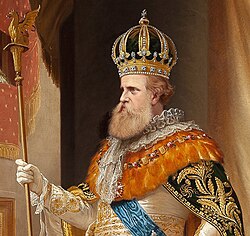
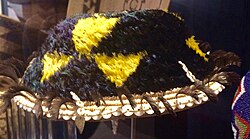
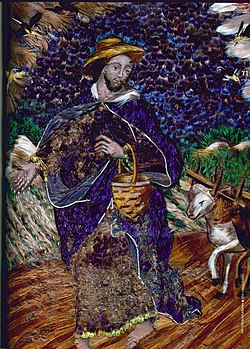
Feathers have deep religious and cultural roots. Examples include the intricate featherwork paintings of the Novohispanic era, which blended pre-Hispanic techniques with Christian iconography using hummingbird and canary feathers.
Summary of Feather Characteristics
| Feather Type | Key Structural Feature | Primary Function |
|---|---|---|
| Contour/Flight | Interlocking barbules, central rachis | Flight, aerodynamics, protection |
| Down | Non-interlocking, fluffy | Thermal insulation (loft) |
| Filoplumes | Hair-like, slender | Mating displays, sensory |
| Bristles | Stiff, reduced vane | Protection, sensory (rictal) |
Frequently Asked Questions
Do only birds have feathers?
No. While they are a defining characteristic of modern birds, feathers were also present in several groups of non-avian dinosaurs and other archosaurs.
What is "loft" in the context of feathers?
Loft refers to the ability of feathers, particularly down, to expand from a compressed state to trap large amounts of air, which provides superior thermal insulation.
How do feathers get their colors?
Colors result from a combination of pigments (such as melanins and carotenoids) and structural coloration, where the physical shape of the feather reflects light in specific ways.
Are all feathers used for flight?
No. Many feathers are specialized for other tasks, such as maintaining body heat (down), attracting mates (filoplumes), or providing sensory information (bristles).
How did feathers evolve?
Feathers evolved from simple single filaments into increasingly complex branched structures, eventually developing the asymmetrical rachis and interlocking vanes necessary for powered flight.