Mesozoic Era: The Age of Reptiles and Dinosaurs
The Mesozoic Era, often referred to as the "Age of Reptiles," "Age of Dinosaurs," or "Age of Conifers," represents a pivotal chapter in Earth's history. Spanning approximately 186 million years, this era serves as the middle bridge between the Paleozoic and Cenozoic eras. It is a time defined by the rise and fall of the most famous creatures to ever walk the Earth and the gradual shifting of continents from a single landmass into the shapes we recognize today.
The term "Mesozoic" was proposed in 1840 by British geologist John Phillips. Derived from the Greek words meso- (between) and zōon (animal), it literally translates to "middle life." This era is characterized by the dominance of archosaurs on land and a dramatic evolution of flora, moving from gymnosperms to the first flowering plants.
Key Facts
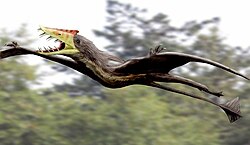
- Time Span: 251.902 to 66 million years ago (Ma).
- Major Periods: Triassic, Jurassic, and Cretaceous.
- Dominant Life: Dinosaurs were the primary terrestrial vertebrates for roughly 135 to 150 million years.
- Plant Evolution: Conifers dominated early on, with flowering plants appearing in the Early Cretaceous.
- Mammalian Origins: The first mammals appeared during this era but remained small (under 15 kg) until the Cenozoic.
- End Event: The era concluded with the K-Pg extinction, which wiped out 75% of all species, including non-avian dinosaurs.
The Geologic Timeline of the Mesozoic
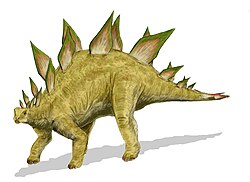
The Mesozoic is divided into three distinct geologic periods, each marked by unique climatic conditions and biological milestones.
| Period | Time Range (Ma) | Key Characteristics | Defining Life Forms |
|---|---|---|---|
| Triassic | 251.902 – 201.4 | Pangaea supercontinent; desert interiors | Early dinosaurs, pterosaurs, Lystrosaurus |
| Jurassic | 201.4 – 143.1 | Humid tropical climate; expanding seas | Large theropods, plesiosaurs, early birds |
| Cretaceous | 143.1 – 66.0 | Cooling trends; diversification of flora | T. rex, Triceratops, flowering plants |
The Triassic Period: Recovery and Rise
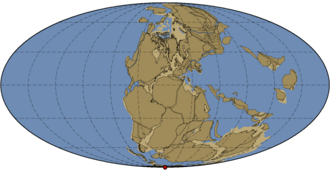
The Early Triassic (252 to 247 Ma) began in the wake of a massive die-off that extinguished 95% of all life. The interior of the supercontinent Pangaea—a single landmass containing all Earth's continents—was dominated by vast deserts. Survivors like Lystrosaurus and various temnospondyls navigated this harsh landscape.
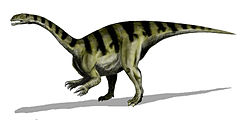
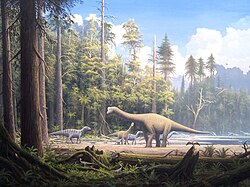
By the Late Triassic (237 to 201 Ma), warming temperatures sparked a boom in dinosaurian evolution. This period saw the emergence of Sauropodomorphs, Theropods, and Herrerasaurids, alongside the first pterosaurs. However, the period ended with the Triassic–Jurassic extinction event, possibly caused by flood basalt eruptions in the Central Atlantic magmatic province, which eliminated many large amphibians and synapsids.
The Jurassic Period: The Golden Age of Giants
The Jurassic (200 to 145 Ma) saw a shift toward a more humid, tropical climate as seas began to penetrate the separating landmasses. In the oceans, ammonites, ichthyosaurs, and plesiosaurs flourished. On land, archosaurs—a group of diapsid reptiles—rose to total dominance, with theropods like Dilophosaurus occupying the top of the food chain.
While dinosaurs grew to massive sizes, the first true mammals also evolved. These creatures remained small but highly adaptable; for example, Castorocauda was adapted for swimming and fishing, while Volaticotherium could glide like a modern flying squirrel.
The Cretaceous Period: The Final Act
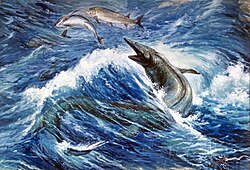
The Late Cretaceous (100 to 66 Ma) was marked by a gradual cooling trend. This era saw the peak of dinosaur diversity, with famous taxa such as Tyrannosaurus, Ankylosaurus, and Triceratops dominating the ecosystem. In the seas, mosasaurs became the apex predators, filling the void left by the declining ichthyosaurs.
A revolutionary change occurred in the flora: flowering plants (angiosperms) became dominant, replacing the gymnosperms (non-flowering seed plants) like conifers and cycads. Birds also diversified, with some forms, such as the hesperornithes, becoming large and flightless marine specialists.
The era ended abruptly 66 million years ago. A combination of volcanic activity from the Deccan Traps and a massive meteorite impact—which created the Chicxulub Crater—triggered the K-Pg Extinction. This event eliminated 75% of life on Earth, including all non-avian dinosaurs, paving the way for the Cenozoic Era.
Frequently Asked Questions
What does the word "Mesozoic" mean?
The word comes from the Greek prefix meso- meaning "between" and zōon meaning "animal" or "living being," translating literally to "middle life."
When did the first mammals appear?
The first mammals appeared during the Mesozoic Era, evolving from mammaliaforms. However, they remained relatively small—typically under 15 kg—throughout the era.
What caused the end of the Mesozoic Era?
The era ended with the K-Pg Extinction event, caused by a combination of atmospheric poisoning from the Deccan Traps volcanic eruptions and a large meteorite impact that created the Chicxulub Crater.
How did the plant life change during the Mesozoic?
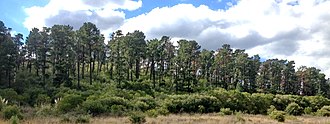
For much of the era, conifers and other gymnosperms were the dominant terrestrial plants. In the Early Cretaceous, flowering plants appeared and rapidly diversified, eventually becoming the dominant plant group.
Which animals dominated the oceans during the Cretaceous?
Mosasaurs became the dominant marine predators in the Late Cretaceous, while long-necked plesiosaurs like Elasmosaurus also continued to thrive.