Ottoman Seventh Army: History and Operations in World War I
The Ottoman Seventh Army was a significant military formation of the Ottoman Empire that operated during the late 19th and early 20th centuries. While designated as an "army," historical records indicate that by 1918, its actual size was effectively that of a corps (a large military unit typically consisting of two or more divisions).
Established in 1877, the Seventh Army was initially deployed to Arabia and the Yemen. By 1908, its composition included the 13th and 14th infantry divisions, supported by one cavalry regiment and one artillery regiment. During this early period, the army was primarily engaged in combatting insurgent tribesmen within the Yemen region.
Key Facts
- Active Period: Established in 1877; active through November 7, 1918.
- Primary Role: Served in Arabia, Yemen, and later the Sinai and Palestine Campaign.
- Command Structure: Part of the Yildirim Army Group during World War I.
- Notable Commanders: Mustafa Kemal and Fevzi Çakmak Paşa.
- Final Fate: Destroyed by British aerial bombardment on September 21, 1918.
World War I Operations
During the First World War, the Seventh Army played a critical role in the Sinai and Palestine Campaign. Under the leadership of various commanders, the army faced the British forces led by General Allenby.
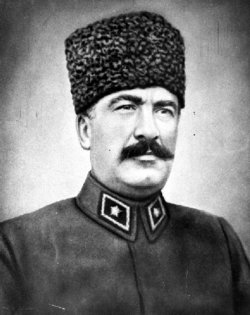
In late 1917, under the command of Fevzi Pasha, the Seventh Army was ordered to advance across the desert to pressure Allenby's inland flank in Palestine. While Allenby focused his main attack on the Ottoman Eighth Army, he deployed the Australian Mounted Division to obstruct the Seventh Army. Although the Seventh Army successfully forced the Australian forces to retreat by several miles, the Australians ultimately maintained their line. Following the British victory at the Battle of Mughar Ridge on November 13, Fevzi decided to withdraw the Seventh Army to provide defense for Jerusalem.
The Final Collapse
The army's operational capacity diminished toward the end of the war. During its retreat from Nablus on September 21, 1918, the Seventh Army was destroyed by British aerial bombardment, marking a decisive blow during the Battle of Megiddo.
Organizational Structure and Order of Battle
The composition of the Seventh Army shifted frequently between 1917 and 1918 to meet tactical needs. A consistent element of its strength during this period was the inclusion of the German Asia Corps, providing specialized European support to the Ottoman forces.
| Date | Commander | Primary Components |
|---|---|---|
| August 1917 | Mustafa Kemal Pasha | III Corps (24th, 50th Div), XV Corps (19th, 20th Div), German Asia Corps |
| January 1918 | Mustafa Fevzi Pasha | III Corps (1st, 19th, 24th Div), XV Corps (26th, 53rd Div), 3rd Cavalry Div, German Asia Corps |
| June 1918 | Mustafa Fevzi Pasha | III Corps (1st, 24th Div, 3rd Cav Div), XV Corps (26th, 53rd, 19th Div), German Asia Corps |
| September 1918 | Mustafa Kemal Pasha | III Corps (1st, 11th Div), XV Corps (26th, 53rd Div) |
| November 1918 | Ali Fuat Pasha (Deputy) | III Corps (11th, 24th Div), XX Corps (1st, 43rd Div) |
Frequently Asked Questions
Was the Seventh Army actually the size of a full army?
No. Although it carried the designation of an "army," by 1918 it had the effective strength of a corps.
Who were the most notable commanders of the Seventh Army?
The most prominent commanders included Mustafa Kemal, who led the army during two different periods, and Fevzi Çakmak Paşa.
What was the Seventh Army's role in the Palestine Campaign?
The army was tasked with pressuring the inland flank of General Allenby's forces and later guarding Jerusalem after the Battle of Mughar Ridge.
How was the Seventh Army eventually defeated?
The army was destroyed on September 21, 1918, by British aerial bombardment while retreating from Nablus.
Which foreign units were attached to the Seventh Army?
The German Asia Corps was a key component of the Seventh Army's order of battle throughout much of 1917 and 1918.