Osvaldo Pugliese: The Maestro of Dramatic Tango
Osvaldo Pedro Pugliese was more than just a musician; he was a transformative force in the world of tango. Born in Buenos Aires, Argentina, Pugliese evolved the genre from the traditional walking beats of salon tango into dramatic, concert-style arrangements. His music is characterized by an emotional intensity that makes it a favorite for theatrical dance and late-night milongas, where dancers seek a more intimate and impressionistic experience.
Key Facts
- Full Name: Osvaldo Pedro Pugliese (1905–1995).
- Primary Instrument: Piano.
- Musical Legacy: Developed dramatic, concert-style tango arrangements.
- Famous Works: "Recuerdo" (1924) and "La Yumba" (1946).
- Political Stance: Outspoken communist and advocate for musicians' rights.
- Major Achievement: Performed a historic concert at the Teatro Colón in 1985.
Early Life and Musical Foundations
Born on December 2, 1905, Osvaldo Pugliese grew up in a household that valued artistic excellence. While his father, Don Adolfo, pushed him toward hard work, his mother, Aurelia Terragno, encouraged him to aim for the Teatro Colón—the most prestigious opera house in Buenos Aires. His brothers, Adolfo Vicente and Alberto Roque, were both violinists, further immersing him in a musical environment.
Though he briefly left primary school in 1918 to work as a print graphic artist, his passion for music prevailed. He eventually studied under Antonio D'Agostino at the Conservatorio Odeon. At just 19 years old, in 1924, he composed his first tango, "Recuerdo," which would eventually become a timeless classic of the genre.
The Orquesta Osvaldo Pugliese
In 1939, Pugliese formed his orchestra as a cooperative, a reflection of his political beliefs regarding shared labor and fair pay. The ensemble made its official debut on August 11, 1939, at Café El Nacional, often referred to as the "Cathedral of Tango."
The orchestra became a global ambassador for Argentine culture, embarking on extensive international tours. They performed in the former Soviet Union (visiting 80 cities in three months), China, Japan, the United States, France, and across South and Central America. This global reach earned Pugliese high cultural distinctions from the governments of Argentina, France, and Cuba.
The Historic 1985 Teatro Colón Concert
A crowning moment in Pugliese's career occurred on December 26, 1985, when he finally performed at the Teatro Colón at the age of 80. The event was a triumph, resulting in five standing ovations. The program featured a wide array of his works, including "Arrabal," "La mariposa," and his most popular composition, "La yumba," which was performed alongside several veteran members of his former orchestra.
Political Convictions and Resilience
Pugliese was a committed member of the Communist Party starting in 1936. His political sympathies often put him at odds with the Argentine government, leading to multiple periods of imprisonment. In 1939, he was jailed just before his orchestra's debut, and in 1956, he was imprisoned during "Operation Cardenal" by the Revolución Libertadora dictatorship.
During these periods of absence, his orchestra continued to play, placing a red carnation on the piano as a symbol of protest and solidarity with their imprisoned conductor. Despite facing bans from radio broadcasts and restrictions on his recording output during the Onganía government, Pugliese remained steadfast in his integrity and humility.
His capacity for forgiveness was highlighted in 1973 when he accepted an apology from Juan Domingo Perón, who acknowledged Pugliese's greatness despite their political differences.
The Legend of "San Pugliese"
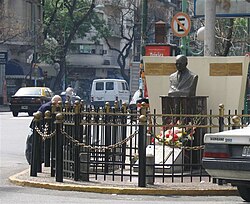
Following his death on July 25, 1995, a unique cultural myth emerged: "San Pugliese" (Saint Pugliese). This belief suggests that invoking the Maestro's name or playing his records can bring good luck or resolve technical failures. This phenomenon was popularized after a Charly García concert reportedly improved its sound quality after a Pugliese record was used for testing. Artists like León Gieco and Javier Calamaro have since referenced this "patron saint of tango" in their work.
Summary of Career and Achievements
| Category | Details |
|---|---|
| Active Years | 1924–1995 |
| Key Genres | Tango, Milonga, Vals |
| Notable Compositions | Recuerdo, La Yumba, Ausencia, El Encopao |
| Major Awards | Ciudadano Ilustre (Buenos Aires), Commander of Ordre des Arts et des Lettres (France), Alejo Carpentier Medal (Cuba) |
| Film Appearances | Mis cinco hijos, Tango y tango, Coexistencia |
Frequently Asked Questions
What is the significance of the red carnation on the piano?
The red carnation was a symbol of protest and solidarity. It was placed on the piano whenever Osvaldo Pugliese was imprisoned for his political beliefs, signaling that the music continued even in the face of oppression.
Which of Pugliese's compositions are the most famous?
His most enduring works include "Recuerdo," composed in 1924, and "La yumba," which became one of his most popular and recognized tangos.
How did Pugliese change the style of tango?
He moved away from the simple walking beat of salon tango to create more dramatic, complex, and impressionistic arrangements, paving the way for concert-style tango music.
Who is "San Pugliese"?
"San Pugliese" is a modern myth where the late musician is viewed as a lucky charm or patron saint. Musicians and fans invoke his name to ward off bad luck or technical glitches during performances.
What was Pugliese's approach to managing his orchestra?
Consistent with his communist beliefs, Pugliese organized his orchestra as a cooperative, paying members based on their contribution, which fostered immense loyalty among his musicians.