Tango: The Evolution of a Global Musical Phenomenon
Tango is a passionate style of music and dance characterized by its 4/4 time signature and deep emotional resonance. Originating in the late 19th and early 20th centuries within the immigrant communities of Uruguay and Argentina, it represents a complex cultural synthesis. Its roots are a rich blend of Spanish, Italian, African, French, and Gaucho influences, evolving from a marginalized street music into a sophisticated art form celebrated worldwide.
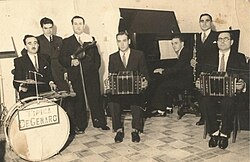
Traditionally, tango is performed by a solo guitar, a guitar duo, or a full ensemble known as the orquesta típica. This standard orchestra typically consists of at least two violins, a flute, a piano, a double bass, and at least two bandoneóns—a bellows-driven instrument similar to an accordion that provides the genre's signature soulful sound. Depending on the arrangement, clarinets and additional guitars may join the ensemble, and the music may be purely instrumental or feature a vocalist.
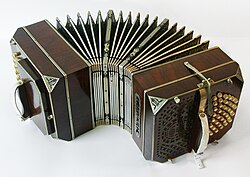
Key Facts
- Origins: Developed in Argentina and Uruguay among European immigrants and African communities.
- Core Instrument: The bandoneón is the most iconic instrument associated with the genre.
- Golden Age: The peak of its popularity occurred between 1935 and 1952.
- Key Figures: Carlos Gardel (vocal transition) and Astor Piazzolla (modernization).
- Global Reach: Spread to Europe in the early 20th century, influencing salon music and classical compositions.
The Stylistic and Cultural Origins
The birth of tango was a melting pot of global rhythms. It drew from European styles such as the polka, mazurka, and contradanse, as well as the Peruvian waltz and the milonga. Crucially, the influence of African communities and their rhythms, specifically the candombe (an Afro-Argentine drumming tradition), provided the rhythmic foundation for the genre.
![Typical tango rhythm[1]](/images/23/07/2307ce5debf93a7d4c97ce871bf7a55efb77077cd795abbec21aa621d2dbc868.jpg)
In its early days, tango was the music of the urban underworld in Buenos Aires and Montevideo. The first generation of players, known as the Guardia Vieja (Old Guard), performed in brothels and street corners. Because the cities had a significant surplus of men over women—for instance, Buenos Aires had 100,000 more men than women in 1914—men often practiced the complex dances in groups, blending expressions of masculinity, aggression, and emotion.
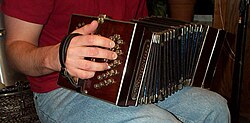
Early Pioneers and Instruments
Early ensembles relied on portable instruments like the flute, guitar, and violin. The organito (a portable player-organ) helped spread popular melodies. However, the arrival of the bandoneón at the end of the 19th century transformed the sound. Eduardo Arolas was instrumental in popularizing the instrument, while Vicente Greco standardized the sextet format (piano, double bass, two violins, and two bandoneóns).
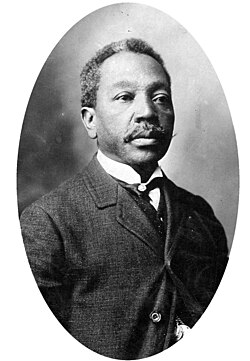
The Argentine Roots and Early Compositions
While the term "tango" appeared in Havana, Cuba, as early as 1823, Argentine records date back to 1866. A pivotal moment occurred in 1876 with the popularity of "El Merenguengué," a tango-candombe played with harp, violin, flute, and Afro-Argentine drums (the Llamador and Repicador).
Early contributions came from diverse artists, including Afro-Argentines like Casimiro Alcorta and Rosendo Mendizabal, the latter of whom released the first copyrighted tango score, "El entrerriano," in 1896. Women also contributed early on; Eloísa D'Herbil wrote several scores between 1872 and 1885.
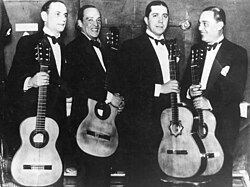
The Era of Carlos Gardel and the Golden Age
In the 1920s, Carlos Gardel played a transformative role by developing tango-canción (tango song). His influence helped transition tango from a lower-class "gangster" music to a respectable art form embraced by the middle class, paving the way for the genre's most prosperous era.
The Golden Age (1935–1952) mirrored the big band era of the United States. During this time, large orquestas típicas dominated the scene. The music eventually migrated to Europe, where it was adopted into dance repertoires. European bands often substituted the bandoneón with accordions and added saxophones or ukuleles, creating a distinct European style that remained popular until the rise of rock-and-roll in the 1950s.
Modernization: Tango Nuevo and Neotango
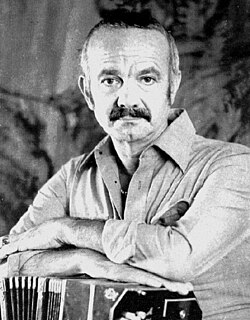
The mid-20th century saw a radical shift led by Ástor Piazzolla. In the 1950s, Piazzolla introduced nuevo tango, incorporating jazz and classical influences to create a more academic and experimental sound. Though initially criticized by purists, his work, such as "Adiós nonino," became immensely influential.
By the 1970s and 80s, fusion movements emerged in Buenos Aires, blending jazz with tango. This evolution continued into the 1990s and 2000s with the rise of Neotango (or electro-tango). Artists like Tanghetto, Carlos Libedinsky, and the Paris-based Gotan Project integrated electronic beats, samples, and synthesizers into the traditional tango groove.
Classical Influence and Global Impact
Tango's influence extended into the world of classical music. Composers such as Igor Stravinsky, Erik Satie, and Isaac Albéniz wrote tangos, and Kurt Weill utilized the style in The Threepenny Opera. Additionally, classically trained pianists like Arminda Canteros and Cecilia Pillado brought tango into prestigious concert halls, breaking gender barriers in a genre once seen as the epitome of machismo.
| Era | Approx. Period | Key Characteristics | Notable Figures/Groups |
|---|---|---|---|
| Guardia Vieja | Late 19th C. - 1920s | Portable instruments, street/brothel origins | Ángel Villoldo, Eduardo Arolas |
| Golden Age | 1935 - 1952 | Large orquestas típicas, global popularity | Carlos Gardel |
| Nuevo Tango | 1950s - 1980s | Jazz and classical fusion, experimental | Ástor Piazzolla |
| Neotango | 1990s - Present | Electronic elements, beats, and samples | Gotan Project, Bajofondo |
Frequently Asked Questions
What is the difference between traditional tango and nuevo tango?
Traditional tango follows the classic forms of the orquesta típica and the dance halls. Nuevo tango, pioneered by Ástor Piazzolla, incorporates jazz and classical music elements, focusing more on academic composition and experimental sounds than on traditional danceability.
What is a bandoneón?
The bandoneón is a bellows-driven instrument similar to an accordion. It is the central instrument of tango, providing the characteristic melancholic and dramatic sound associated with the genre.
Who was Carlos Gardel?
Carlos Gardel was a legendary artist who helped transition tango from a marginalized lower-class music to a respectable middle-class art form. He is credited with developing the tango-canción style in the 1920s.
Where did tango originate?
Tango originated in the late 19th century in the urban centers of Argentina and Uruguay, specifically in Buenos Aires and Montevideo, emerging from a blend of European immigrant and African cultural influences.
What is Neotango?
Neotango, also known as electro-tango, is a modern fusion that blends traditional tango rhythms and melodies with electronic music, including digital beats, samples, and synthesizers.