Old West Saloons: Legendary Establishments and the Life of Wyatt Earp
In the American frontier, the saloon was more than just a place to drink; it was the social and economic hub of boomtowns. These establishments often operated twenty-four hours a day, six days a week, closing only on Sundays and Christmas to accommodate the rigorous pace of mining and cattle towns.
From the dusty streets of Kansas to the gold fields of Alaska, notable saloons became landmarks of the era. Some of the most famous included the First Chance Saloon in Miles City, Montana; the Long Branch Saloon in Dodge City, Kansas; the Birdcage Theater in Tombstone, Arizona; and the Jersey Lilly in Langtry, Texas. Other legendary spots included the Arcade Saloon in Eldora, Colorado, the Holy Moses in Creede, Colorado, and the Bucket of Blood Saloon in Virginia City, Nevada.
Key Facts
- Many frontier saloons operated 24/6, closing only for Sundays and Christmas.
- Wild Bill Hickok was killed in Saloon No. 10 in Deadwood, South Dakota, holding a hand of aces and eights.
- Wyatt Earp operated saloons across multiple states and territories, including Arizona, Idaho, California, Alaska, and Nevada.
- The Dexter Saloon in Nome, Alaska, was the city's first two-story wooden building.
- Victorian-era gambling games common in saloons included faro, keno, monte, and pedro.
Conflict and Tragedy at the Bull's Head
Saloons were often the backdrop for violent disputes. In Abilene, Kansas, Phil Coe, owner of the Bull's Head tavern, sparked a conflict with the townspeople by painting a bull with an erect penis (pizzle) on the exterior wall. The local marshal, Wild Bill Hickok, demanded the image be removed. When Coe refused, Hickok hired men to paint over the image, fueling a rivalry that eventually led to Hickok killing Coe.
Hickok, a renowned gunfighter, gambler, and lawman, met his own end on August 2, 1876. While playing cards in Saloon No. 10 in Deadwood, South Dakota, he was shot in the back of the head by Jack McCall. Tradition holds that Hickok was holding aces and eights at the moment of his death, a combination now famously known as the dead man's hand.
The Entrepreneurial Journey of Wyatt Earp
Wyatt Earp, a former lawman and faro dealer (a dealer of a popular card game where players bet on the next card drawn), spent much of his life managing or owning gambling houses. His venture into the saloon business began in earnest in Tombstone, Arizona, where he arrived on December 1, 1879. By January 1881, he acquired a one-quarter interest in the faro concession at the Oriental Saloon from owner Lou Rickabaugh in exchange for his services as an enforcer and manager. Earp also recruited his friend, Bat Masterson, to help manage the tables.
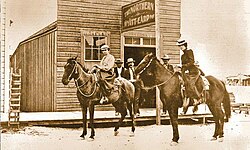
Following his time in Tombstone, Earp moved to Eagle City, Idaho, in 1884 while searching for gold in the Murray-Eagle mining district. There, he and his family opened The White Elephant, a saloon uniquely housed in a circus tent.
By 1885, Earp transitioned to San Diego, California, during a real estate boom. Between 1887 and 1896, he owned three gambling halls and saloons in the respectable areas of town, including one on Fourth Street and two near Sixth and E. These venues offered twenty-one different games, including blackjack, poker, keno, and Victorian games like pedro and monte. At the peak of the boom, Earp's profits reached $1,000 per night. He was particularly associated with the Oyster Bar, located in the Louis Bank of Commerce on Fifth Avenue.
The Earp family's ambitions eventually led them to the Alaska Gold Rush in 1897. After operating a canteen in 1899, Wyatt and partner Charles Ellsworth Hoxie constructed the Dexter Saloon in Nome, Alaska. Measuring 70 by 30 feet with 12-foot ceilings, it was the largest and most luxurious saloon in the city, as well as its first two-story wooden structure.
After returning to California in 1901 with approximately $80,000, Earp moved to Tonopah, Nevada, in February 1902. There, he opened the Northern Saloon and served as a deputy U.S. Marshal under Marshal J.F. Emmitt, finding success in mining, gambling, and saloon ownership.
Summary of Notable Frontier Saloons
| Saloon Name | Location | Notable Association |
|---|---|---|
| Bull's Head | Abilene, Kansas | Conflict between Phil Coe and Wild Bill Hickok |
| Oriental Saloon | Tombstone, Arizona | Managed by Wyatt Earp and Bat Masterson |
| The White Elephant | Eagle City, Idaho | Operated in a circus tent by Wyatt Earp |
| Dexter Saloon | Nome, Alaska | First two-story wooden building in Nome |
| The Northern | Tonopah, Nevada | Owned by Wyatt Earp |
| Saloon No. 10 | Deadwood, South Dakota | Site of Wild Bill Hickok's death |
Frequently Asked Questions
What was the "dead man's hand"?
The "dead man's hand" refers to a poker hand consisting of aces and eights, which Wild Bill Hickok was reportedly holding when he was shot and killed in Deadwood, South Dakota.
How did Wyatt Earp enter the saloon business in Tombstone?
Wyatt Earp gained a one-quarter interest in the faro concession at the Oriental Saloon in January 1881, provided by owner Lou Rickabaugh in exchange for Earp's management and enforcement services.
What made the Dexter Saloon in Nome unique?
The Dexter Saloon was the first two-story wooden building in Nome, Alaska, and was the city's largest and most luxurious saloon, measuring 70 by 30 feet.
What were some common gambling games in Victorian-era saloons?
Common games included faro, blackjack, poker, keno, and other Victorian games of chance such as monte and pedro.
Why did Wild Bill Hickok and Phil Coe become enemies?
The conflict began when Phil Coe painted a bull with an erect penis on the wall of his tavern. Hickok, the marshal, hired men to paint over the image, which outraged Coe and led to a fatal altercation.