The History and Culture of Okjeo: An Ancient Korean Tribal State
In the early centuries of the Common Era, the northern Korean peninsula was home to a variety of tribal states that laid the groundwork for the region's complex history. Among these was Okjeo, an ancient tribal state that existed from approximately the 2nd century BCE to the 5th century CE. Characterized by its fertile lands and coastal settlements, Okjeo played a significant role in the shifting power dynamics between local tribes and expanding empires like Goguryeo.
Geography and Regional Divisions
Okjeo was not a single, unified entity but was divided into two distinct geographic regions. The eastern portion, known as Dong-okjeo (Eastern Okjeo), occupied the area of the modern-day Hamgyŏng provinces in North Korea. This region was often referred to simply as Okjeo. To the north lay Buk-okjeo (Northern Okjeo), which inhabited the Duman River region. Buk-okjeo was sometimes identified by the names Chiguru or Guru.
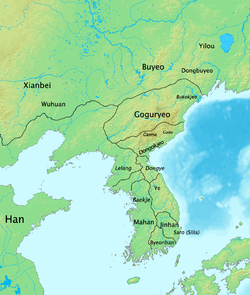
The landscape of Okjeo was defined by its natural boundaries. To the east, the people lived along the shores of the great sea, while the Gaema Mountains stood to their west. The territory was described as narrow in the northeast and long in the southwest, stretching perhaps a thousand li. This fertile land, situated between the mountains and the sea, was highly suitable for the cultivation of the five grains (traditional staple crops).
Political History and the Struggle for Autonomy
Because of its location, Okjeo was frequently caught in the crossfire of larger neighboring powers. Its political history is a timeline of shifting allegiances and external pressures:
- Early Control: From the 3rd century BCE to 108 BCE, the region was under the control of Gojoseon.
- Chinese Commanderies: In 107 BCE, Okjeo became part of the Xuantu Commandery. As Goguryeo expanded, the Xuantu Commandery retreated, and Eastern Okjeo eventually became part of the eastern portion of the Lelang Commandery.
- Goguryeo Influence: Okjeo never achieved a fully centralized kingdom due to constant interference from neighbors. By the 1st or 2nd century CE, King Taejo of Goguryeo had reduced Okjeo to a tributary state, requiring them to deliver local products.
- Refuge and Conflict: During the 244 Wei Invasion of Goguryeo, King Dongcheon briefly retreated to Northern Okjeo. Similarly, in 285, the Buyeo court sought temporary refuge in Okjeo to escape northern nomadic attacks.
The era of Okjeo as a distinct entity came to an end in the early 5th century when it was completely conquered by Gwanggaeto the Great of Goguryeo.
Social Structure and Cultural Traditions
Unlike the centralized kingdoms that would follow, Okjeo maintained a decentralized social structure. There was no supreme ruler; instead, each village was governed by its own hereditary chief. Despite this lack of central authority, the people were described as simple, direct, strong, and brave.
Daily Life and Warfare
The Okjeo people were skilled farmers, adept at tilling and planting the fertile soil. Because they possessed few oxen and horses, they developed specialized combat skills, becoming proficient at fighting on foot using spears. Their settlements were primarily located along the coastline, benefiting from the proximity to the sea.
Customs and Marriage
While much of our knowledge of Okjeo culture is fragmentary, historical records suggest their customs were similar to those of Goguryeo and Dongye. One notable tradition was the practice of arranged marriage, specifically a system where a child-bride would live with the child-groom's family until she reached adulthood. Regarding funerary rites, families practiced interring their deceased members within a single coffin.
The Okjeo Language
The linguistic identity of Okjeo remains a subject of scholarly discussion. It is presumed to have been part of the Puyŏ languages. There are two primary academic perspectives regarding its relationship to other regional tongues:
- Distinct but Related: Scholar Peter H. Lee suggests that while Okjeo shared many similarities with the language of Goguryeo, it possessed unique differences that distinguished it from other Puyŏ languages.
- A Dialect: Conversely, Christopher I. Beckwith posits that Okjeo may have simply been a dialect of the Goguryeo language.
Key Facts
- Time Period: Approximately 2nd century BCE to 5th century CE.
- Primary Regions: Dong-okjeo (Hamgyŏng provinces) and Buk-okjeo (Duman River region).
- Governance: Decentralized; governed by hereditary village chiefs rather than a single king.
- Economy: Based on agriculture (five grains) and coastal living.
- Military Style: Foot soldiers proficient with spears.
- Final Fate: Conquered by Gwanggaeto the Great of Goguryeo in the early 5th century.
Summary of Okjeo Overview
| Category | Details |
|---|---|
| Korean Name | Okjeo (옥저) |
| Hanja | 沃沮 |
| Language Family | Presumed Koreanic / Puyŏ languages |
| Major Neighbors | Goguryeo, Dongye, Buyeo, Yilou |
| Political Status | Tribal state / Tributary to Goguryeo |
Frequently Asked Questions
What was the political structure of Okjeo?
Okjeo did not have a centralized monarchy. Instead, it functioned as a collection of villages, each led by its own hereditary chief.
How did Okjeo relate to the kingdom of Goguryeo?
The relationship was often one of dominance. Okjeo oscillated between being controlled by Chinese commanderies and being a tributary state to Goguryeo. Eventually, Goguryeo completely conquered Okjeo in the early 5th century.
What were the main occupations of the Okjeo people?
The people were primarily farmers, skilled in the cultivation of the "five grains," and lived in settlements along the coast.
Was Okjeo a single unified territory?
No, it was divided into two main areas: Dong-okjeo in the eastern Hamgyŏng provinces and Buk-okjeo in the Duman River region.
What is known about the Okjeo language?
It is believed to be part of the Puyŏ language group. Scholars debate whether it was a distinct language with slight differences from Goguryeo or simply a dialect of Goguryeo.