The Official Symbols and Emblems of Colorado
From its towering peaks to its rich frontier history, the state of Colorado is defined by a diverse array of official symbols. These emblems, which range from majestic wildlife to cultural traditions, serve as a testament to the state's identity and natural heritage. Most of these symbols were established through acts of the Legislative Assembly of the Territory of Colorado or, following statehood, the General Assembly of the State of Colorado, while others were designated by the Governor or federal agencies.
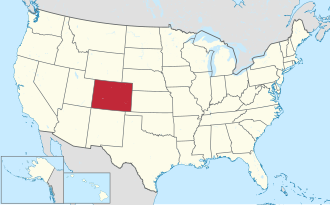
Foundational State Insignia
The earliest symbols of Colorado were established during its time as a territory. The state's first insignia, the territorial motto nil sine numine (Latin for "Nothing without providence"), was adopted on November 6, 1861. Shortly after, on November 11, 1861, the Territorial Legislature specified the state's seal and coat of arms.
The Flag and Logo
The Colorado state flag was officially adopted on June 5, 1911. Over the following decades, it underwent refinements: in 1929, the General Assembly mandated that the red and blue hues match those of the United States flag, and in 1964, the dimensions and placement of the letter "C" were standardized. More recently, the Colorado state government introduced a modern logo on March 26, 2019.
The Centennial State
Colorado is widely known by its nickname, the Centennial State. This title commemorates the state's admission to the Union on August 1, 1876, which occurred just four weeks after the 100th anniversary of the United States Declaration of Independence. Additionally, the state is often associated with the unofficial slogan "Colorful Colorado," which emerged around 1950.
Living Symbols of the Natural World
Colorado's commitment to its environment is reflected in its extensive list of living symbols, representing the diverse ecosystems found across the region.
State Flora
- Flower: The Rocky Mountain columbine (adopted 1899).
- Tree: The Colorado blue spruce (adopted 1939).
- Grass: Blue grama grass (adopted 1987).
- Cactus: The Claret cup cactus (adopted 2014).
State Fauna
The state has designated representatives for nearly every animal group, including the Rocky Mountain bighorn sheep as the state mammal (1961) and the Lark bunting as the state bird (1931). Other notable designations include the Greenback cutthroat trout (fish, 1994), the Western tiger salamander (amphibian, 2012), and the Western painted turtle (reptile, 2008). In a unique move on May 13, 2013, the state officially recognized shelter pets (dogs and cats) as state pets.
Insects and Fungi
The Colorado hairstreak butterfly was named the state insect on April 17, 1996. Most recently, the state designated "The Emperor" (Agaricus julius) as the state mushroom for 2025.
Earth and Geological Symbols
The geological diversity of the region is captured through several "earth symbols" adopted by the state government and federal agencies.
- Fossil: The Stegosaurus, designated by Executive Order on April 28, 1982.
- Gemstone: Aquamarine (adopted 1971).
- Mineral: Rhodochrosite (adopted 2002).
- Rock: Yule Marble (adopted 2004).
- Soil: Seitz soil, designated by the United States Department of Agriculture.
Cultural and Recreational Emblems
Colorado's identity is also shaped by its cultural pastimes and artistic expressions. The state's official folk dance is the square dance, adopted in 1992. Its musical heritage is represented by two official songs: "Where the Columbines Grow" (1915) and "Rocky Mountain High" (2007).
The state also recognizes its active outdoor lifestyle through official sports. Skiing and snowboarding were designated as the official winter sports in 2008, while the unique tradition of pack burro racing was named the official summer sport in 2012. Additionally, the Colorado state tartan was adopted on March 3, 1997.
Federal Recognition and Honors
Beyond state-level designations, the federal government has honored Colorado through various mediums, including currency, postal services, and naval vessels.
Naval History
The United States Navy has commissioned four vessels named the USS Colorado. These include a screw frigate (1858), an armored cruiser (1905, later renamed the USS Pueblo), a battleship (1923), and a nuclear submarine commissioned on March 17, 2018. Interestingly, the original vessel was named after the Colorado River, which predated the creation of the Colorado Territory.
Coins and Postage
The United States Mint issued the Colorado state quarter dollar on June 14, 2006. Looking forward, the United States Postal Service will release a sesquicentennial (150th anniversary) postage stamp on January 24, 2026. This "forever stamp" features a photograph of the 13,826-foot Jagged Mountain in the Weminuche Wilderness, captured by photographer John Fielder.
Summary of Key Colorado Symbols
| Category | Symbol | Adoption Date |
|---|---|---|
| Motto | Nil sine numine | November 6, 1861 |
| Nickname | Centennial State | August 1, 1876 |
| Flag | State Flag of Colorado | June 5, 1911 |
| Flower | Rocky Mountain columbine | 1899 |
| Mammal | Rocky Mountain bighorn sheep | May 1, 1961 |
| Fossil | Stegosaurus | April 28, 1982 |
| Winter Sport | Skiing and snowboarding | April 8, 2008 |