Officers of Arms: The Guardians of Heraldry and State Ceremony
An officer of arms is a specialized official appointed by a sovereign or state to manage the complex world of heraldry. These individuals serve as the bridge between ancient tradition and modern administration, ensuring that the visual language of nobility and statehood is preserved and correctly applied.
The primary responsibilities of these officers generally fall into three categories: controlling and initiating armorial matters (the design and granting of coats of arms), arranging and participating in formal ceremonies of state, and the conservation and interpretation of genealogical and heraldic records.
Key Facts
- Core Roles: Officers of arms manage armorial grants, state ceremonies, and genealogical archives.
- Ranks: In many systems, officers are divided into three ranks: kings of arms, heralds, and pursuivants.
- Appointment Types: "In ordinary" refers to permanent appointments, while "extraordinary" refers to temporary or occasional roles.
- Global Variation: Authority ranges from strict legal frameworks in Scotland to purely ceremonial roles in the Netherlands.
Heraldic Authority Across Different Nations
The United Kingdom
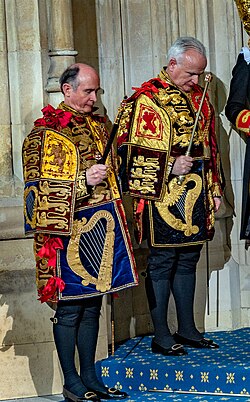
In England, the College of Arms consists of thirteen officers of arms in ordinary. Their authority extends across the Commonwealth, excluding Canada, Scotland, and South Africa. These officers are members of the royal household and receive a nominal salary.
Scotland operates under a distinct and strict legal framework. The Lord Lyon King of Arms and the Lyon Clerk and Keeper of the Records control armorial matters. Unlike their English counterparts, the Scottish system includes a court that is part of the criminal jurisdiction, supported by a prosecutor known as the Procurator Fiscal (though the prosecutor is not an officer of arms).
Canada
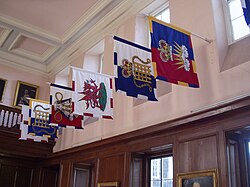
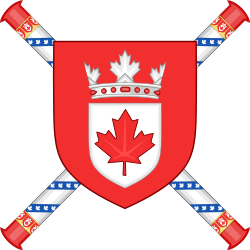
The Canadian Heraldic Authority is led by the Herald Chancellor of Canada and the Chief Herald of Canada, who serves as the director. The authority employs several heralds of arms, including the Athabaska, Assiniboine, Coppermine, Fraser, Miramichi, Saguenay, and Saint-Laurent heralds.
Canada also recognizes honorary positions. Retired heralds or notable figures may be named as Heralds Extraordinary or Heralds Emeritus. Examples include the Albion, Capilano, Cowichan, Dauphin, Niagara, and Rouge Heralds Extraordinary, as well as the Outaouais and Rideau Heralds Emeritus.
Ireland
In the Republic of Ireland, the Chief Herald of Ireland oversees armorial and genealogical matters. The legal foundation for grants made since 1943 was questioned by the Attorney General, leading to the introduction of the Genealogy & Heraldry Bill 2006 in the Irish Senate (Seanad Éireann) to legitimize actions following the transfer of power from the Ulster King of Arms.
The Netherlands
Unlike other nations, the Netherlands does not maintain permanent officers of arms. Private heraldry is not legislated, and the High Council of Nobility regulates state and noble heraldry.
However, officers of arms appear during royal inaugurations. Historically, kings of arms wore nineteenth-century court dress and heralds wore tabards (ceremonial tunics), both carrying rods and chains of office. By the 1980 inauguration of Queen Beatrix, ceremonial dress was replaced by white tie, and members of the resistance, such as Erik Hazelhoff Roelfzema, filled these roles. The senior king of arms proclaims the new monarch, while heralds announce the event to the public outside the New Church in Amsterdam.
Summary of Heraldic Systems
| Region | Primary Authority/Body | Legal Status | Key Officers |
|---|---|---|---|
| England | College of Arms | Royal Household | Kings, Heralds, Pursuivants |
| Scotland | Court of the Lord Lyon | Strict Legal/Criminal Framework | Lord Lyon, Lyon Clerk |
| Canada | Canadian Heraldic Authority | Official State Authority | Chief Herald, Various Heralds |
| Ireland | Chief Herald of Ireland | State Authority (Legislative updates) | Chief Herald |
| Netherlands | High Council of Nobility | Private/Ceremonial | Temporary Kings and Heralds |
Frequently Asked Questions
What is the difference between an officer in ordinary and an officer extraordinary?
Officers in ordinary hold permanent appointments and, in the case of the English College of Arms, are members of the royal household. Officers extraordinary are appointed on a temporary or occasional basis.
What are the three ranks of officers of arms?
The three traditional ranks are kings of arms (the highest rank), heralds of arms, and pursuivants of arms.
How does the Scottish system differ from the English system?
The Scottish system, led by the Lord Lyon, operates within a strict legal framework that includes criminal jurisdiction and a prosecutor (Procurator Fiscal), whereas the English system is more administrative and ceremonial.
Do officers of arms still exist in countries without official heraldic control?
Yes, the medieval practice of appointing heralds or pursuivants to noble households still occurs in some European countries and Scotland, though these private appointments are purely advisory.
What is the role of a herald during a Dutch inauguration?
The senior king of arms proclaims the new monarch after the oath of allegiance, and the heralds step outside the New Church in Amsterdam to announce the inauguration to the gathered public.