Heralds of Arms: The History and Role of Official Heraldry
A herald, or herald of arms, is a specialized officer of arms who occupies a rank between a pursuivant (a junior officer) and a king of arms (the highest rank). While the term is technically a specific rank, it is often used more broadly to describe all officers of arms who manage the complex world of heraldry.
Originally, heralds served as essential messengers for monarchs and noblemen. Their primary duty was to convey official proclamations and messages, making them the direct predecessors of modern diplomats. Because of their status as neutral messengers, they could move between opposing forces during conflicts to deliver terms or news.
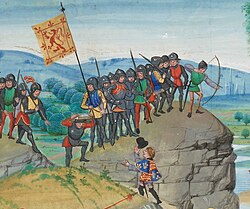
The Evolution of Heraldic Duties
The transition of heralds from simple messengers to regulators of armory occurred during the Late Middle Ages. Because heralds were responsible for organizing, announcing, and refereeing contestants at tournaments, they became the natural authorities on the coats of arms (the unique heraldic designs on shields) worn by knights. This role evolved into a formal system of regulation that persists in several countries today.
One of the most recognizable symbols of the office is the tabard, a short, open-sided surcoat decorated with the coat of arms of the herald's master. This garment served as a visual identification of the authority the herald represented.
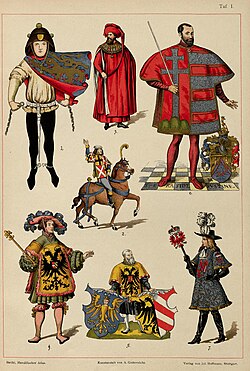
![Bavarian herald Jörg Rugen [de] wearing a tabard of the Coat of arms of Bavaria, around 1510.](/images/ed/46/ed46bdfd0da66412181a5fb5d3ed9b86ed46bba7826b9d5b4d9a329905977c1d.jpg)
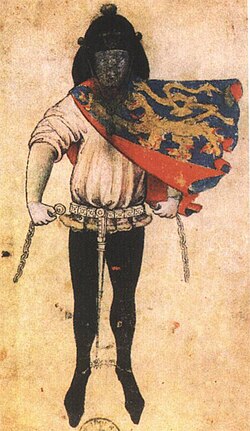
Modern Ceremonial Roles
In the contemporary era, many heralds serve in ceremonial capacities. In the United Kingdom, they are still called upon to read public proclamations while wearing tabards emblazoned with the royal coat of arms. Similarly, in the Netherlands, heralds were appointed for the monarch's inauguration to proclaim the completion of the ceremony at the Nieuwe Kerk, a tradition that continued until 1948.
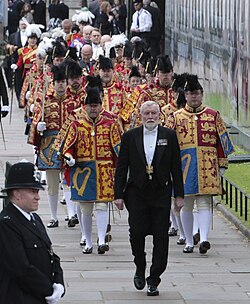
![Tabard worn by an English herald in the College of Arms[nb 1]](/images/4f/63/4f63d39adda0d3dde3f93c31b495be04f21e44ffeb1102300606d59e2affaed2.jpg)
Key Facts
- Rank: Heralds rank between pursuivants and kings of arms.
- Origins: They began as royal messengers and early diplomats.
- Attire: The traditional garment is the tabard, featuring the master's coat of arms.
- Functions: Historically managed tournaments; currently handle proclamations and heraldic regulation.
- Global Presence: Official heralds still exist in the UK, Ireland, Canada, and South Africa.
Global Heraldic Structures
Different nations maintain different structures for their officers of arms. In England and Scotland, most are "Heralds of Arms in Ordinary" (full-time employees of the sovereign), though "Heralds of Arms Extraordinary" may be appointed for specific events like coronations.
Canada utilizes the Canadian Heraldic Authority, which includes a unique rank called "Herald of Arms Emeritus" to honor distinguished heraldists. In Scotland, some clan chiefs still appoint private officers of arms, typically pursuivants, to manage genealogical and heraldic matters for clan members.
| Region | Ordinary Heralds (Examples) | Extraordinary Heralds (Examples) |
|---|---|---|
| England | Richmond, Chester, Lancaster, York, Somerset, Windsor | Arundel, Beaumont, Maltravers, New Zealand, Norfolk, Surrey, Wales |
| Scotland | Albany, Marchmont, Rothesay, Snawdoun | Angus, Islay, Orkney, Ross |
| Canada | Chief Herald, Assiniboine, Athabaska, Coppermine, Fraser, Miramichi, Saguenay, Saint-Laurent | Albion, Capilano, Cowichan, Dauphin, Niagara, Rouge, Delhi |
Frequently Asked Questions
What is the difference between a herald and a pursuivant?
A herald is a higher-ranking officer of arms than a pursuivant, though both serve the sovereign or a noble house in heraldic and ceremonial duties.
What is a tabard and why is it worn?
A tabard is a decorative surcoat featuring the coat of arms of the herald's master. It serves as a formal uniform that identifies the authority the herald represents during official duties.
Do heralds still exist today?
Yes, official heralds are still active in several countries, including the United Kingdom, Canada, Ireland, and the Republic of South Africa.
What is a Herald of Arms Extraordinary?
These are temporary appointments made for specific major state occasions, such as a coronation, rather than being full-time employees of the sovereign.
How did heralds become experts in coats of arms?
Because they were responsible for organizing and refereeing tournaments in the Late Middle Ages, they had to identify and regulate the coats of arms worn by the participating knights.