NJ Transit Bus Garages: Infrastructure and Modernization
The efficiency of a regional transit network depends heavily on its behind-the-scenes infrastructure. For NJ Transit, a vast network of bus garages ensures that thousands of vehicles are maintained, fueled, and deployed daily across New Jersey. As the agency shifts toward a greener future, these facilities are undergoing significant transformations to accommodate electric buses and sustainable energy solutions.
Key Facts
- Modernization: Multiple garages are being retrofitted with overhead pantograph charging systems for battery-electric buses.
- Strategic Expansion: The upcoming Northern Bus Garage in Ridgefield Park will be a massive facility capable of housing 500 buses.
- Diverse Fleet: Facilities range from specialized Compressed Natural Gas (CNG) hubs like Howell to traditional diesel depots.
- Regional Reach: Operations are split into Northern, Central, and Southern Divisions to optimize route deployment.
Northern Division: Transitioning to the Future
The Northern Division manages critical corridors connecting Hudson, Bergen, and Passaic counties to the Port Authority Bus Terminal. Many of these facilities are legacy sites currently being evaluated for replacement or modernization.
The Fairview Garage serves the Hudson Waterfront communities, while the Market Street facility in Paterson—a former trolley barn from 1903—is part of the Great Falls Historic District. Despite its heritage, Market Street is considered obsolete and is slated for potential replacement or retrofitting.
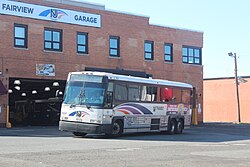
The Meadowlands Garage, built in 1993, is a cornerstone of Hudson County operations. It is currently being upgraded to handle longer articulated buses and electric vehicles, with plans for an outdoor charging facility to support 67 buses by 2028, eventually expanding to 130.
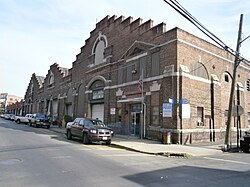
Other key sites include the Wayne facility, which replaced older garages in 1998 and is now being prepared for battery-electric buses, and the Westwood facility, purchased in 2022 to alleviate overcrowding at the Oradell Garage.
Upcoming Northern Facilities
To replace aging sites like Oradell and Fairview, NJ Transit is developing the Northern Bus Garage in Ridgefield Park. Spanning over 50 acres, this facility is expected to be completed by 2029. Additionally, a new 100,000 square foot Union City Bus Garage is projected for 2030, specifically designed for 40 emission-free articulated buses.
Central Division: Maintenance and Innovation
The Central Division focuses on the Newark area and surrounding corridors, blending heavy maintenance hubs with local deployment centers.
The Ironbound and Kearny Point garages serve as major maintenance hubs. Kearny Point, a converted factory, officially opened in August 2024 following the cessation of ONE Bus operations. Meanwhile, the Howell facility is the primary hub for the Compressed Natural Gas (CNG) fleet, housing 147 vehicles as of 2024.
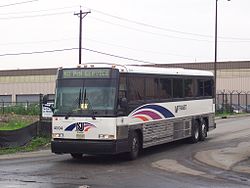
Sustainability efforts are highly visible at the Hilton garage in Maplewood. By 2025, it will feature an overhead pantograph charging system—a device that lowers from a canopy to charge the bus—supporting the GO25 Irvington-Newark line.
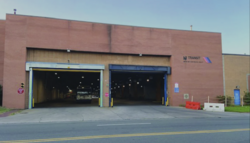
Southern Division: Regional Connectivity
The Southern Division ensures mobility across the Greater Atlantic City, Trenton, and Camden regions. The Washington Township facility is a primary hub for Camden, Gloucester, and Salem counties.
The Newton Avenue Garage in Camden holds a special place in the agency's history, having become the recharging station for NJ Transit's first eight battery-operated buses in 2022.
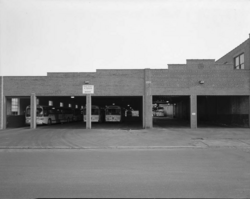
Other vital sites include the Egg Harbor Township garage for the Southern Shore region and the Hamilton Township facility, which is slated for electric bus accommodation.
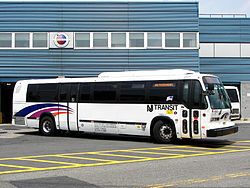
Contracted Services
Beyond agency-owned garages, NJ Transit partners with private contractors to maintain service levels. These include Academy Bus Lines, Suburban Transit, and Trans-Bridge Lines, among others, who operate specific numbered routes across the state.
Summary of Major NJ Transit Facilities
| Garage Name | Division | Primary Feature/Status | Key Note |
|---|---|---|---|
| Meadowlands | Northern | Electric Retrofit | Charging for 67 buses by 2028 |
| Northern Bus Garage | Future | New Construction | Capacity for 500 buses (2029) |
| Howell | Central | CNG Hub | 147 CNG buses as of 2024 |
| Hilton | Central | Electric Retrofit | Pantograph system by 2025 |
| Newton Avenue | Southern | Electric Pioneer | First 8 battery buses in 2022 |
Frequently Asked Questions
Which garages are being replaced?
The Oradell and Fairview garages are planned for closure and will be replaced by the new Northern Bus Garage in Ridgefield Park.
How is NJ Transit implementing electric buses?
The agency is retrofitting existing garages (like Hilton and Meadowlands) with overhead pantograph charging systems and building new emission-free facilities like the Union City Bus Garage.
What is the role of the Howell garage?
The Howell garage is the primary facility for NJ Transit's Compressed Natural Gas (CNG) fleet, supporting routes along the Route 9 corridor.
What is a pantograph charging system?
A pantograph is an overhead charging apparatus that connects to the roof of a bus, allowing for efficient battery recharging without the need for manual plug-ins.
Who are the contracted bus operators?
NJ Transit utilizes several contractors, including Academy Bus Lines, Suburban Transit, and Trans-Bridge Lines, to operate specific local and commuter routes.