New Orleans Opera: A History of Musical Grandeur in the Crescent City
Opera has been a cornerstone of the musical culture in New Orleans, Louisiana, for over two centuries. Since the 1790s, the city has served as a vibrant hub for operatic performance, evolving from a destination for traveling troupes to a city with its own dedicated resident companies. This enduring passion for the art form reflects the cosmopolitan nature of New Orleans, where audiences from all social strata and backgrounds have historically embraced the drama and scale of opera.
The Early Era of Operatic Performance
The documented history of opera in New Orleans began on May 22, 1796, with a performance of André Grétry's Sylvain at the Theatre de la Rue Saint Pierre. As the city grew, so did its appetite for the arts, leading to the opening of the Théâtre St. Philippe on January 30, 1808, which hosted the U.S. premiere of Étienne Méhul's Une folie. This venue continued to break ground, hosting the U.S. premiere of Luigi Cherubini's Les deux journées on March 12, 1811.
Between 1819 and 1859, the Théâtre d'Orléans stood as the city's most famous venue. It was eventually succeeded in 1859 by the French Opera House, located on Bourbon Street in the heart of the French Quarter.
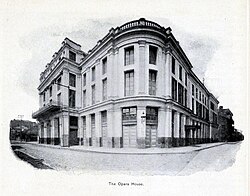
The era of the French Opera House came to a tragic end in 1919 when the building burned down. This disaster caused a severe disruption to the local scene; when efforts to secure financing for a rebuild failed, the resident company disbanded. For the next generation, New Orleans relied primarily on touring companies performing at various local theaters.
The Modern Era and the New Orleans Opera Association
The landscape changed in 1943 with the formation of the New Orleans Opera Association, which successfully established a permanent resident company. This organization has since hosted numerous world-renowned singers and staged significant productions.
The city has also remained a key stop for prestigious touring ensembles. In 1947, the Metropolitan Opera visited with productions of Le nozze di Figaro, La traviata, and Lucia di Lammermoor. They returned in 1972 with a series of masterpieces including Otello, Faust, La traviata, and La fille du régiment, featuring legendary performers such as Plácido Domingo and Luciano Pavarotti.
World Premieres and Experimental Works
The New Orleans Opera Association has contributed to the operatic canon with two world premieres: Carlisle Floyd's Markheim (1966) and Thea Musgrave's Pontalba (2003). Other notable contributions include the short-lived New Opera Theatre (1986–1990), which focused on experimental productions and two world premieres, including a highly acclaimed staging of Dido and Æneas that toured to New York's Symphony Space.
Resilience and Recent Developments
The city's operatic tradition has faced significant challenges, most notably during Hurricane Katrina in 2005. The storm flooded the Theatre for the Performing Arts, forcing the cancellation of the season. However, the New Orleans Opera persevered. On January 17, 2009, the company celebrated a gala reopening of the Mahalia Jackson Theater of the Performing Arts, featuring Plácido Domingo and master of ceremonies Patricia Clarkson.
The company continues to evolve under new leadership. Following the tenure of Clare Burovac, the New Orleans Opera Association announced librettist and director Lila Palmer as the new artistic and general director on January 18, 2024. The community also recently mourned the loss of Harry Robert Lyall, a conductor and administrator who passed away on January 5, 2024, at the age of 75.
Key Facts
- First Documented Opera: André Grétry's Sylvain, performed May 22, 1796.
- Historic Venues: Key sites included Théâtre St. Philippe, Théâtre d'Orléans, and the French Opera House.
- Major Setback: The 1919 fire of the French Opera House led to the disbanding of the resident company for decades.
- Modern Foundation: The New Orleans Opera Association was formed in 1943.
- Recent Recovery: The company returned to full strength following the devastation of Hurricane Katrina in 2005.
Production History Summary
The following table highlights a selection of productions staged by the New Orleans Opera Association over recent seasons.
| Season | Notable Productions |
|---|---|
| 2006–2007 | Le nozze di Figaro, Lucia di Lammermoor, La bohème |
| 2010–2011 | Porgy and Bess, Die Zauberflöte, Il trovatore |
| 2015–2016 | La traviata, Die Fledermaus, Dead Man Walking, Tosca |
| 2019–2020 | Carmen, Joan of Arc, The Falling and The Rising |
| 2023–2024 | The Marriage of Figaro, Blue, Lucia di Lammermoor |
Frequently Asked Questions
When was the first opera performed in New Orleans?
The first documented opera performance in the city took place on May 22, 1796, featuring André Grétry's Sylvain at the Theatre de la Rue Saint Pierre.
What happened to the French Opera House?
The French Opera House, located on Bourbon Street, burned down in 1919. Because financing for a rebuild could not be secured, the resident company disbanded, and the city relied on touring companies for several decades.
Which world premieres have been staged by the New Orleans Opera Association?
The association has presented two world premieres: Markheim by Carlisle Floyd in 1966 and Pontalba by Thea Musgrave in 2003.
How did Hurricane Katrina affect the New Orleans Opera?
Hurricane Katrina flooded the Theatre for the Performing Arts in 2005, which resulted in the cancellation of that season. The company eventually returned, culminating in a gala reopening of the Mahalia Jackson Theater in 2009.
Who is the current artistic and general director?
As of January 18, 2024, the New Orleans Opera Association is led by librettist and director Lila Palmer.