Louis Armstrong Park: A Cultural Landmark in New Orleans
Located in the heart of the historic Tremé neighborhood, Louis Armstrong Park serves as a vital green space and cultural hub in New Orleans, Louisiana. Spanning 32 acres, this urban oasis sits just across Rampart Street from the world-famous French Quarter, offering visitors a blend of musical heritage, architectural interest, and open-air recreation.
The park is named in honor of the legendary jazz musician Louis Armstrong, a New Orleans native whose influence on global music remains unparalleled. Its creation was the result of a complex history; in the 1960s, a controversial urban renewal project demolished a significant part of the Tremé neighborhood near Congo Square. Following a decade of public debate, the city developed the current park on that land, with the design led by New Orleans architect Robin Riley.
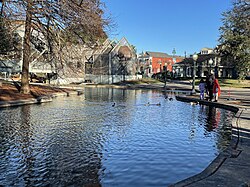
Key Facts
- Size: 32 acres (13 hectares).
- Location: Tremé neighborhood, New Orleans, LA.
- Key Site: Home to the historic Congo Square.
- Major Facilities: New Orleans Municipal Auditorium and Mahalia Jackson Theater for the Performing Arts.
- Transit: Accessible via buses and streetcars at N. Rampart St. and St. Ann St.
Cultural and Historical Significance
Congo Square
One of the most significant areas within the park is Congo Square, located directly in front of the New Orleans Municipal Auditorium. Formerly known as Beauregard Square, this site is renowned for its pivotal role in the history of African American spiritual practices and the evolution of music in the United States.
Musical Monuments
The park pays tribute to the pioneers of jazz through several prominent monuments. Visitors can find a 12-foot statue of Louis Armstrong created by artist Elizabeth Catlett, as well as a bust of Sidney Bechet and a depiction of Buddy Bolden.
Performing Arts and Institutions
Beyond its open spaces, the park's footprint includes several major cultural institutions:
- The New Orleans Municipal Auditorium.
- The Mahalia Jackson Theater for the Performing Arts.
- Various buildings belonging to the New Orleans Jazz National Historical Park.
Events and Community Impact
Louis Armstrong Park has a long history of hosting major cultural gatherings. It was the original site of the first New Orleans Jazz & Heritage Festival in 1970, before the event moved to the larger New Orleans Fairgrounds. Today, the park continues to host vibrant community events, including the Treme Creole Gumbo Fest, the Louisiana Cajun & Zydeco Festival, and the "Jazz in the Park" free concert series.
Design and Urban Challenges
Despite its beauty, certain design elements of the park have faced criticism from residents of the French Quarter and Tremé. Some community members have advocated for the removal of the large perimeter fence and the conversion of rear concrete parking lots into additional greenspace. The existence of these parking lots is largely attributed to issues with flooding and subsidence (the gradual sinking of the ground) along N. Villere Street.
| Feature | Details |
|---|---|
| Total Area | 32 acres (13 ha) |
| Architect | Robin Riley |
| Coordinates | 29°57′46″N 90°4′4″W |
| Primary Neighborhood | Tremé |
| Notable Statues | Louis Armstrong, Sidney Bechet, Buddy Bolden |
Frequently Asked Questions
Where is Louis Armstrong Park located?
The park is located in the Tremé neighborhood of New Orleans, Louisiana, situated just across Rampart Street from the French Quarter.
What is the significance of Congo Square?
Congo Square is a historic site within the park famous for its role in African American music and spiritual practice.
Who designed the park?
The park was designed by New Orleans architect Robin Riley.
What major events are held at the park?
The park hosts the Treme Creole Gumbo Fest, the Louisiana Cajun & Zydeco Festival, and the "Jazz in the Park" free concert series. It also hosted the inaugural New Orleans Jazz & Heritage Festival in 1970.
Why are there large parking lots in the park?
The parking lots are primarily due to high rates of flooding and subsidence along N. Villere Street.