Mamie Smith: The Trailblazing Queen of the Blues
In the early 20th century, the American music landscape was strictly divided by racial lines. However, one woman would shatter these barriers and change the recording industry forever. Mamie Smith, born Mamie Robinson, was a versatile vaudeville singer whose courage and talent paved the way for generations of African American musicians.
As a performer, Smith mastered multiple styles, blending jazz and blues to captivate audiences. Her legacy is most defined by her role as the first African American artist to record vocal blues, a milestone that proved there was a massive, untapped market for Black music in the United States.
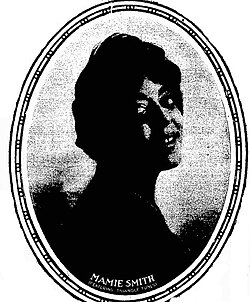
Key Facts
- Historic First: First African American artist to make vocal blues recordings (1920).
- Biggest Hit: "Crazy Blues," which sold one million copies in less than a year.
- Industry Impact: Her success sparked the era of classic female blues and the rise of "race records."
- Recognition: "Crazy Blues" is inducted into the Grammy Hall of Fame and the National Recording Registry.
- Versatility: Transitioned from vaudeville and recording to a career in early sound films.
Early Life and Artistic Beginnings
Mamie Robinson was born in Cincinnati, Ohio. While some historical accounts previously cited 1883 as her birth year, researcher John Jeremiah Sullivan confirmed via her birth certificate in 2018 that she was born in 1891.
Her professional journey began remarkably early. Around the age of 10, she toured with the Four Dancing Mitchells, a white act. As a teenager, she continued to hone her craft dancing in Salem Tutt Whitney's Smart Set. By 1913, she moved to Harlem to sing in local clubs, where she married her first husband, singer William "Smitty" Smith.
Breaking the Color Barrier in Recording
The turning point in music history occurred on February 14, 1920. After bandleader Perry Bradford persuaded Fred Hager of the Okeh label to break the color barrier, Smith recorded "That Thing Called Love" and "You Can't Keep a Good Man Down" in New York City.
The decision was not without risk; Hager had faced threats of boycotts from pressure groups in both the North and South. Despite these tensions, the recordings were a commercial success. While the backing musicians for these first sessions were white, the door was now open for Black artists to enter the studio.
Smith's career reached new heights on August 10, 1920, with the release of "Crazy Blues" and "It's Right Here for You (If You Don't Get It, 'Tain't No Fault of Mine)." "Crazy Blues" became a phenomenon, selling a million copies in under a year. This surge in demand led to the proliferation of race records—recordings specifically marketed to African American audiences.

The Queen of the Blues
Billed as "The Queen of the Blues," Smith toured extensively with her band, Mamie Smith & Her Jazz Hounds, as part of the "Struttin' Along Review." She was an early adopter of radio, using the medium to reach white audiences in cities like Portland, Oregon, where she performed on KGW in 1923.
Her recording lineups featured legendary musicians, including Coleman Hawkins, Bubber Miley, and Joe Smith. Although she was eventually eclipsed in title by Bessie Smith (known as "The Empress of the Blues"), Mamie Smith's foundational success made the subsequent era of classic female blues possible.
Film Career and Later Years
As the music industry evolved, Smith transitioned into cinema. She appeared in the 1929 sound film Jailhouse Blues before retiring from performing in 1931. She made a comeback in 1939 in Paradise in Harlem, produced by her third husband, Jack Goldberg.
Throughout the early 1940s, she appeared in several other films, including Mystery in Swing, Sunday Sinners, Stolen Paradise, Murder on Lenox Avenue, and Because I Love You.
Death and Lasting Memorial
Mamie Smith passed away on August 16, 1946, in New York City. For decades, her contributions to music were not reflected in her final resting place; she was interred at Frederick Douglass Memorial Park on Staten Island in an unmarked grave.
Efforts to honor her began in 1963 with help from musicians in West Germany and singer Victoria Spivey. However, it wasn't until a 2012 crowdfunding campaign led by Michael and Anne Fanciullo Cala—supported by Music Cares—that a permanent monument was funded. On September 20, 2013, a four-foot-high etched granite headstone was finally erected to honor the "First Lady of the Blues."
Summary of Career Highlights
| Category | Details |
|---|---|
| First Blues Recording | February 14, 1920 (Okeh Records) |
| Signature Song | "Crazy Blues" (1920) |
| Key Band | Mamie Smith & Her Jazz Hounds |
| Film Debut | Jailhouse Blues (1929) |
| Major Honors | Grammy Hall of Fame; National Recording Registry |
Frequently Asked Questions
Was Mamie Smith the first Black person ever recorded?
No. Other African Americans, such as George W. Johnson in the 1890s, had been recorded earlier. However, they performed music tailored for European-American audiences. Mamie Smith was the first African American to record vocal blues, creating a specific market for Black musical expression.
What were "race records"?
Race records were recordings of African American music—primarily blues and jazz—that were marketed specifically to Black consumers. The massive success of Mamie Smith's "Crazy Blues" proved the commercial viability of this market to record companies.
Who were the Jazz Hounds?
The Jazz Hounds were Mamie Smith's backing band. The group included several influential musicians over the years, most notably the legendary saxophonist Coleman Hawkins.
How did Mamie Smith's birth date become a point of research?
For years, it was believed she was born in 1883. However, in 2018, researcher John Jeremiah Sullivan discovered her actual birth certificate, which corrected her birth year to 1891 in Cincinnati, Ohio.
What happened to her grave after her death?
Smith was buried in an unmarked grave for 67 years. After various unsuccessful attempts to mark her site, a successful crowdfunding campaign in 2012 raised over $8,000 to install a granite headstone in 2013.