Native Species and the Dynamics of Biogeography
In the study of biogeography—the branch of science dealing with the distribution of species and ecosystems in geographic space and through geological time—the concept of a native species is fundamental. A species is considered native, indigenous, or autochthonous to a region if its presence is the result of local natural evolution. While often simplified as occurring "without human intervention," the reality of nativity is a complex interplay of biology, history, and geography.
Key Facts
- Native species are indigenous to a region through natural evolutionary processes.
- Endemic species are a subset of native species found exclusively in one specific location.
- Introduced species are wild organisms brought to a region via human activity (anthropogenic introduction).
- Invasive species are introduced species that cause significant ecological, environmental, or economic harm.
- Nativity is dynamic, shifting over time due to tectonic movements and natural climate change.
Defining Nativity, Endemism, and Invasion
To understand ecological health, it is essential to distinguish between different types of species residency. A native species may be found in several different regions, meaning it is not necessarily endemic. Endemic species, by contrast, are restricted to a single defined geographic area and found nowhere else on Earth.
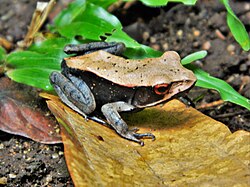
When humans move a wild organism into a new area, it becomes an introduced species. If this organism disrupts the local balance—causing substantial damage to the environment or economy—it is classified as an invasive species.
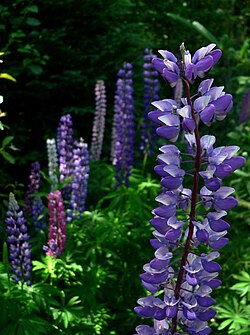
The Fluidity of Geographic Boundaries
Nativity is not a static binary. Over millions of years, the movement of tectonic plates and natural climate shifts (which occur much slower than human-induced changes) alter sea levels, temperatures, and rainfall. These changes shift habitability and drive the migration, reproduction, or extinction of species. Some researchers suggest more graded categories, such as prehistoric natives—species that existed in a region during prehistory but were driven to local extinction by human activity.
Ecological Interactions and Human Impact
Native species do not exist in isolation; they form intricate communities. Many rely on mutualistic interactions, where two species benefit from each other. For example, certain plants depend entirely on a specific animal pollinator for reproduction, while that animal relies on the plant for food. Many native species have also evolved specialized adaptations to survive harsh conditions, such as frequent wildfires or extreme cold.
Historically, biodiversity was maintained because bioregions were separated by natural barriers like oceans, deserts, and high mountain ranges. However, humans now move species across the globe at an unprecedented rate. This anthropogenic movement introduces species to environments they never encountered in their evolutionary history, increasing the risk to native populations.
Consequences of Invasive Species
Invasive species can fundamentally alter an ecosystem's structure, function, and community composition. Beyond the ecological shift, they can damage critical infrastructure, agriculture, and cultural assets, leading government agencies and environmental groups to allocate significant resources toward their management.
Conservation and Ecological Restoration
Organizations such as the Society for Ecological Restoration, Wild Ones, and the Lady Bird Johnson Wildflower Center advocate for the use of native plants to support local wildlife. This often involves identifying remnant natural areas to serve as a blueprint for restoration.
However, restoration is not without challenges. If a project ignores historical distribution or ecotype accuracy, it can fail or even cause further harm. A notable example occurred in 1975 at the Los Angeles International Airport. To prevent erosion, landscapers used a "natural" seed mix of coastal sage scrub. Because this was an exogenous (originating outside the area) community rather than the native dune scrub, it displaced the dune buckwheat. This led to the endangerment of the El Segundo blue butterfly, which relied on the dune buckwheat as its host plant. The butterfly population only began to recover once the invasive California buckwheat was removed.
| Term | Origin | Distribution | Impact |
|---|---|---|---|
| Native | Natural Evolution | Local or Multiple Regions | Supports local ecosystem |
| Endemic | Natural Evolution | One Specific Location | Highly vulnerable to loss |
| Introduced | Human Activity | New Geographic Area | Variable |
| Invasive | Human Activity | Spreads Rapidly | Ecological/Economic Damage |
Frequently Asked Questions
What is the difference between a native species and an endemic species?
A native species is indigenous to a region through natural processes but can be found in multiple different regions. An endemic species is a native species that is found exclusively in one specific geographic location and nowhere else.
Can a species be both native and invasive?
Generally, no. A species is considered invasive only if it has been introduced to a region by human activity and then causes substantial damage. A species is native to the region where it evolved naturally.
Why is it important to use native plants in home gardens?
Native plants have co-evolved with local wildlife, providing essential food and habitat for pollinators and other animals that may not be able to utilize non-native species.
How do invasive species affect the environment?
Invasive species can change the structure and function of an ecosystem, alter species abundance, and outcompete native species for resources, which can lead to a loss of biodiversity.
Does "native" mean the species first evolved in that exact spot?
Not necessarily. The term native implies the species arrived in the region through natural means rather than human intervention, but it does not strictly mean the species first originated or evolved in that specific location.