National Flags: Symbols of Sovereignty and Identity
Across the globe, national flags serve as more than just pieces of colored fabric; they are powerful emblems of identity, history, and political legitimacy. From the halls of international diplomacy to the heart of local communities, these symbols distinguish one state from another and foster a sense of national unity among citizens.
In the arena of international politics, flags are essential tools for representation. Currently, all 193 member states of the United Nations, along with two General Assembly non-member observer states and various de facto states (entities that function as states but lack widespread international recognition), utilize national flags to assert their presence on the world stage.
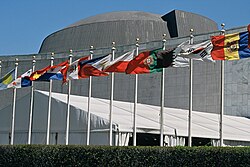
Key Facts
- Global Usage: Used by 193 UN member states, 2 non-member observer states, and several de facto states.
- Oldest Flag: The flag of Denmark is the oldest national symbol still in use, recognized since the 13th century.
- Purpose: Flags are adopted to strengthen national bonds, legitimate formal authority, and distinguish states in international law.
- Symbolism: Designs often incorporate elements representing territories, rulers, dynasties, militaries, or the people.
Defining the National Flag
According to the Collins English Dictionary, a national flag is defined as "a flag that represents or is an emblem of a country." While the term "country" often refers to a sovereign or independent state, it can also describe sub-divisions of a larger sovereign entity.
A primary example of this distinction is the United Kingdom. While it is a single sovereign state, it is a union of four countries: the kingdoms of England and Scotland, the principality of Wales, and the province of Northern Ireland. Despite these internal divisions, international law customarily expects nation-states to adopt a primary flag to distinguish themselves from other global entities.
The Role of Vexillology and Symbolism
The study of flags is known as vexillology. This field examines the design, history, and usage of flags, as well as the specific symbols—known as vexillological symbols—that appear on them.
Governments carefully select colors and imagery to convey specific meanings. These elements may include:
- Dynastic Symbols: References to ruling families or historical dynasties.
- Territorial Markers: Colors or shapes representing the geography of the land.
- Military Honors: Symbols reflecting the strength or history of the armed forces.
- Cultural Identity: Elements that represent the heritage and values of the people.
| Category | Description | Example/Context |
|---|---|---|
| Sovereign State Flag | Represents a fully independent nation | UN Member States |
| Observer State Flag | Represents non-member observer states | General Assembly Observers |
| De Facto State Flag | Represents entities acting as states without full recognition | Various disputed territories |
| Sub-division Flag | Represents a nation within a union | Wales or Scotland (UK) |
Frequently Asked Questions
What is the oldest national flag still in use?
The flag of Denmark holds the record as the oldest national flag still in current use, having been recognized as a national symbol since the 13th century.
What is the difference between a sovereign state and a country in the context of flags?
A sovereign state is an independent entity recognized internationally. However, a "country" can also be a sub-division of a sovereign state, such as the four countries that make up the United Kingdom.
Why do governments adopt national flags?
Governments adopt flags to legitimate their formal authority, strengthen the bonds between their citizens, and provide a distinct emblem for use in international politics and law.
What is vexillology?
Vexillology is the scientific study of flags, including their history, symbolism, and the design principles used to create them.
Who uses national flags besides UN member states?
In addition to the 193 UN member states, national flags are used by two General Assembly non-member observer states and several de facto states.