Vexillology: The Science and Art of Flags
Flags are more than just pieces of fabric; they are powerful symbols of identity, history, and sovereignty. The formal study of these symbols is known as vexillology (pronounced VEK-sih-LOL-ə-jee), a field that encompasses the history, symbolism, and usage of flags. Whether pursued as a rigorous academic discipline or a passionate hobby, vexillology provides a framework for understanding how visual markers communicate complex social and political meanings.
Within this field, different roles are defined by their focus. A vexillologist is someone who studies flags, while a vexillographer is a specialist who designs them. The actual art and practice of flag design is called vexillography. Those who simply admire flags as a hobby are known as vexillophiles.
Key Facts
- Origin: The term was coined by American scholar Whitney Smith in 1957.
- Etymology: Derived from the Latin vexillum (a Roman cavalry flag) and the Greek -logia (study).
- Global Body: The International Federation of Vexillological Associations (FIAV) serves as the global umbrella organization.
- Design Standard: The "Good Flag, Bad Flag" principles are the most widely cited guidelines for effective design.
- Standardization: Vexillologists use a specific "Flag Information Code" to record flag usage in a language-neutral format.
The History and Evolution of the Field
While humans have used flags since the earliest days of civilization, the formal study of them is relatively recent. For centuries, the study of flags was considered a subset of heraldry, which is the study of armorial bearings (coats of arms).
The transition to a standalone discipline began in 1957 when Whitney Smith conceived the term "vexillology." By 1959, the term appeared in print, and in 1961, Smith further formalized the field by publishing The Flag Bulletin. Smith was instrumental in establishing the infrastructure of the discipline, organizing the first International Congress of Vexillology (ICV), the North American Vexillological Association (NAVA), and the International Federation of Vexillological Associations (FIAV).
Today, vexillology is an interdisciplinary field that draws from sociology, history, and design. Since 1969, the ICV has met every two years under the FIAV, publishing the official Congress's Proceedings to share academic findings.
Vexillological Organizations and Governance
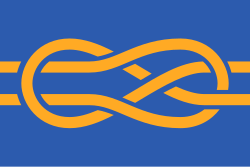
The FIAV acts as the primary international body, overseeing various constituent organizations such as the North American Vexillological Association (NAVA), the Deutsche Gesellschaft für Flaggenkunde (German Society for Flag Studies), and Flags of the World (FOTW).
In some regions, flag usage is strictly regulated by law. In Scotland, for example, all flags must be authorized by the Lord Lyon for recording in the Public Register of All Arms and Bearings in Scotland. To support this, Philip Tibbetts of the UK Flag Institute was appointed as the Honorary Vexillologist to the Court of the Lord Lyon.
The Principles of Vexillography
Vexillography, the design of flags, relies on specific principles to ensure a flag is effective and recognizable. In 2006, the NAVA published a highly influential booklet titled "Good" Flag, "Bad" Flag, compiled by Ted Kaye. This guide outlines five core principles for effective design:
- Simplicity: The design should be simple enough for a child to draw from memory.
- Meaningful Symbolism: Every element should represent something significant.
- Limited Palette: Use two or three contrasting colors.
- No Text: Avoid using lettering or complex seals.
- Distinctiveness: The flag should be unique while remaining contextually related to similar flags.
These principles have gained global traction, with the booklet translated into five languages. They have also influenced real-world changes; for instance, Minnesota redesigned its state flag in 2024 with guidance from Ted Kaye.
Technical Symbols and Data Recording
To communicate flag data efficiently across different languages, Whitney Smith developed a standardized system of symbols in the early 1970s. Formally adopted by the FIAV in 1981 as the Flag Information Code, this system uses a two-by-three grid to categorize flag usage:
| Usage Context | Civil | State | Military |
|---|---|---|---|
| Land Use | Cell 1 | Cell 2 | Cell 3 |
| Sea Use | Cell 4 | Cell 5 | Cell 6 |
A filled dot in a cell indicates that a flag is used in that specific context. Additional symbols denote if a flag is historical, proposed but not adopted, or double-sided. While not part of the official FIAV standard, extensions proposed by Željko Heimer regarding vertical displays and obsolete historical flags are commonly used by professionals.
Public Interest and Modern Redesigns
Vexillology entered the mainstream consciousness after 2015, largely due to a TED Talk by Roman Mars titled "Why city flags may be the worst-designed thing you've never noticed." Mars used the "Good Flag, Bad Flag" principles to critique the aesthetics of various American municipal flags.
This surge in interest led to a wave of redesigns. NAVA has tracked these trends through surveys; a 2004 survey of 150 municipal flags famously rated the flag of Pocatello, Idaho, as the lowest (1.48/10). Conversely, a 2022 survey of 312 redesigned flags saw Tulsa's updated flag ranking first.
Frequently Asked Questions
What is the difference between a vexillologist and a vexillographer?
A vexillologist is a person who studies the history, symbolism, and usage of flags, whereas a vexillographer is a person who specifically designs flags.
Who is considered the father of modern vexillology?
American scholar Whitney Smith is credited with conceiving the term "vexillology" in 1957 and formalizing the field with the publication of The Flag Bulletin in 1961.
What are the five basic principles of a "good" flag?
According to Ted Kaye, a good flag should be simple, use meaningful symbolism, feature two or three contrasting colors, avoid lettering or seals, and be distinctive.
What is the Flag Information Code?
It is a standardized, language-neutral system of symbols adopted by the FIAV that uses a grid to indicate whether a flag is used for civil, state, or military purposes on land or at sea.
How does vexillology differ from heraldry?
Heraldry is the study of armorial bearings (coats of arms). While vexillology was once considered a part of heraldry, it is now recognized as its own distinct discipline focused specifically on flags.