National Epics: The Literary Soul of Nations
A national epic is a literary work of epic scope—often a long poem—that seeks to capture and express the essence or spirit of a particular nation. While we often associate the word "nation" with a modern nation-state, in a literary context, it can refer to any ethnic or linguistic group striving for autonomy or independence. These works serve as cultural anchors, recounting the origins of a people, pivotal historical events, or the development of a shared national identity.
From the ancient Mediterranean to the forests of Finland, these narratives do more than tell a story; they create a mirror in which a society sees its highest ideals and its ancestral roots.
Key Facts
- Purpose: To express the spirit, essence, and identity of a linguistic or ethnic group.
- Content: Typically focuses on national origins, historical milestones, and founding myths.
- Evolution: Transitioned from strictly poetic forms to broader literary works that embody a nation's character.
- Drivers: Often fueled by Romantic nationalism to fill gaps in a perceived national mythology.
The Evolution of the National Epic
Classical Foundations
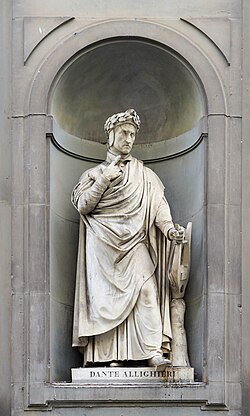
In the medieval era, the line between mythology and history was often blurred. Homer's Iliad was widely accepted as a factual account, and the Trojan War was viewed as a seminal event in the genealogies of various European monarchies. Following this tradition, Virgil wrote the Aeneid as a Roman counterpart to the Iliad, tracing the lineage of the young Roman nation back to the Fall of Troy.
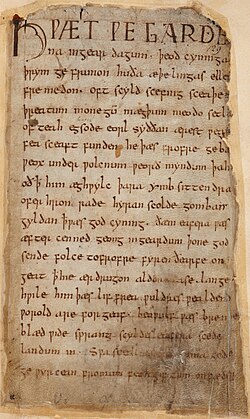
This pattern of linking a nation's ancestry to classical antiquity persisted for centuries. In the 12th century, Geoffrey of Monmouth wrote Historia Regum Britanniae to serve a similar function for the British and Welsh. Later, in the 16th century, Pierre de Ronsard attempted to create La Franciade, a Gallic equivalent to Virgil's work that traced French ancestry back to Trojan princes.
The Rise of Romantic Nationalism
While the impulse to create a national ethos is ancient, the specific phrase "national epic" is closely tied to Romantic nationalism. During this period, writers were motivated by the "Romantic spirit" to invent or recover myths where none seemed to exist.
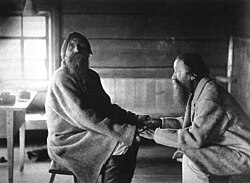
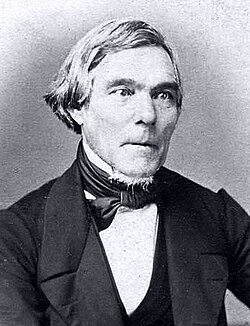
A notable example is Ossian, a cycle of poems by James Macpherson. Macpherson claimed these were translations from ancient Scottish Gaelic sources, though they were largely seen as an attempt to fill a gap in Scottish national myth. Other works, such as the Finnish Kalevala or the Slovak Svatopluk, similarly sought to codify the spirit of their respective peoples.
Modern Interpretations
By the 19th century, the era of the traditional epic poem began to wane. Adam Mickiewicz's Pan Tadeusz (1834) is frequently cited as the final epic poem of European literature. In the 20th century, the definition expanded. The term no longer requires a poem or a historical chronicle; instead, it can describe any literary work that critics and readers agree is emblematical of a nation's literature.
For instance, in James Joyce's Ulysses, the character Dr. Sigerson suggests that while Don Quixote serves as the national epic of Spain, Ireland's national epic had yet to be written.

Comparative Overview of National Epics
| Work | Nation/Group | Primary Focus |
|---|---|---|
| Aeneid | Rome | Founding of Rome via Trojan ancestry |
| Os Lusíadas | Portugal | Celebration of Portugal as a naval power |
| Kalevala | Finland | Finnish mythology and folk poetry |
| Pan Tadeusz | Poland | Polish nobility and national spirit |
| Don Quixote | Spain | Emblematic of Spanish literary character |
Frequently Asked Questions
What is the main purpose of a national epic?
The primary purpose is to capture and express the essence, spirit, or identity of a specific nation, ethnic group, or linguistic community, often by recounting its origins or key historical events.
Does a national epic have to be a poem?
Historically, yes, they were typically epic poems. However, since the early 20th century, the term has expanded to include any literary work that is considered emblematical of a nation's literature, regardless of its form.
How did Romantic nationalism influence these works?
Romantic nationalism encouraged writers to create or "rediscover" national myths to fill perceived gaps in a culture's heritage, leading to the creation of works that solidified national identity during the 18th and 19th centuries.
Are national epics always based on true history?
Not necessarily. While many recount historical events, they often blend fact with myth. For example, many early European epics claimed Trojan origins to provide a prestigious lineage for their respective nations.