Homer: The Legendary Poet of the Iliad and Odyssey
Homer stands as the most influential figure in the history of Western literature. Traditionally credited as the author of the Iliad and the Odyssey, he is the foundational voice of the Greek epic tradition. While his historical existence remains a subject of intense scholarly debate, his works have shaped the cultural and literary landscape for nearly three millennia.
Writing in a specialized literary dialect known as Homeric Greek (a mixture of Ionic and other dialects), Homer crafted narratives that blended mythology, human psychology, and the brutal realities of war and survival. His stories are not merely tales of heroes and gods but are essential windows into the values and social structures of early Greek society.
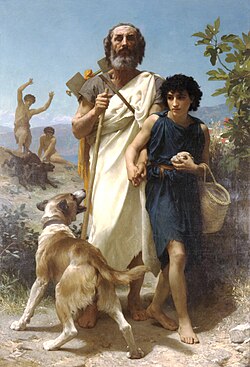
Key Facts
- Notable Works: The Iliad and the Odyssey.
- Estimated Era: Born circa 8th century BC, possibly in Ionia.
- Literary Genre: Epic poetry, specifically focusing on the Epic Cycle.
- Language: Homeric Greek (a literary form of Ionic Greek).
- Legacy: His works served as the primary educational texts of ancient Greece.
The Life and Identity of Homer
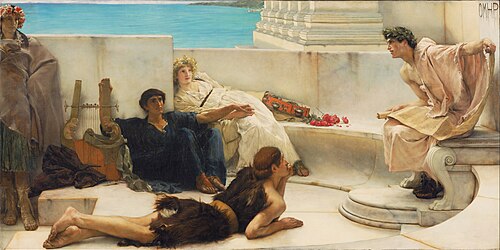
The biography of Homer is shrouded in mystery. Ancient traditions suggest he may have been born in Ionia and died on the island of Ios. Many traditions describe him as a blind poet, a detail that has become central to his iconography in art and literature.
Despite these traditions, modern scholars often discuss the "Homeric Question," which examines whether "Homer" was a single individual or a name given to a long tradition of oral poets. The complexity of the texts suggests a transition from oral composition—where poets improvised using set formulas—to a written form.
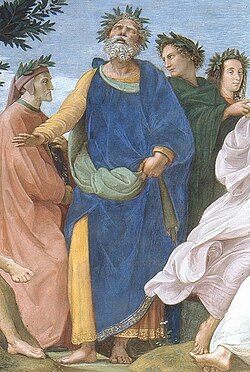
The Masterworks: Iliad and Odyssey
Homer is primarily attributed with two monumental epics that define the Epic Cycle, a collection of poems detailing the events of the Trojan War.
The Iliad
The Iliad focuses on a brief period during the final year of the Trojan War, centering on the wrath of Achilles and the devastating consequences of his conflict with King Agamemnon. It explores themes of honor, fate, and the tragedy of war.
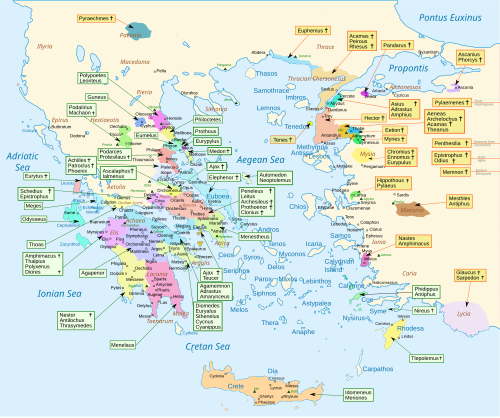
The Odyssey
The Odyssey follows the long and perilous journey of Odysseus as he attempts to return home to Ithaca after the fall of Troy. It is a narrative of endurance, cunning, and the longing for home, contrasting the martial focus of the Iliad with a broader exploration of the Mediterranean world.
![Among the four surviving statues of Penelope, this is the oldest dating back to the 5th century BC, crafted 300 years after Homer composed the Odyssey. Discovered in Persepolis and housed at the National Museum of Iran, the other three are kept at the Vatican Museum and Capitoline Museum in Rome.[43][44][45]](/images/ed/0a/ed0acc87000bb05b0b6c11da7122d1a396d017a1a6aee149eec8c0150369cd02.jpg)
Historicity and Society
Analyzing the Homeric epics provides clues about the era in which they were composed and the era they describe. For instance, in the Iliad (10.260–265), Odysseus is described as wearing a helmet made of boar's tusks. While such helmets were not common in the 8th century BC, they were frequently used by aristocratic warriors between 1600 and 1150 BC, suggesting that the poems preserve memories of a much older Mycenaean society.
Transmission and Scholarship
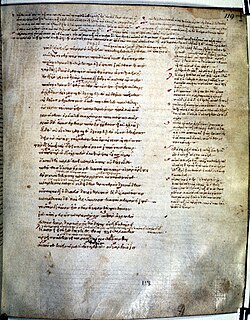
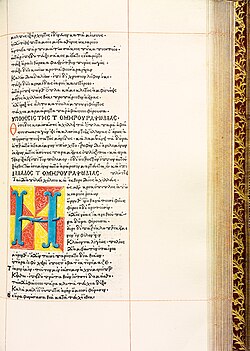
The journey of Homer's texts from oral performance to printed books spanned centuries. Early manuscripts, such as the "Townley Homer," contain scholia—ancient marginal notes that provided commentary and interpretation of the text.
The first printed edition, known as the editio princeps, was edited by Demetrios Chalkokondyles in Florence in 1489. Since then, scholarship has evolved from ancient interpretations to modern linguistic and narratological analyses.
Summary of Homeric Profile
| Category | Details |
|---|---|
| Primary Works | Iliad, Odyssey |
| Language | Homeric Greek (Literary Ionic) |
| Estimated Date | c. 8th Century BC |
| Key Themes | Honor, Fate, War, Homecoming |
| Transmission | Oral tradition $\rightarrow$ Manuscripts $\rightarrow$ Print |
Frequently Asked Questions
Who was Homer?
Homer is the legendary author of the Iliad and the Odyssey. While tradition describes him as a blind poet from Ionia living around the 8th century BC, his exact identity remains unknown and is a central topic of the "Homeric Question."
What is the difference between the Iliad and the Odyssey?
The Iliad is a war epic focusing on the conflict at Troy and the rage of Achilles. The Odyssey is a journey epic focusing on Odysseus's ten-year struggle to return home to Ithaca.
What is Homeric Greek?
Homeric Greek is a literary dialect used in the epics. It is not a spoken language of any specific city but a mixture of Ionic Greek and other archaic forms designed for the meter and style of epic poetry.
Are the stories in Homer's epics based on real history?
The poems blend mythology with historical echoes. For example, the mention of boar's tusk helmets aligns with archaeological evidence from the period between 1600 and 1150 BC, suggesting the poems reflect an older heroic age.
How were Homer's works preserved?
They were originally composed and performed orally. They were later written down in manuscripts and eventually printed, with the first collected printed edition appearing in 1489.