Mutually Assured Destruction: The History and Evolution of Nuclear Deterrence
Mutually Assured Destruction (MAD) is a doctrine of military strategy and national security based on the theory of deterrence. It posits that when two or more opposing military forces possess enough nuclear weapons to destroy one another, neither side will initiate a first strike, as the resulting retaliatory strike would ensure the total annihilation of both the attacker and the defender.
While most commonly associated with the Cold War, the philosophical roots of MAD—the idea that a weapon so terrible it makes war inconceivable will force a lasting peace—predate the atomic age by nearly a century.
Key Facts
- Core Principle: Deterrence through the guarantee of a devastating retaliatory strike.
- The Nuclear Triad: A three-pronged delivery system consisting of land-based missiles, strategic bombers, and submerged submarines.
- Second-Strike Capability: The ability of a nation to absorb a nuclear attack and still respond with enough force to destroy the aggressor.
- MIRVs: Multiple Independently targetable Re-entry Vehicles allow a single missile to strike several different targets.
- Nuclear Winter: A theoretical climatic collapse caused by smoke and debris from nuclear explosions blocking sunlight.
Philosophical Origins and Early Concepts
Long before the first nuclear test, writers and inventors speculated on the possibility of a "superweapon" that would end all conflict. In 1863, Jules Verne described a perpetual stalemate in his novel Paris in the Twentieth Century, and in 1870, Wilkie Collins wrote of a destructive agent so terrible that fear would force men to keep the peace.
Inventors also viewed their creations through this lens. Richard Jordan Gatling patented the Gatling gun in 1862 to illustrate the futility of war, and Alfred Nobel hoped that the invention of dynamite would cause civilized nations to recoil from conflict. In 1937, Nikola Tesla proposed a charged particle beam weapon designed to put an end to all war.
The transition from philosophy to technical reality occurred in March 1940 with the Frisch–Peierls memorandum, which first outlined the technical possibility of a practical nuclear weapon and anticipated deterrence as the primary means of combatting an enemy possessing such power.
The Early Cold War and the Nuclear Triad
The United States became the first nuclear power in August 1945, followed by the Soviet Union in 1949. Initially, neither side had the means to effectively deliver weapons deep into the other's territory. This changed with the development of long-range aircraft, such as the American Convair B-36 and the Soviet Tupolev Tu-95.
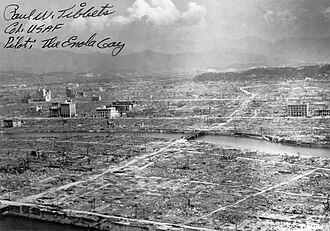
During this era, the U.S. adopted a policy of "Instant Retaliation," which threatened massive atomic attacks against the Soviet Union in response to any invasion of Europe. However, the doctrine of MAD was not fully realized until the development of the nuclear triad: land-based missiles, bombers, and nuclear-powered ballistic missile submarines (SSBNs).
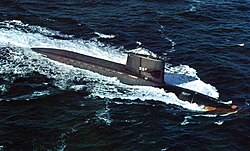
The addition of submarines, such as the George Washington class introduced in 1959, provided the critical "third leg." Because submarines could remain hidden underwater, they ensured a second-strike capability—the guarantee that even if a surprise first strike destroyed all land-based silos and airfields, a retaliatory force would survive to destroy the attacker.
Strategic Air Command and the Brink of War
To maintain a credible threat, the U.S. Strategic Air Command (SAC) implemented rigorous alert systems. By 1961, President John F. Kennedy increased the number of bombers on alert to 50 percent. During peak tensions in the 1960s, some B-52 bombers remained airborne at all times to ensure an immediate response to a surprise attack.

The high-stakes nature of this readiness was reflected in popular culture, most notably in the 1964 films Dr. Strangelove and Fail Safe, which explored the catastrophic potential of accidental nuclear launch.
Technological Challenges to Stability
Anti-Ballistic Missiles (ABMs)
In the 1960s, both superpowers developed anti-ballistic missile systems, such as the Soviet A-35 and the American LIM-49 Nike Zeus. These systems threatened MAD because if a nation could effectively defend itself against a retaliatory strike, it might feel emboldened to launch a first strike without fear of consequence.
MIRVs: Overwhelming the Defense
To counter ABM systems, the U.S. developed Multiple Independently targetable Re-entry Vehicles (MIRVs). This technology allowed a single Intercontinental Ballistic Missile (ICBM) to carry multiple warheads, each capable of hitting a different target. This made defense prohibitively expensive and technically untenable.
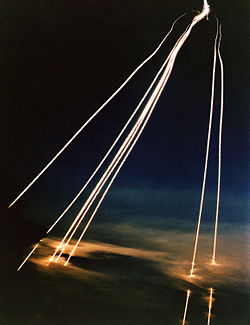
For example, the LGM-118A Peacekeeper could carry up to 10 warheads, totaling an explosive payload equivalent to 230 Hiroshima-type bombs. While MIRVs reinforced MAD by ensuring retaliation, they were also seen as destabilizing because they increased the incentive for a "counterforce" first strike to eliminate the enemy's missiles before they could be launched.
Evolution of Strategy and the End of the Cold War
In 1980, President Jimmy Carter shifted toward a "countervailing strategy," which prioritized targeting Soviet leadership and military assets over population centers, suggesting a more constrained—and potentially "winnable"—nuclear conflict.
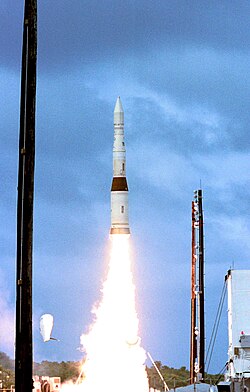
This evolved further under the Reagan administration with the Strategic Defense Initiative (SDI), or "Star Wars." SDI aimed to use space-based technology to destroy missiles in flight. Critics, including Soviet physicist Andrei Sakharov and UK Prime Minister Margaret Thatcher, argued that SDI would undermine MAD by giving the U.S. a perceived first-strike advantage, potentially triggering a new arms race.
The Theory of Nuclear Winter
In 1983, the TTAPS study, involving researchers like Carl Sagan, introduced the concept of nuclear winter. They predicted that the smoke from burning cities would block sunlight, dropping global temperatures by 15°C to 25°C. This suggested that even a limited nuclear exchange could cause global catastrophe, reinforcing the argument for drastic weapons reductions.
Post-Cold War Dynamics and Modern Challenges
Following the Cold War, the MAD balance shifted. The U.S. withdrew from the Anti-Ballistic Missile Treaty in 2002. Some analysts, such as Keir Lieber and Daryl Press, have argued that the decay of Russian nuclear stockpiles has pushed the U.S. toward "global nuclear primacy," potentially ending the era of mutual stability.
Meanwhile, China has aggressively modernized its arsenal. As of March 2025, China is estimated to possess approximately 600 warheads, with projections suggesting 1,000 by 2030. By developing its own second-strike capabilities, China is moving toward a MAD relationship with the United States, which complicates regional security, particularly regarding Taiwan.
| Concept | Primary Goal | Key Mechanism | Effect on Stability |
|---|---|---|---|
| First Strike | Eliminate enemy capability | Surprise attack on silos/bases | Destabilizing |
| Second Strike | Ensure retaliation | Survivable forces (e.g., SSBNs) | Stabilizing (Core of MAD) |
| MIRV | Overwhelm defenses | Multiple warheads per missile | Mixed (Counters ABM, encourages first strike) |
| ABM | Prevent impact | Interception of incoming missiles | Destabilizing (Undermines MAD) |
Frequently Asked Questions
What is the difference between a first strike and a second strike?
A first strike is a surprise nuclear attack intended to destroy the opponent's weapons before they can be used. A second strike is the ability to launch a devastating retaliatory attack after having been hit by a first strike.
Why are submarines so important to MAD?
Submarines provide a survivable nuclear force. Unlike land-based silos, which are fixed targets, submerged submarines are difficult to detect, ensuring that a nation can always retaliate even if its land forces are destroyed.
How do MIRVs affect nuclear stability?
MIRVs make missile defense nearly impossible by flooding the sky with multiple warheads. However, they are considered destabilizing because one missile can destroy multiple enemy silos, increasing the incentive for an attacker to strike first.
What is the "Nuclear Triad"?
The nuclear triad is the combination of three delivery methods for nuclear weapons: land-based intercontinental ballistic missiles (ICBMs), strategic bombers, and submarine-launched ballistic missiles (SLBMs).
What is nuclear winter?
Nuclear winter is a theoretical global cooling effect caused by soot and smoke from nuclear explosions rising into the stratosphere and blocking sunlight, leading to massive temperature drops and agricultural failure.