The Musical Envoy: The Life and Legacy of Van Cliburn
In the height of the Cold War, a period defined by intense geopolitical tension between the United States and the Soviet Union, a single young man used the language of music to bridge a massive cultural divide. Harvey Lavan "Van" Cliburn Jr. was more than just a virtuoso; he was a global phenomenon whose talent transcended borders and politics.
Born in 1934, Cliburn rose from a young prodigy in Texas to become one of the most celebrated classical pianists in history. His career was defined by a historic victory in Moscow that captured the imagination of the world and a lasting legacy that continues to nurture new musical talent today.
Early Musical Foundations
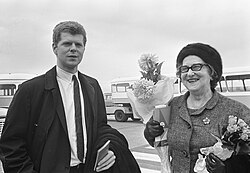
Cliburn's journey began early. By the age of 12, he had already won a statewide piano competition, an achievement that led to his debut with the Houston Symphony Orchestra. After graduating from Kilgore High School, he moved to New York City to attend the prestigious Juilliard School at age 17.
At Juilliard, he studied under Rosina Lhévinne, a renowned teacher who trained him in the tradition of the great Russian Romantics—a style characterized by emotional depth and technical brilliance. Cliburn's rapid ascent continued with several major honors:
- 1952: Winner of the Kosciuszko Foundation's Chopin Piano Competition.
- 1954: Winner of the Leventritt Award, the most prestigious piano competition of that era.
- Age 20: Made his highly anticipated debut at Carnegie Hall.
A Cold War Triumph in Moscow
In 1958, the world was focused on the Space Race following the Soviet launch of Sputnik. In this atmosphere, the inaugural International Tchaikovsky Competition was held in Moscow, intended to showcase Soviet cultural superiority. While the competition field was initially seen as having regional significance, Cliburn saw it as an opportunity for cultural exchange following the death of Joseph Stalin.
On April 13, 1958, Cliburn delivered a performance that would change his life. Playing Tchaikovsky's Piano Concerto No. 1 and Rachmaninoff's Piano Concerto No. 3, he earned an eight-minute standing ovation. In a moment of profound cultural connection, he even performed a piano arrangement of the Russian song "Moscow Nights," endearing him to the local audience.
The victory was so unexpected that judges reportedly sought permission from Soviet leader Nikita Khrushchev to award the first prize to an American. Khrushchev famously replied, "Is he the best?" Upon hearing "Yes," he gave the command to award the prize. Cliburn returned to the United States to a ticker-tape parade in New York City—the only classical musician ever to receive such an honor.
Recording Success and Global Impact
Cliburn's success was not limited to the stage. His recording of Tchaikovsky's Piano Concerto No. 1 became a massive commercial hit, reaching No. 1 on the Billboard Top 200. It was a landmark in music history, becoming the first classical album to be certified platinum and eventually reaching triple-platinum status.
His discography includes a wide range of standard repertoire, such as:
- Brahms: Piano Concerto No. 2
- Schumann: Piano Concerto in A minor
- Grieg: Piano Concerto in A minor
- Rachmaninoff: Piano Concerto No. 2 and Rhapsody on a Theme of Paganini
- Beethoven: Piano Concertos No. 4 and No. 5 ("Emperor")
- Prokofiev: Piano Concerto No. 3
The Van Cliburn Legacy
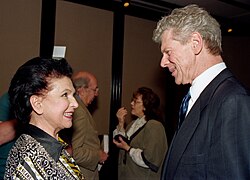
Cliburn's impact on the musical community was solidified through the creation of the Van Cliburn International Piano Competition. Established in 1962 in Fort Worth, Texas, the competition was founded to honor his achievements and provide a platform for emerging artists. Cliburn served as Director Emeritus of the Van Cliburn Foundation until his death.
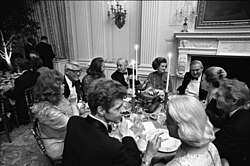
Despite a hiatus from public life in the late 1970s following personal losses, Cliburn made several triumphant returns, including a 16-city tour in 1994 and performances for world leaders like Mikhail Gorbachev and Ronald Reagan.
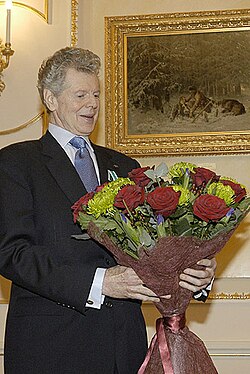
Key Facts
- Major Achievement: First and only American to win the International Tchaikovsky Competition in piano.
- Record-Breaking Album: His Tchaikovsky recording was the first classical album to achieve platinum certification.
- Global Recognition: Received the Presidential Medal of Freedom (USA) and the Order of Friendship (Russia).
- Cultural Institution: Founded the Van Cliburn International Piano Competition in Fort Worth, Texas.
- Final Honors: His 1958 Moscow performance is preserved in the National Recording Registry at the Library of Congress.
Summary of Honors and Awards
| Year | Award/Honor | Issuing Body/Country |
|---|---|---|
| 1958 | Grammy Award for Best Classical Performance | Recording Academy |
| 1962 | Charles E. Lutton Man of Music Award | Phi Mu Alpha Sinfonia |
| 2001 | Kennedy Center Honors | United States |
| 2003 | Presidential Medal of Freedom | United States |
| 2004 | Order of Friendship | Russia |
| 2004 | Grammy Lifetime Achievement Award | Recording Academy |
| 2011 | National Medal of Arts | United States |
Frequently Asked Questions
What was the significance of Cliburn's win in Moscow?
His victory occurred during the Cold War, a time of extreme tension between the US and the USSR. By winning the Tchaikovsky Competition, Cliburn acted as a "musical envoy," using his talent to foster goodwill and cultural exchange between the two superpowers.
How did Cliburn's recording career impact the classical music industry?
Cliburn helped bring classical music to a mainstream audience. His Tchaikovsky recording was the first classical album to go platinum, proving that classical music could achieve massive commercial success on the Billboard charts.
What is the Van Cliburn International Piano Competition?
It is a prestigious quadrennial piano competition held in Fort Worth, Texas. It was established in 1962 to honor Cliburn's legacy and has since become one of the most important platforms for discovering new classical piano talent.
When and where did Van Cliburn pass away?
Van Cliburn passed away on February 27, 2013, in Fort Worth, Texas, at the age of 78, following a battle with advanced bone cancer.
Did Cliburn ever return to the Soviet Union?
Yes, Cliburn returned to the Soviet Union on several occasions for performances that were often recorded and televised. He maintained a warm relationship with the Soviet people throughout the Cold War era.