Mushrooms: Biology, Nutrition, and Diversity of Fungi
A mushroom is the fleshy, spore-bearing fruiting body of a fungus. While most commonly seen emerging from the soil or decaying organic matter, the mushroom is only a small part of the organism's overall structure. These structures serve a critical biological purpose: producing microscopic spores that allow the fungus to spread across new surfaces and environments.
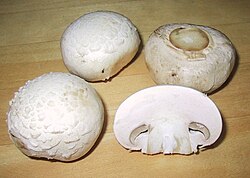
While the term is often used broadly, a "toadstool" generally refers specifically to a poisonous mushroom. In a botanical context, the standard reference for a mushroom is the cultivated white button mushroom, Agaricus bisporus.
Key Facts
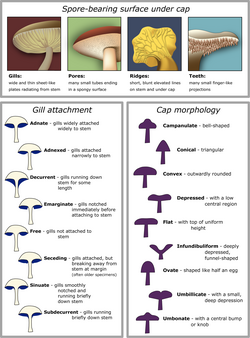
- Structure: Typical mushrooms consist of a stem (stipe), a cap (pileus), and gills (lamellae) on the underside.
- Classification: Most mushrooms belong to the Basidiomycota (specifically Agaricomycetes), though some Ascomycota also produce fleshy fruiting bodies.
- Longevity: While the visible mushroom is short-lived, the underground mycelium can live for thousands of years.
- Nutrition: They are low-calorie sources of protein and rich in B vitamins, selenium, and copper.
- Global Production: China is a leading producer, accounting for approximately half of all cultivated mushrooms.
Morphology and Classification
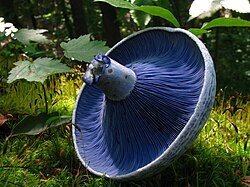
The classic mushroom shape—a cap atop a stem—is common, but fungal morphology is incredibly diverse. Gilled mushrooms are often called agarics due to their similarity to the genus Agaricus. The gills are the primary site of spore production.
Fungi that deviate from this standard form have specific names based on their appearance:
- Boletes: Fungi with pores instead of gills.
- Morels: Distinctive honeycombed caps.
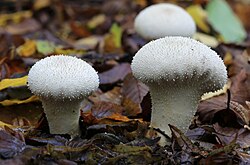
- Puffballs: Rounded fungi that release spores in a cloud of powder.
- Truffles: Subterranean fruiting bodies.
- Stinkhorns: Fungi known for their strong odors.
Growth and the Mycelium
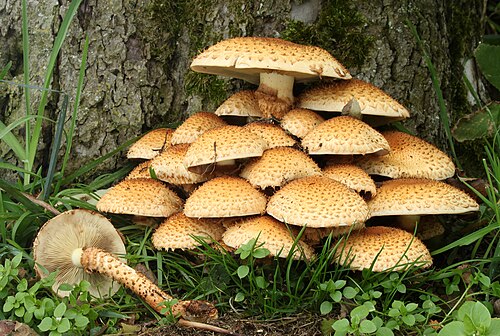
The visible mushroom is merely the reproductive stage. The main body of the fungus is the mycelium, a network of white filaments that lives underground or within wood. Some mycelial colonies are massive; for example, a colony of Armillaria solidipes in the Malheur National Forest of the United States is estimated to be 2,400 years old and spans roughly 2,200 acres (8.9 km²). This network often utilizes black, shoelace-like rhizomorphs to bridge separate woody substrates.
Nutritional Profile
Raw brown mushrooms are highly hydrating, consisting of 92% water. They are a nutrient-dense food source, particularly rich in B vitamins and essential minerals. They provide a significant percentage of the Daily Value (DV) for copper and selenium.
| Nutrient | Amount | % Daily Value (DV) |
|---|---|---|
| Energy | 22 kcal | - |
| Protein | 2.5 g | - |
| Carbohydrates | 4.3 g | - |
| Riboflavin (B2) | - | 38% |
| Pantothenic acid (B5) | - | 30% |
| Niacin (B3) | - | 24% |
| Copper | - | 56% |
| Selenium | - | 47% |
| Potassium | - | 15% |
Human Use and Diversity
Edible and Cultivated Species
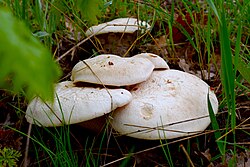
Mushrooms are a global dietary staple. China produces about half of the world's cultivated mushrooms, with an average consumption of 2.7 kg per person annually. Poland has also been a major global exporter, reporting approximately 194,000 tonnes annually in 2014.
Toxic and Psychoactive Fungi
Many mushrooms are dangerous to humans. The Amanita phalloides, known as the "death cap," is a prime example of a lethal species.
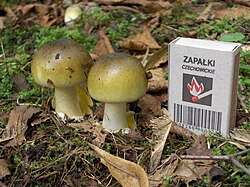
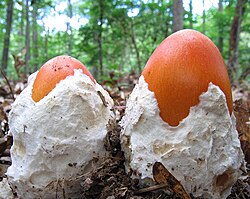
Other fungi contain psychoactive compounds. The genus Psilocybe includes over 100 species native to various regions worldwide that produce hallucinogenic effects. Another well-known example is Amanita muscaria, the iconic red-and-white "fly agaric" often depicted in folklore.
![Amanita muscaria, the most easily recognised "toadstool", is frequently depicted in fairy stories and on greeting cards. It is often associated with gnomes.[1]](/images/2f/29/2f291c827df5ea05a26cd7ef9ee8165bb6a9eae105b18702bf35f4906c0e5bfb.jpg)
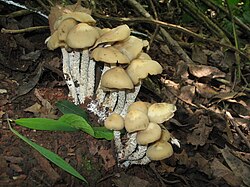
![There are over 100 psychoactive mushroom species of genus Psilocybe native to regions all around the world.[50]](/images/25/f4/25f4913751a4f66b72d783748c72837159e8f62c7a779a54ab863f3562c0c425.webp)
Specialized Fungi
Some fungi exhibit unique biological relationships. The "lobster mushroom" is actually a mushroom (likely Russula brevipes) that has been parasitized by Hypomyces lactifluorum.
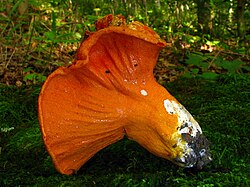
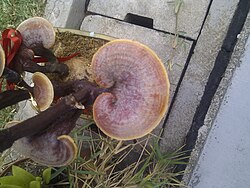
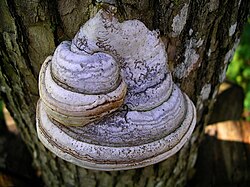
Other species are valued for non-food uses, such as Fomes fomentarius (tinder fungus) or Ganoderma lingzhi, which is used in traditional contexts.
Frequently Asked Questions
What is the difference between a mushroom and a toadstool?
While both are fruiting bodies of fungi, the term "mushroom" is a general descriptor, whereas "toadstool" is typically used to refer to mushrooms that are poisonous.
How large can a mushroom colony grow?
While the visible cap is small, the underground mycelium can be massive. One colony of Armillaria solidipes in the U.S. spans an estimated 2,200 acres.
Are mushrooms a good source of vitamins?
Yes, they are particularly rich in B vitamins, including riboflavin, niacin, and pantothenic acid, as well as minerals like selenium and copper.
What are the main parts of a typical mushroom?
A standard mushroom consists of the pileus (cap), the stipe (stem), and the lamellae (gills) located on the underside of the cap.
Which country is the largest producer of cultivated mushrooms?
China is a major producer, accounting for approximately half of all cultivated mushrooms globally.