Mural Art: History, Techniques, and Global Significance
A mural is any piece of graphic artwork applied directly to a wall, ceiling, or other permanent substrate. From the prehistoric depths of caves to the towering facades of modern cities, murals have served as a primary medium for storytelling, political expression, and architectural enhancement. The term itself originates from a Spanish adjective referring to things attached to a wall, eventually evolving into a noun used in the art world since the early 20th century.
Key Facts
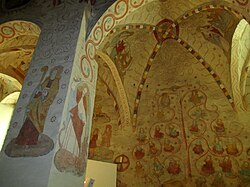
- Ancient Origins: Murals date back to the Upper Paleolithic era, with examples found in Borneo (40,000–52,000 BP) and France (32,000 BP).
- Diverse Techniques: Common methods include fresco (wet plaster), secco (dry plaster), mosaic, and marouflage.
- Political Power: Murals have been used as critical tools for social dialogue and political propaganda, most notably in Mexico and Northern Ireland.
- Modern Evolution: Contemporary murals range from traditional hand-painted works to digitally printed canvas and vinyl "wallscapes."
The Evolution of Mural Art
Antique and Medieval Foundations
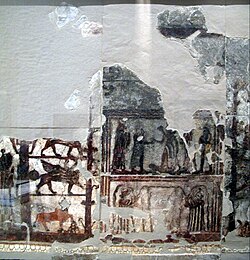
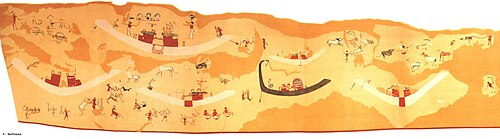
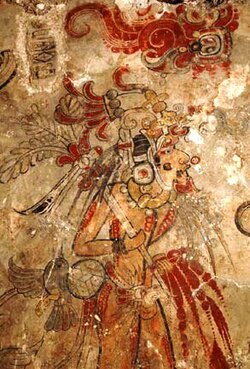
The earliest forms of mural art are found in cave paintings, such as those in the Lubang Jeriji Saléh cave in Borneo and the Chauvet Cave in France. As civilizations developed, murals became integral to funerary and royal architecture. Notable ancient examples include Egyptian tomb paintings (c. 3150 BC), Minoan palaces (1700–1600 BC), and the ruins of Pompeii.
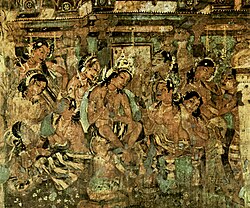
During the Middle Ages, artists primarily used fresco secco, a technique where paint is applied to dry plaster. This is evident in the 14th-century Kerala mural paintings of India. However, around 1300 in Italy, the reintroduction of true fresco—painting on wet plaster—significantly elevated the quality and durability of wall art.
The Rise of Modern Muralism
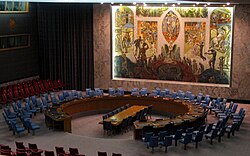
The 20th century saw the birth of the Mexican muralism movement, led by figures such as Diego Rivera, David Siqueiros, and José Orozco. This movement transformed murals into a social and political tool, aiming to bring art to the public. The first mural of the 20th century is credited as "El árbol de la vida" by Roberto Montenegro.
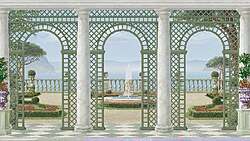
In the latter half of the century, murals expanded into diverse styles. Trompe-l'œil (French for "trick the eye") creates an optical illusion of three-dimensional space on a flat surface. This style experienced a renaissance in the 1980s through artists like Graham Rust and Rainer Maria Latzke.
Technical Methods and Materials
Traditional Mediums
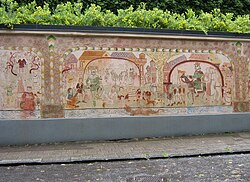
One of the oldest methods is tempera, where pigments are bound with an albuminous medium, such as egg yolk or white. By the 16th century, oil painting on canvas became popular because it allowed artists to complete works in a studio before transporting them to the site. While convenient, oil paint can yellow over time and is more susceptible to atmospheric damage than fresco.
Modern and Digital Applications
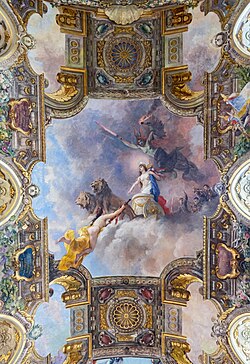
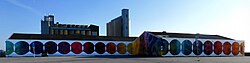
Today, murals are created using a wide array of water-based and oil-based media. Digital printing has revolutionized the field, allowing photographic images to be transferred to poster paper or canvas (Frescography) and then pasted to walls. In commercial advertising, "wallscapes" use large-scale vinyl prints or hand-painted designs to turn building exteriors into billboards.
Mosaic and Tile Work
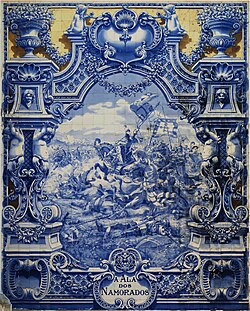
Mosaic murals are constructed from small pieces of colorful stone, ceramic, or glass. Modern technology now allows computer programs to analyze photographs and automatically cut tiles to create precise, large-scale images quickly.
Social and Political Significance
Beyond aesthetics, murals often function as a voice for the marginalized. In Northern Ireland, nearly 2,000 murals have been documented since the 1970s, evolving from sectarian markers to works addressing racism and environmentalism. Similarly, the Berlin Wall served as the "world's longest canvas," where artists like Keith Haring and Thierry Noir painted expressions of freedom and protest.
In many regions, murals serve as community memorials. In New York City, dedicated walls honor those lost to inner-city violence, weaving the memory of the deceased into the physical fabric of the neighborhood.
Mural Art Summary
| Technique | Substrate/Medium | Key Characteristic |
|---|---|---|
| Fresco | Wet Plaster | High durability; integrated into the wall. |
| Fresco Secco | Dry Plaster | Easier to apply; less durable than true fresco. |
| Tempera | Egg-based binder | One of the oldest known painting methods. |
| Mosaic | Stone, Glass, Ceramic | Created from small tesserae (tiles). |
| Trompe-l'œil | Various | Creates a 3D optical illusion. |
| Digital/Vinyl | Canvas or Vinyl | Fast installation; high photographic accuracy. |
Frequently Asked Questions
What is the difference between fresco and fresco secco?
Fresco involves painting directly onto wet lime plaster, which causes the pigment to become part of the wall as it dries. Fresco secco is the technique of painting on already dry plaster.
Who were the primary figures of the Mexican muralism movement?
The movement was most famously led by Diego Rivera, José Orozco, and David Siqueiros, who used public walls to convey social and political messages.
What is trompe-l'œil painting?
Trompe-l'œil is a French term meaning "trick the eye." It is an art technique that uses realistic imagery to create the optical illusion that the depicted objects exist in three dimensions.
How are modern digital murals created?
Modern murals can be digitally printed on canvas or vinyl and then adhered to the wall, or they can be created using computer-aided design (CAD) to guide the placement of mosaic tiles.
Can murals be used for economic development?
Yes, many rural towns use murals as tourist attractions to boost economic income. For example, Colquitt, Georgia, hosted the 2010 Global Mural Conference to highlight this potential.