Niki de Saint Phalle: The Vibrant Legacy of a Feminist Art Pioneer
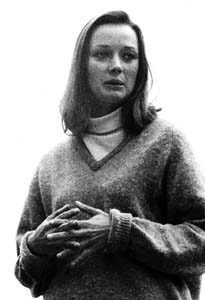
Niki de Saint Phalle was a powerhouse of 20th-century art, known for her bold colors, monumental scales, and an unwavering commitment to female empowerment. Born Catherine Marie-Agnès Fal de Saint Phalle in Neuilly-sur-Seine, France, she evolved from a self-taught artist into a global icon of Nouveau réalisme (New Realism)—an art movement that sought to incorporate the real world into art—and a leading voice in feminist art.
Her work spanned sculpture, painting, and filmmaking, often blending playfulness with profound social commentary. From the aggressive energy of her early "shooting paintings" to the joyful, voluptuous forms of her Nanas, Saint Phalle used her art to challenge societal norms and explore the complexities of the human experience.
Key Facts
- Full Name: Catherine Marie-Agnès Fal de Saint Phalle.
- Artistic Style: Associated with Nouveau réalisme and Feminist art.
- Most Famous Works: The Tirs (Shooting) series, the Nanas, and the Tarot Garden.
- Major Awards: Prix Caran d’Ache (1994) and Praemium Imperiale (2000).
- Collaborations: Frequent partner of artist Jean Tinguely.
- Lifespan: 1930–2002.
The Evolution of an Artist: From Tirs to Nanas
The Tirs (Shooting Paintings)
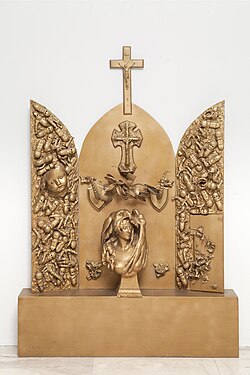
Between 1961 and 1963, Saint Phalle created the Tirs series, a provocative set of works where she used a rifle to shoot paint-filled balloons embedded in plaster. This performative act served as a form of emotional release and a critique of the patriarchal structures of the time.
The Nanas
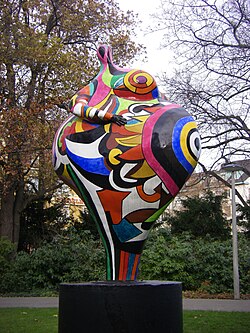
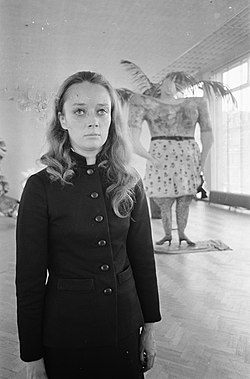
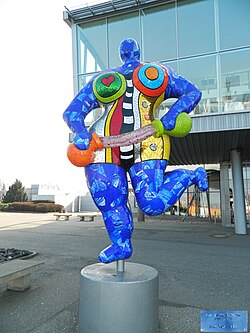
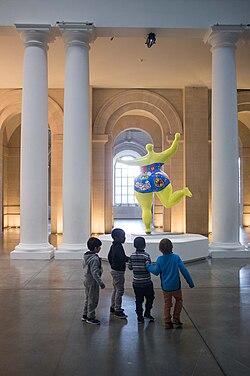
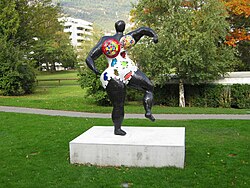
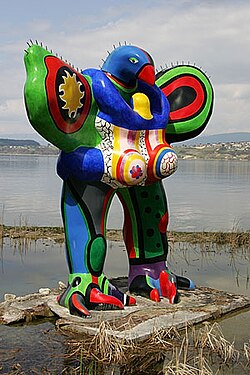
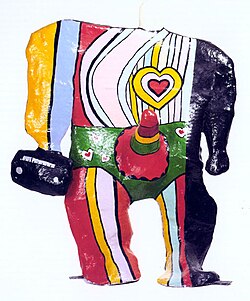
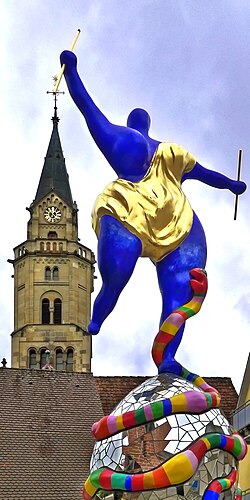
Transitioning from the aggression of the Tirs, Saint Phalle introduced the Nanas from 1964 to 1973. These large-scale, colorful sculptures of voluptuous women celebrated femininity, fertility, and joy. The Nanas became symbols of female liberation and strength, appearing in major exhibitions such as Les Nanas au pouvoir at the Stedelijk Museum Amsterdam in 1967.
Collaborations and Monumental Projects
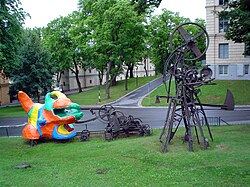
Saint Phalle's career was marked by significant collaborations, most notably with her second husband, the kinetic artist Jean Tinguely. Together, they created works that merged her organic forms with his mechanical ingenuity, such as Le Paradis Fantastique (1967–1971).
The Tarot Garden
One of her most ambitious achievements was the Tarot Garden (1974–1998), a massive sculpture park in Italy. This immersive environment features mirrored mosaics and towering structures based on the tarot cards, including the Empress and the Tower, blending architecture with sculpture.
Public Art and Global Reach
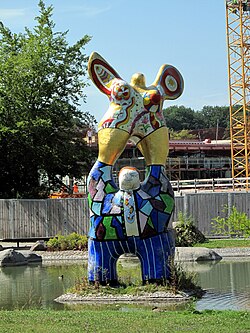
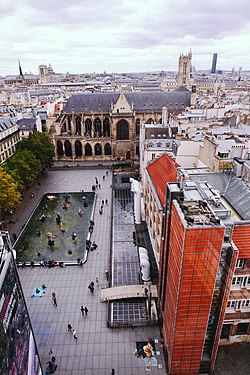
Saint Phalle's work is scattered across the globe in the form of public installations. Notable examples include the Stravinsky Fountain in Paris, the Noah's Ark in the Jerusalem Biblical Zoo, and Queen Califia's Magical Circle in Escondido, California.
Later Years and Artistic Legacy
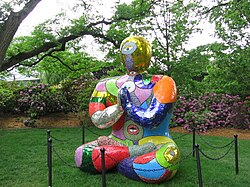
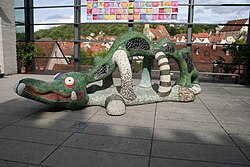
In her later years, Saint Phalle continued to explore spiritual and cultural themes, creating works like Buddha (1999) and Nikigator (2001). She also used her platform to address social issues, publishing the book AIDS: You Can't Catch It Holding Hands in 1987.
Saint Phalle passed away on May 21, 2002, in La Jolla, California. Her legacy lives on through her foundation and a series of major retrospectives at institutions like MoMA PS1 and the Grand Palais, ensuring her vision of rebellion and joy continues to inspire.
Summary of Major Works
| Period/Series | Key Characteristics | Notable Examples |
|---|---|---|
| Tirs (1961–1963) | Performative "shooting" of paint-filled plaster | Autel d'or |
| Nanas (1964–1973) | Voluptuous, colorful female figures | Blue Nana, Dancing Nana |
| Collaborations | Kinetic and organic fusion with Jean Tinguely | Le Paradis Fantastique, Stravinsky Fountain |
| Environmental | Immersive sculpture parks and gardens | Tarot Garden, Queen Califia's Magical Circle |
Frequently Asked Questions
What are the "Nanas"?
The Nanas are a series of large, colorful, and voluptuous sculptures of women created by Niki de Saint Phalle. They were designed to celebrate the female form and represent a sense of joy, power, and liberation.
What was the purpose of the Tirs series?
The Tirs (or "Shooting") paintings were a form of performance art where the artist shot paint-filled balloons with a rifle. This process was intended as a way to "attack" the artwork and release emotional tension.
Who was Jean Tinguely?
Jean Tinguely was a Swiss kinetic artist and the second husband of Niki de Saint Phalle. The two collaborated on several major public works, blending her sculptural forms with his moving, mechanical machines.
Where is the Tarot Garden located?
The Tarot Garden is a monumental sculpture park located in Italy, created by Saint Phalle between 1974 and 1998. It features large-scale mosaic structures based on tarot card imagery.
Was Niki de Saint Phalle formally trained in art?
No, Niki de Saint Phalle was a self-taught artist, which contributed to her experimental approach and willingness to break traditional artistic boundaries.