Moa: The Giant Extinct Birds of New Zealand
The moa were a group of flightless birds that once dominated the landscapes of New Zealand. Belonging to the order Dinornithiformes, these birds evolved into a variety of forms, ranging from smaller forest dwellers to the colossal giant moa. As ratites—a group of flightless birds that includes ostriches and emus—moa occupied the ecological niches typically held by large mammals in other parts of the world.
Their existence spanned from the Miocene epoch through to the Holocene, roughly 17 million to 6,000 years ago. These birds are a classic example of island gigantism, where isolated species evolve to much larger sizes than their mainland ancestors due to a lack of competition and predators.
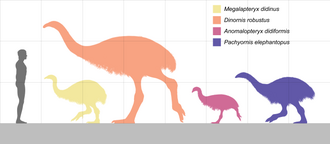
Key Facts
- Diversity: Comprised 6 genera and 9 recognized species.
- Range: Endemic to the North and South Islands of New Zealand.
- Classification: Part of the Palaeognathae infraclass (ratites).
- Temporal Range: Existed from the Miocene to the Holocene (17–0.0006 Ma).
- Distinctive Feature: Completely flightless with no wing remnants.
Classification and Diversity
The moa are categorized into three primary families, each representing different sizes and habitats. The Dinornithidae family contained the giant moa, while the Emeidae and Megalapterygidae families consisted of smaller, more specialized species.
The Giant Moa (Dinornithidae)
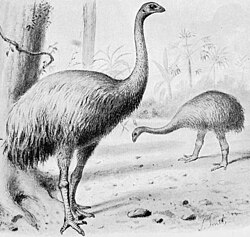
The genus Dinornis included the largest of all moa. This group is split into the North Island giant moa (Dinornis novaezealandiae) and the South Island giant moa (Dinornis robustus). These birds exhibited extreme reversed sexual size dimorphism, meaning the females were significantly larger than the males.
The Lesser Moa (Emeidae)
This family was more diverse, including several genera that adapted to various environments:
- Anomalopteryx: The bush moa (A. didiformis), found on both islands.
- Emeus: The eastern moa (E. crassus), native to the South Island.
- Euryapteryx: The broad-billed moa (E. curtus), found on both islands.
- Pachyornis: This genus included the heavy-footed moa (P. elephantopus), Mantell's moa (P. geranoides), and the crested moa (P. australis).
The Upland Moa (Megalapterygidae)
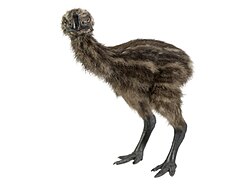
The upland moa (Megalapteryx didinus) was specialized for the higher altitudes of the South Island. Unlike the giant moa, these birds were smaller and adapted for more rugged terrain.
Physical Characteristics and Biology
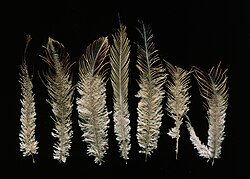
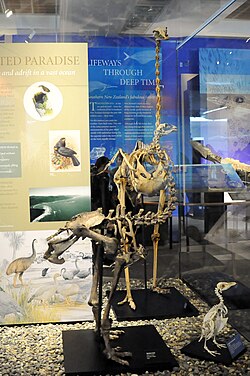
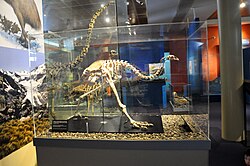
Moa were characterized by their powerful legs and lack of wings. While other ratites have vestigial wing bones, moa are unique in that they had no wing elements at all. Their skeletal structures varied by species, with the giant moa possessing massive frames to support their weight.
Reproduction and Growth
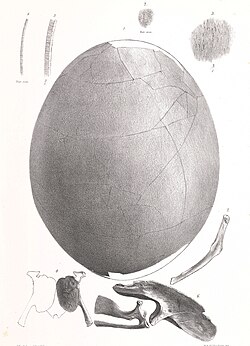
Research into moa eggs and embryos reveals unique nesting behaviors. Some species produced eggs that were exceptionally large relative to their body size. Evidence from the Otago Museum shows female upland moa with eggs in an unlaid position within the pelvic cavity, providing insight into their reproductive anatomy.
Diet and Ecology
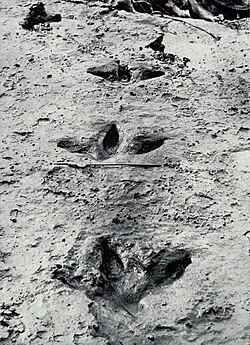
Moa were herbivores, browsing on a variety of New Zealand flora. Their diet varied by species and habitat, with some preferring the dense bush and others the open uplands. Their footprints, preserved in various sites, provide evidence of their movement and distribution across the islands.
Interaction with Predators and Humans
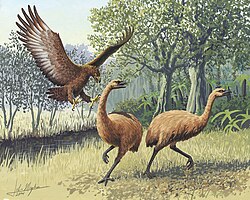
Before the arrival of humans, the primary predator of the moa was the Haast's eagle, a massive raptor capable of attacking moa pairs. However, the arrival of humans led to a rapid decline in moa populations due to hunting.
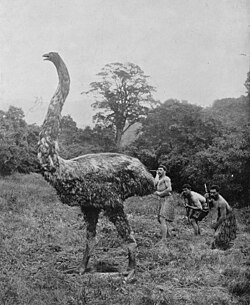
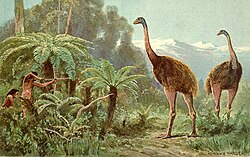
Early human settlers relied on moa as a primary food source. Historical reconstructions and illustrations of moa hunts depict the scale of these birds and the methods used to capture them.
Moa Summary Table
| Genus | Common Name | Distribution | Family |
|---|---|---|---|
| Dinornis | Giant Moa | North & South Islands | Dinornithidae |
| Anomalopteryx | Bush Moa | North & South Islands | Emeidae |
| Emeus | Eastern Moa | South Island | Emeidae |
| Pachyornis | Heavy-footed/Crested Moa | North & South Islands | Emeidae |
| Megalapteryx | Upland Moa | South Island | Megalapterygidae |
Frequently Asked Questions
Why did the moa go extinct?
The moa went extinct primarily due to hunting by early human settlers and the loss of their natural habitat.
Did moa have wings?
No, moa are unique among ratites because they had no wing bones at all, making them completely flightless.
Which moa species was the largest?
The giant moa (Dinornis), specifically the females of the species, were the largest, reaching heights significantly greater than a human.
What did moa eat?
Moa were herbivores that browsed on various plants and vegetation found across the New Zealand islands.
Is it possible to bring moa back to life?
While there have been discussions and plans regarding de-extinction using ancient DNA, these remain theoretical and experimental goals.