Miguel Hidalgo and the Spark of Mexican Independence (1810–1811)
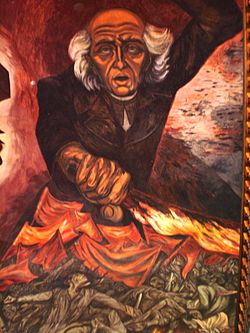
The road to Mexican sovereignty began not with a calculated military campaign, but with a passionate call to arms by an unorthodox priest. Miguel Hidalgo y Costilla, now revered as the father of Mexican independence, ignited a massive popular uprising on September 16, 1810. While his movement lacked a disciplined military structure or a detailed political manifesto, it exposed the deep-seated discontent of the plebeians—the common people—and posed an existential threat to the Spanish imperial regime.
Hidalgo was a man of the Enlightenment: a learned priest fluent in multiple languages with a vast library. Despite his status as rector of the Seminary of San Nicolás, his unorthodox beliefs and criticisms of the monarchy brought him into conflict with the Inquisition. By 1803, facing financial debts from his landed estates, he became the curate of the poor parish of Dolores.
The Conspiracy of Querétaro
The seeds of revolt were sown in Querétaro, where Hidalgo joined a group of educated, American-born Spaniards. Operating under the guise of a literary society and supported by Josefa Ortíz de Domínguez (known as "La Corregidora"), the group discussed a popular rising. They were inspired by previous attempts to challenge Spanish authority, such as the 1809 uprising in Valladolid (now Morelia) in the name of Ferdinand VII.
Hidalgo worked closely with Ignacio Allende, a captain in the Dragoons of New Spain. Allende had grown disillusioned with the crown after the 1808 ouster of Viceroy José de Iturrigaray, who had been seen as too sympathetic to the grievances of American-born Spaniards. Together, they expanded the conspiracy into northern cities including Celaya, Guanajuato, and San Miguel el Grande.
The Grito de Dolores
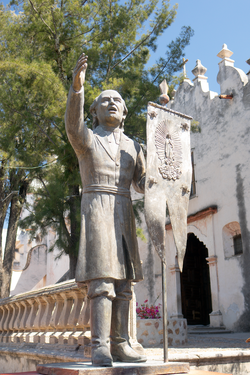
The movement was forced into action prematurely when crown officials discovered the plot. Warned by Josefa Ortíz de Domínguez, Hidalgo acted swiftly. On Sunday, September 16, 1810, he gathered his parishioners for mass and issued the Grito de Dolores (the Cry of Dolores). While accounts vary, the official record suggests he called for religion, the Virgin of Guadalupe, and Ferdinand VII, while denouncing "bad government."
The Rise of the Insurgent Army
The response was immediate and overwhelming. Thousands joined Hidalgo, including liberated prisoners, estate workers, and a few royal army deserters. This was not a professional army but a mass movement; many fighters were Indigenous people armed only with bows and arrows or agricultural tools used as makeshift weapons.
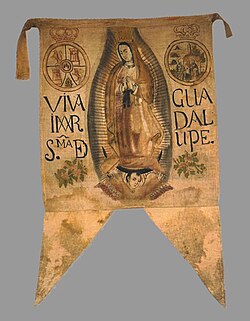
Religious symbolism played a pivotal role in unifying the rebels. Hidalgo seized a banner of the Virgin of Guadalupe from the church at Atotonilco. The "dark virgin" became a symbol of liberation and protection for dark-skinned Mexicans, with many insurgents wearing her image on their hats. In contrast, royalists looked to the Virgin of Remedios as their patron.
The Siege of Guanajuato
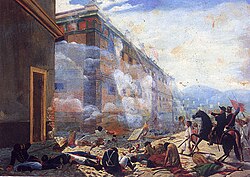
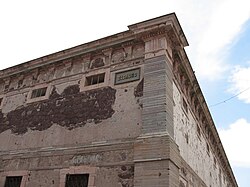
The insurgency gained rapid momentum, marching through Celaya and San Miguel el Grande. On September 28, 1810, the forces reached Guanajuato and attacked the Alhóndiga de Granaditas, a public granary where Spanish forces and loyalist creoles had barricaded themselves. The resulting battle was horrific; the insurgents, numbering roughly 30,000, killed over 500 Spaniards.
Tactical Errors and Downfall
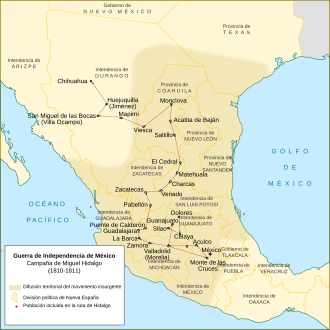
Following a victory at the Battle of Monte de las Cruces on October 30, Hidalgo's forces surrounded Mexico City. Despite the advantage, Hidalgo made the controversial decision to retreat against Allende's advice. Historians suggest he did this to prevent the city's citizens from suffering the inevitable sacking and plunder that would follow a rebel victory.
This retreat proved fatal. Hidalgo moved west to Guadalajara, where a period of intense violence ensued from December 12, 1810, to January 13, 1811. Hidalgo later admitted to ordering the execution of innocent Spanish civilians during this time. This brutality led to mass desertions and a loss of morale among his followers.
The Final Defeat
The royalist forces, now led by the more effective Félix María Calleja del Rey, defeated the disorganized rebels at the Calderón River. Attempting to flee north toward the United States for support, Hidalgo and his remaining men were betrayed by Ignacio Elizondo and captured at the Wells of Baján (Norias de Baján) in Coahuila.
Key Facts
- Start Date: September 16, 1810, with the Grito de Dolores.
- Primary Leaders: Miguel Hidalgo y Costilla and Ignacio Allende.
- Key Symbol: The Virgin of Guadalupe, representing the protector and liberator of the people.
- Major Conflict: The massacre at the Alhóndiga de Granaditas in Guanajuato.
- Turning Point: Hidalgo's decision to retreat from Mexico City after the Battle of Monte de las Cruces.
- Outcome: Execution of Hidalgo and other leaders in 1811, though the insurgency continued under José María Morelos.
| Category | Details |
|---|---|
| Nature of Force | Unorganized mass movement of plebeians, Indigenous people, and some militia. |
| Primary Goal | Overthrow of "bad government" and eventual political independence from Spain. |
| Key Opponent | Spanish Imperial Regime (Royalists), led later by Félix María Calleja. |
| Major Tactical Error | The retreat from Mexico City following the victory at Monte de las Cruces. |
| Legacy | Sparked the Mexican War of Independence; led to the "Sentiments of the Nation" (1813). |
Frequently Asked Questions
Why is Miguel Hidalgo considered the father of Mexican independence?
Hidalgo is credited with igniting the movement through the Grito de Dolores, mobilizing tens of thousands of ordinary citizens against Spanish colonial rule and demonstrating the power of the Mexican people as a threat to the imperial regime.
What was the significance of the Virgin of Guadalupe in the revolt?
The image of the Virgin of Guadalupe served as a powerful religious and nationalist symbol. She was viewed as a protector of dark-skinned Mexicans and a liberator, providing a spiritual focal point for the insurgent forces.
Why did Hidalgo retreat from Mexico City?
Although he had the military advantage after the Battle of Monte de las Cruces, historians believe Hidalgo retreated to spare the city's civilian population from the violent sacking and plunder that typically accompanied such conquests.
How did the Spanish government respond to the uprising?
The government initially struggled due to the suddenness of the attack but eventually organized a professional military response under Félix María Calleja, focusing on defeating the rebels in the field and publicly executing their leaders to deter others.
What happened to the leaders after their capture?
Ignacio Allende, Jiménez, and Aldama were shot in the back as a sign of dishonor on June 26, 1811. Hidalgo was stripped of his priesthood and executed on July 30, 1811. Their heads were displayed at the corners of the Alhóndiga de Granaditas as a warning.